The Arc de Homer

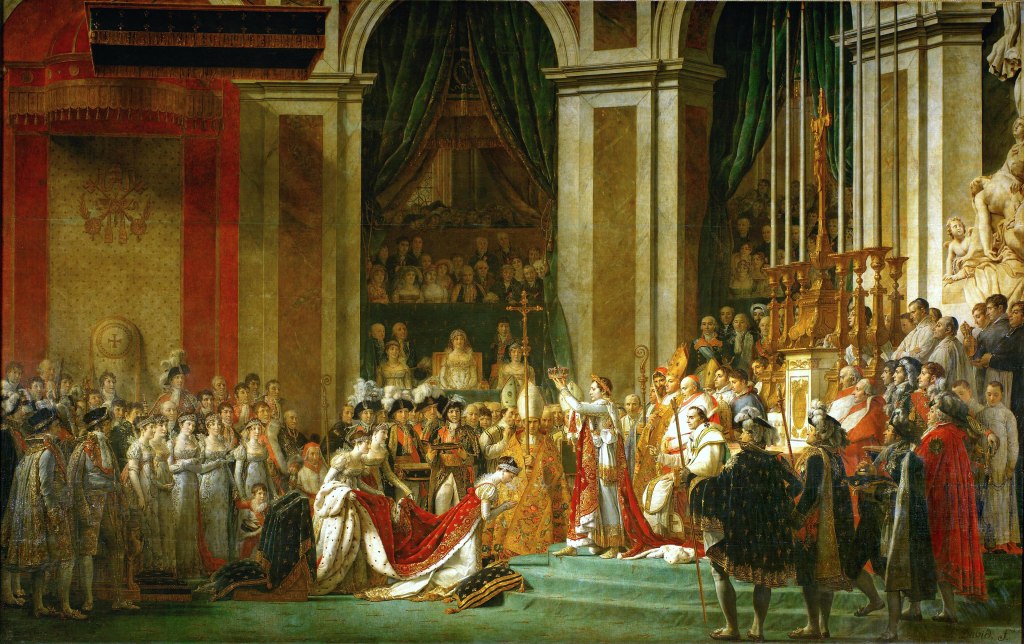
The Coronation of Napoleon by Jacques-Louis David 1807

If it was not such an egregious misuse of governmental power and resources Trump’s proposed Arc de Trump would be comical. The daily comings and going of our president reminds me of Homer Simpson’s antics.

Take the proposed Trumpian arch for Washington DC. Triumphant arches are not uncommon. They date back to the time of the Romans Empire. It is believed that as many as 50 arches were built through out Rome. Today only three remain. Two of the most famous remaining arches are the Arch of Titus built in 81 CE and the Arch of Constantine built in 312.

Now ebsco.com says, “The triumphal arch originated in Rome as a way for the emperors and citizens to celebrate or commemorate some significant event. These included military victories and the seating of a new emperor.” And of course these structures “were designed to be impressive and were usually decorated with carvings, sculptures, and bronze plaques related to the person or event they commemorated.”

In a city like Washington DC with 100 monuments why not add a 250 foot arch to rival the Washington Monument? My real question is what are we commemorating?

“There is nothing that authorizes or justifies a massive arch, even if Trump tries to disguise it as a military facility… This is cartoonishly illegal, but he’s obviously trying to find a way to do it anyway.”– Rep. Jared Huffman of California, House Committe Natural Resources The Washington Post

For instance, Domitian, Titus’ brother and successor built the arch to celebrate Titus’s victory over the Jews and the capture of Jerusalem. A side note: some of the sculptures on the arch show Roman soldiers hauling off captured loot from the Jewish Temple. I am sure some of that loot helped pay for the arch.
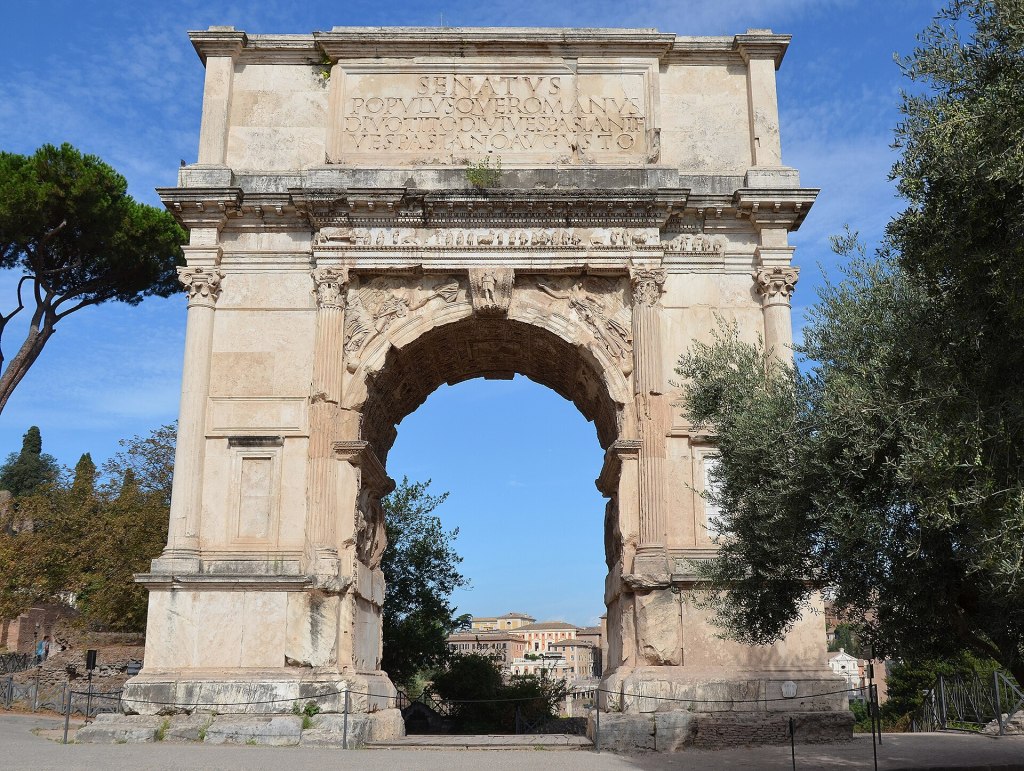
The Arch of Titus, Upper Via Sacra, Rome
by Carole Raddato

So are we building an arch to celebrate Trump’s future victory over Iran? That sounds premature. Is the Trump arch supposed to celebrate Trump being proclaimed supreme leader? Like Augusta, the first emperor of Rome. After his death the Roman Senate went one step further by deifying him. Augusta went into the afterlife as a god.

“…a reporter noticed the arch design on the resolute desk as they were being pushed out of the Oval Office. The reporter asks the president the purpose of the 3D model and he responded, ‘It’s an arch…It’s going to be built.'” When the reporter asks for whom, Trump replied, ‘For me!'”–The Daily Mail

More closer to our time but still more than 200 years in our rearview mirror was The Arc de Triomphe. In 1806 Napoleon decided he needed to be commerated after his great victory in the1805 Battle of Austerlitz. His victory against the Russians and Austrians is considered one of his greatest victories and one of the greatest battles fought. This coming from a man who two years earlier crowned himself emperor. (Trump’s continuing conflict –war; or whatever word du jour the administration is using–with Iran might go down as military flop.)

On 18 May, 1804, after much political horse trading, the French Senate proclaimed Bonaparte Emperor Napoleon I. They then sent a group of senators from central Paris to the consul’s palace in the nearby countryside, Saint Cloud, to present the First Consul with the news of his elevation. Not content with this secular appointment, Napoleon was also to feel the need for divine approbation via a religious consecration, seven months later.–napoleon.org

Maybe in Napoleon’s mind he thought the emperor gig would be solid work for a while. Unfortunately, his grandiose schemes would end less than 10 years later as he was exiled to his own personal island off the African coast to live out the rest of his life, (under British guard) which ended as depressed man in 1821. And another rub to his majestic monumental desires; his arch would not be completed until 1836, 15 years after his death.

In many ways I see the need for President Trump to fast track the building of his arch. After all the old boy is moving beyond 80. Unlike Napoleon and Titus, he probably wants to be around to see his arch built.
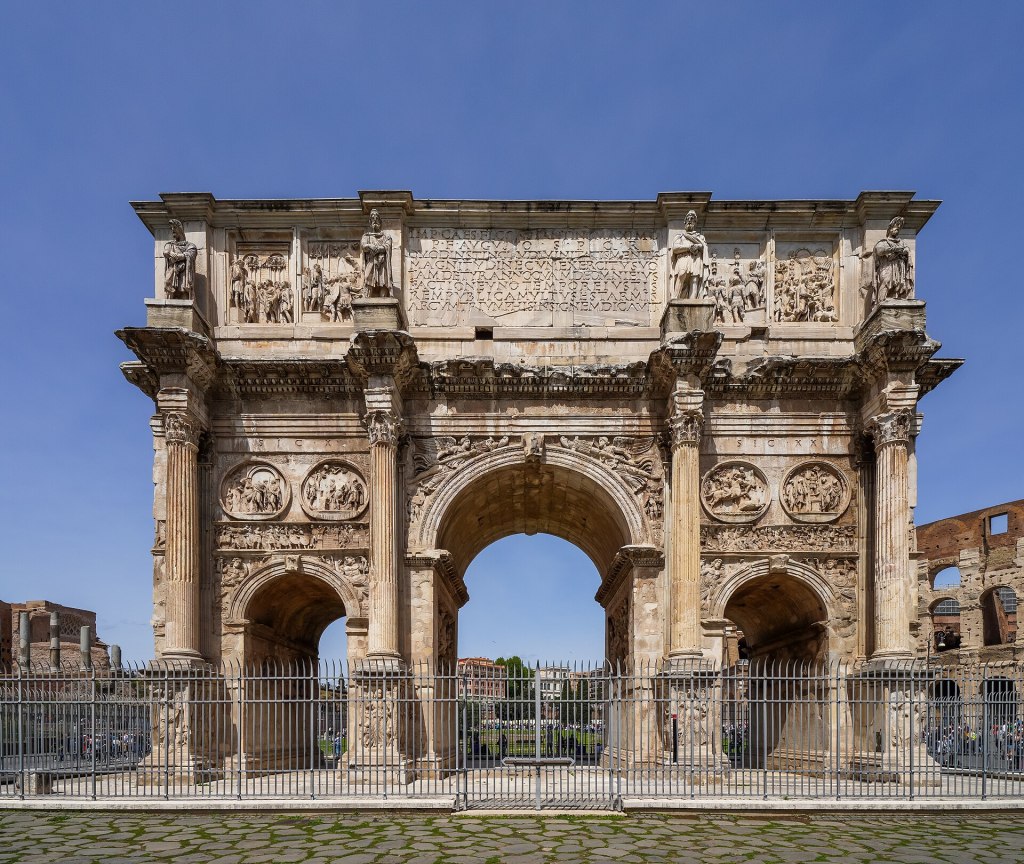
Arch of Constantine
NikonZ7II Paris Orlando Creative Commons via Wikimedia Commons

However, his arch reminds me of a Simpson episode where Homer is charged to design a car–“The Homer.” The car turns out to be a flop with so many added bells, whistles and gadgets. It is beyond a flop. The Homer puts the car company out of business.

Some argue that Washington needs a monumental arch. Washington is a capital without an arch. So in many minds we should build one. Especially to commemorate the semi-quincentennial anniversary of the Declaration of Independence. Heck, why not? Let’s slap a 250-foot-tall memorial right under the flight paths of National Airport.

The building of an arch may not be a bad idea. But, it just seems like so much of what this administration does has little thought put into it; and no public comment associated with implementing something properly.

Over 70 major cities/capitals around the world, from London, Paris and Rome to Madrid, Athens and New Delhi, all showcase beautiful arches. Interestingly, Washington, DC, is the only major Western capital without an arch. Now after 125 years of waiting, the most powerful capital in the world will be home of the most spectacular and beautiful arch of them all! Secretary of the Interior, Doug Burgum from X

Where the flop comes in, in my mind, is how a memorial arch can morph into a monument commemorating the Declaration of Independence to a “top grade military complex” with drones, snipers and maybe missiles. A great place to store munitions–who would think to bomb an arch in the middle of a traffic circle.

This arch (much like the White House Ballroom) is beginning to look like “The Homer.” It makes about as much sense as building a ballroom that can transform into some sort quasi-military compound.
“A tall ship and a star to steer her by.”

Not that I was looking; but I did not see one mention about the Apollo 11 moon landing 57 years ago. It was a race to the moon that ended on July 20, 1969. I know it was a basically a bunch of white men doing their thing; but it was still one of the greatest achievements of mankind, until they did it five more times. And now we are talking about going back in another race, this time with the Chinese. Historically speaking it should be a day remembered.

Like most Americans of that time I was swept up with the Space Progam. It was an outgrowth of the Cold War with the Soviet Union and became the noble quest of President John Kennedy who challenged the country to begin searching the final frontier. Or was it a modern version of Camelot with space as our search for the Holy Grail–on the moon.

We shall send to the moon 240,000 miles away, a giant rocket, more than 300 feet tall on an untried mission to an unknown celestial body, and then return it safely to Earth. But why some say the moon? Why choose this as our goal? And they may well ask, why climb the highest mountain? Why 35 years ago fly the Atlantic? We choose to go to the moon. We chose to go to the moon. We choose to go to the moon in this decade and do the other things not because they are easy, but because they are hard. Because that goal will serve to organize and measure the best of our energies and skills, because that challenge is one that we’re willing to accept. One we are unwilling to postpone. And therefore, as we set sail, we ask God’s blessing on the most hazardous and dangerous and greatest adventure that man has ever gone.–President John Kennedy “Moon Speech” on September 12, 1962 in Rice Stadium. 

It is interesting in what motivates man. I really do think President Kennedy comparing space flight to sailing was apropos. He said, “we set sail, we ask God’s blessing on the most hazardous and dangerous and greatest adventure that man has ever gone.” But when you think about it, most voyages of exploration are hazardous and dangerous excursions into the “unknown.”

Take Ferdinand Magellan’s voyage to around the Earth. With five ships and 270 men he left Spain on September 20, 1519. His expedition returned September 6, 1522 with one ship and about 40 men–he was not one of them. Magellan’s three-year trip would be more on line with going to Mars today. Currently it would take Elon Musk about three years to get there and back.

But blasting off for the moon was an adventure on the level with the ancient mariners. I love Kennedy’s metaphor of sailing. It reminds me of John Masefield’s poem Sea Fever:

I must go down to the seas again, to the lonely sea and the sky,
And all I ask is a tall ship and a star to steer her by,
And the wheel’s kick and the wind’s song and the white sail’s shaking,
And a grey mist on the sea’s face, and a grey dawn breaking.

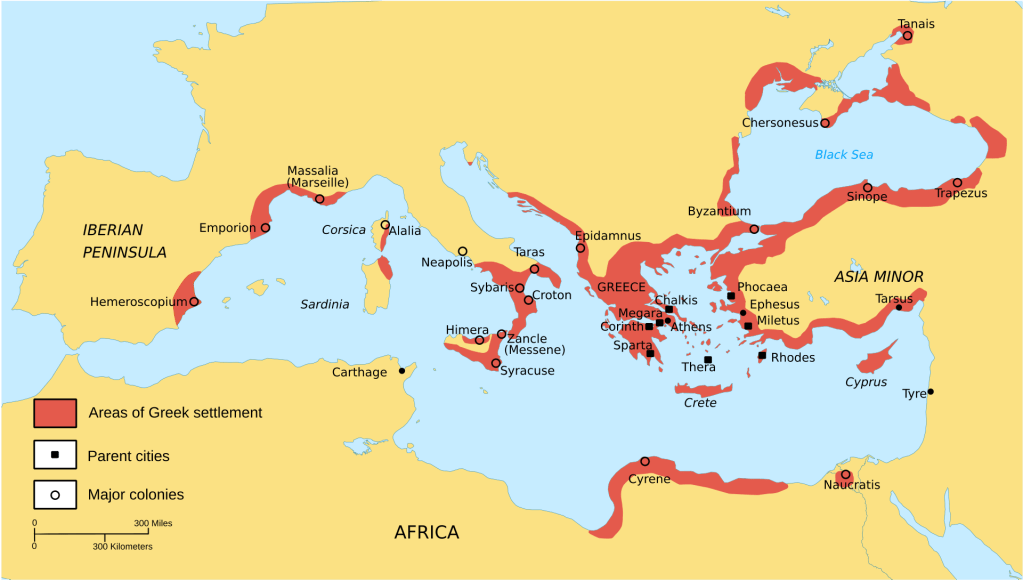
Man has always been blessed, or cursed, with a natural curiosity of what is on the other side of the mountain or beyond the horizon. When I think of going into space it reminds me of the sea voyages of the ancients, particularly the Greeks. The various Greek city-states might have been in competition for land in Greece but it was the open sea that allowed them to expand their horizons.

Geographically Greece is on the Balkan Peninsula with the longest coastline in Europe. The real factor though is that the land on this peninsula is mountainous–80 percent. Greek city-states trying to feed growing populations on mountainous land became a real problem. The solution was to establish over-seas colonies that relieved over population; but colonization also increased trade bringing to the city-states much needed food stuffs from as far away as the Black Sea and Spain. (I am not sure if the concept of colonizing the moon or Mars would either ease any over population issues on Earth or create trade.)

Dipal 1965 via Wikimedia Commons

Greek sea travel was not so much the age of sail as it was a man-powered voyage. Facts and Details says, “a ‘long day’ journey by an oared vessel” could be 140 miles “believed to be 16 hours traveled at seven or eight knots an hour.” Most Greek mariners hugged the coast line using line of sight and recognizing land features. This type of sailing made it easier to navigate. Plus, it made necessary stops for resupplying essential needs, like fresh water, easier.

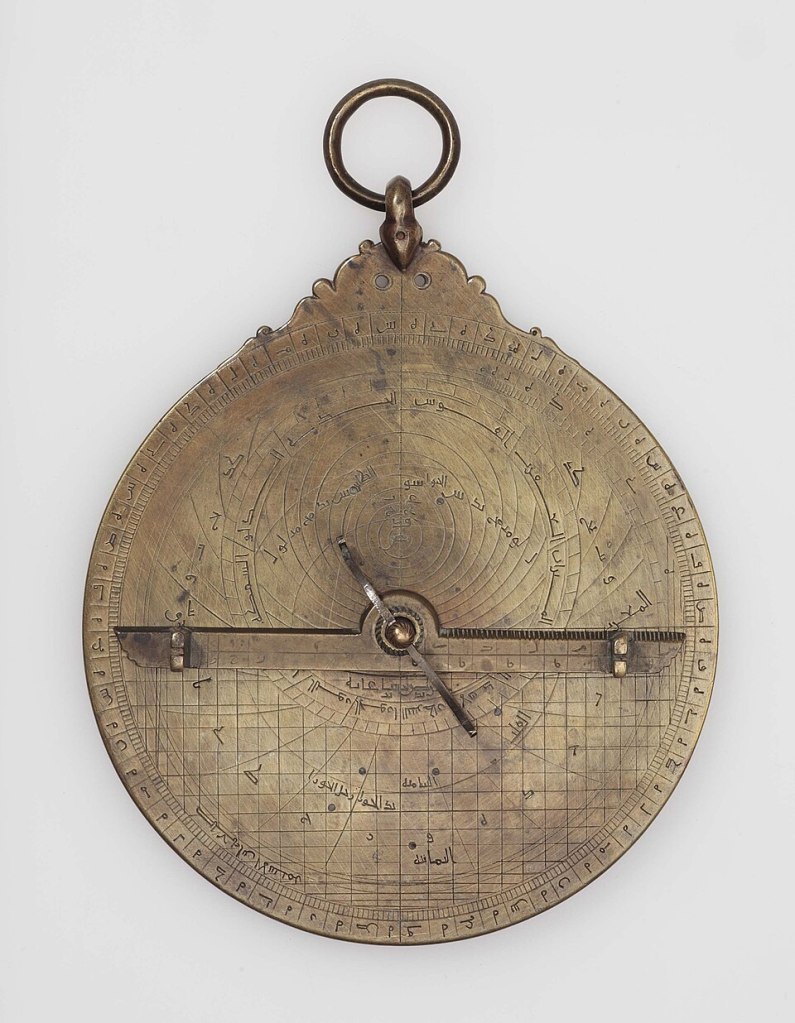
Although longer voyages across the Mediterranean were not uncommon it wasn’t until more sophisticated navigational instruments were developed, like the Astrolabe, did mariners become more confident in pushing further out to sea. It took centuries for Mediterranean sailors to refine navigation that would allow sailors, like Columbus and Magellan, to take longer voyages across the Atlantic and to circumnavigate the globe. It took centuries to build better ships to utilize better navigation.

“The astrolabe, which is a precursor to the sextant, is effective for determining latitude on land or calm seas. Although it is less reliable on the heaving deck of a ship in rough seas, the mariner’s astrolabe  was developed to solve that problem. It is able to measure the altitude above the horizon of a celestial body, day or night; it can be used to identify stars or planets, to determine local latitude given local time.”–Wikipedia

Khalili Collections /via Wikimedia Commons

And since we are talking about seafarers one cannot omit the Polynesian. Seafarers whose navigation skills, according to Wikipedia relied “heavily on constant observation and memorization. Navigators have to memorize where they have sailed from in order to know where they are. The sun was the main guide for navigators because they could follow its exact points as it rose and set. Once the sun had set they would use the rising and setting points of the stars. When there were no stars because of a cloudy night or during daylight, a navigator would use the winds and swells as guides.”

In the 1960s NASA was tasked with assembling, scientists, fledgling aerospace companies and test pilots to come up with how to traverse 240,000 miles of open space and put men on the moon–with no stop overs. And, to do it in less than 10 years. Unlike past seafarers NASA had to invent and improvise. There was very little institutional knowledge of human space travel. What they did from Kennedy’s Moon Speech in 1962 to that one giant leap in 1969 is really a technical miracle. Especially if we look at what they had to use compared to what we have today.

For instance if we just look at the computer used on Apollo 11: the Apollo Guidance Computer. Apollo 11Space called this 70 pound computer, about the size of carry-on luggage, “a pocket sized pioneer (for its time.)” It was a 20th century astrolabe.

Each Moon flight carried two AGCs, one each in the command module and in the Apollo Lunar Module. AGC in the command module was the center of its guidance, navigation and control (GNC) system. The AGC in the lunar module ran its Apollo PGNCS (primary guidance, navigation and control system).”–Wikipedia

The original uploader was Grabert at German Wikipedia., Public domain, via Wikimedia Commons

I am not some sort of techno-geek. I do not know the first thing about what RAM is or how it works. I know nothing of processing speeds, or what 4G or 110 Megabits per second translates to. So comparing the AGC on Apollo 11 to the iPhone by the numbers means nothing until it is put into layman’s terms. I find what RealClear Science says “that the iPhone in your pocket has over 100,000 times the processing power of the computer that landed man on the moon” pretty impressive. There is our giant leap.

A leap, to paraphrase John Gillespie Magee, Jr. poem High Flight: Man has “slipped the surly bonds of Earth” and has “trod the high untrespassed sanctity of space,” and has “touched the face of God.”

Whether it was the ancient sailors on the seas or the astronauts in space, it really gives meaning to what Masefield meant when he said “all I ask is a tall ship and a star to steer her by.”

Making America Great: The Beginning

We have been living with the red-hatted MAGA mantra for close to 10 years. I think this shibboleth historically does the country and its people a great disservice. Yes, it is a forward thinking concept. But in many ways MAGA focuses on the foibles and glitches of the present and omits the fact that America has always been a country that is constantly under construction; progressively moving forward in science, trade, economics and human rights.

I am not sure if we have ever had a period in our history where we have stomped the mud off our boots and dusted our hands and said, “My work here is done.” The only thing that comes to mind is planting the flag on the moon. The last man on the Moon was Gene Cernan way back in December of 1972. In fact no humans have been more than 400 miles from the Earth since that Apollo 17 flight. Every country with a space program is still flying in our contrails.

There are many reason why America has progressively moved forward. The early Puritans considered the New World to be a “beacon on a hill.” Today, President Trump is putting forth the concept that improving tariffs are a mechanism to keep that beacon shining. However, many are questioning if tariffs are the right tool for the time.

Even if we look back to what has to be our darkest moment there was progress. During the Civil War when the country ripped itself apart over a slave based economic system, a time when cotton accounted for 60 percent of the country’s trade revenues, a time when hundreds of thousands of men fought over Union and slavery; America was still moving forward. And, The Homestead Act was just one part of making America great in the post Civil War era.

During the Civil War, while the country was giving its last full measure of devotion to reunite a divided country there was hope with landmark legislation like The Homestead Act 1862. The Act opened up 270 million acres to “anyone” 21 year old or the head of a household. There were two caveats: you had to be a citizen or declare the intentions of becoming one; and well, if you took up arms against or aided enemies (the Confederacy) of the United States you need not apply. A step in making America great. However, this step, a concept of an individual owning 160 acres of western land, clashed with Native American ideas of land ownership and management.

Washington [D.C.] is not a place to live in. The rents are high, the food is bad, the dust is disgusting and the morals are deplorable. Go West, young man, go West and grow up with the country.— attributed to Horace Greeley, New-York Daily Tribune, July 13, 1865

But what made this act so important is it dovetailed neatly into the concept of Manifest Destiny. A belief that America was destined to be a country from the Atlantic to the Pacific. Americans, or English Colonials, have always pushed westward through the Cumberland Gap on the Wilderness Road into Kentucky and Tennessee or the National Road out of western Maryland on into Indiana. River travel played a big role in moving settlers and goods on rivers like the Ohio and its tributaries that flowed to the Mississippi.

However, at this time the United States was hemmed in by the Mississippi River to the West and Spanish Florida to the South. Nobody was really sure what lay on the other side of the Mississippi River in 1800. For instance, the Spanish searched all over the Southwest looking for a city made of gold called Eldorado. (They were looking in the wrong places. All they really needed to do was build a sawmill in Northern California and maybe American history would have been a whole lot different.)

This belief that America was to rule from the Atlantic to the Pacific grew legs with Thomas Jefferson’s Louisiana Purchase. The cry “go west young man” and the slogan “Manifest Destiny” were still to come. But, the early 1800s was also a time of some ill conceived ideas. Americans were picking a Quasi War in the late 1790s with France and a real war, again, trying to settle old scores with Great Britain in 1812. While we were fighting the British we also took another crack at conquering Canada. it seems history has circled back again on conquering Canada, this time with tariffs.


The Homestead Act of 1862 was a revolutionary concept for distributing public land in American history. This law turned over vast amounts of the public domain to private citizens. 270 millions acres, or 10% of the area of the United States was claimed and settled under this act. Repercussions of this monumental piece of legislation can be detected throughout America today.–National Park Service

The new nation’s eyes were also focused south on the Spanish possession, the appendage we know as Florida. At that time there were two Floridas, as if one was not bad enough: an East Florida and a West Florida. It was West Florida that abutted New Orleans and the part of Florida that was not included in the Louisiana Purchase. Despite diplomatic haggling, Presidents Madison and Monroe got nowhere on changing Spain, France or Britain’s mind as to America owning what would later become chunks of Mississippi, Alabama and Florida. Spain, unlike France, was not interested in selling off its North American holdings. However that was about to change.

In 1804 Jefferson was after New Orleans, the crown jewel in the Louisiana Purchase. As long as any foreign country owned New Orleans it put a serious crimp in bottling up American trade coming down the river. Forget tarifs, the fledgling country needed an outlet for its western produce. America needed West Florida to get its goods to what would later be known as the Gulf of America and on to foreign markets or back east to New York, Boston, and Philadelphia.

The process of acquiring this chunk of Gulf Coast would take several diplomatic incidents. But it was General Andrew Jackson that got the ball rolling. During the War of 1812, while other generals were floundering in taking Canada, while the British burning Washington City; Jackson was fighting both the British and Native Americans in the South. He whipped the Native Americans in what was known as the Creek War and whipped the British in the Battle for New Orleans. Once the war with the British was over he was able to turn his full attention to the various renegades who were crossing to and fro across the the US and Spanish Florida border. (It seems like some things in history never change.)

Now, in most wars there is always at least one country ready to supply the locals with the needed provisions to wage war. Like the United States sending weapons to Ukraine. In this case it was Britain supplying the Native American tribes of the Southeast with the tools of the trade. The Spanish did not seem to mind. Nor did they care who came and went across the border. Runaway slaves from Georgia found refuge among the Native Americans. Two groups that had a vested interest in helping Spain keep Florida and keeping Jackson out.

If there is one thing that history has taught us is that Native Americans never come out on the winning side of a war involving Europeans and Americans. Once Jackson sent the British running back to the Gulf of Mexico, as it was known back then, he began chasing Native Americans and runaway slaves seeking asylum in Spanish territory. In his incursion into Spanish Florida combatants were killed, forts and personal property were destroyed. Caught up in the hostilities were two British nationals: Alexander Arbuthnot and Robert Ambrister. Both were convicted of aiding Seminoles and other Native American tribes. Jackson gave both men a short shrift and a short rope. Both ended up getting hung along with two Seminole chiefs creating an international incident. It was a diplomatic mess that Secretary of State, John Quincy Adams, had to clean up. The whole affair would become the first of three Seminole Wars.

A side note here. A small country like Denmark might want to take note. When it comes to land, Americans usually get what they want. Just ask any Native American tribe or Mexico, For instance Florida, the Monroe Administration wanted Florida. Later it was the Polk administration going after Texas. If anything, Jackson’s running around Florida made it clear that Spain could not control the border or its inhabitants. Secretary of State John Quincy Adams presented Spain with the ultimatum either control your people or we will.

If it was anybody who had the art of the deal down it was John Quincy Adams. It was the Onís-Adams Treaty of 1819, which according to history.state.gov, “Spain ceded East Florida to the United States and renounced all claim to West Florida. Spain received no compensation, but the Unites States agreed to assume liability for $5millin in damages done by (Jackson) American citizens who rebelled against Spain”

The Onís-Adams Treaty resulted in the 1821 Transcontinental Treaty. What makes the treaty important is that it “defined the western limits of the Louisiana Purchase.” It led Spain to surrender “its claims to the Pacific Northwest (Oregon Territory). In return, the United States recognized Spanish sovereignty over Texas.” A recognition that would last less than 30 years. Adams also worked out the northern boundaries of the Louisiana Purchase and the Oregon Territory with Great Britain. Once Adams set these boundaries the march to the Pacific and making America great was about to begin.

In just a little more than 10 Years America increased its size by one million square miles.

  • The Louisiana Purchase: 828,000 Square Miles;
  • The Oregon Territory: 288,000 Square Miles;
  • and Florida: 72,000 Square Miles.

And this does not include Mexican controlled California and Texas, yet to be acquired.

The biggest problem Americans faced was getting over the Mississippi River. The technology to capitalize on all of this land had yet to be developed. Canals connecting rivers to the Mississippi River had to be built. According to mississippiriver.com, “In 1814 the city of New Orleans recorded 21 steamboat arrivals, however, over the course of the following 20 years, that number exploded to more than 1200. The steamboat’s place as a transportation necessity was secured.” It was the beginning of making America great.

From Gilded Age to Golden Age

contemplative images flickr.com

In President Trump’s Inaugural Address he boldly stated, “The golden age of America begins right now.” It has a nice ring to it but when you think about it, America’s last attempt at a golden age was called the Gilded Age.

Our Gilded Age was a time that was between the Civil War and the and turn of the 20th Century. It was a time when America was unfolding itself from sea to shining sea. History.com describes it as an era where “America became more prosperous and saw unprecedented growth in industry and technology.” But it was also an era as History.com says, that “had a more sinister side: It was a period where greedy, corrupt industrialists, bankers and politicians enjoyed extraordinary wealth and opulence at the expense of the working class. In fact, it was wealthy tycoons, not politicians, who inconspicuously held the most political power during the Gilded Age.”

For a Golden Age to be golden it needs to fit the following criteria:

  • The age must have stable economic growth, trade and the creation of wealth;
  • The age must have significant advancements in the arts, literature and science that contributes to the advancement of civilization;
  • The age must be one of discovery and innovation where progress pushes the envelope of what is possible;
  • Finally, it must be an age where there are peaceful relations among citizens and other countries.

Granted very few eras in history have hit all of the above criteria in full. It could be argued that for most of the United States history the US has come close to meeting most of the criteria to some degree some of the time; and at other times completely disregarded others. But even the Gilded Age with its moments of great wealth had its moments of economic panics, followed once again with the creation of great wealth. It was a time when the captains of industry controlled entire industries creating monopolies and trusts. and full employment. But it was a time where workers barley made $500 a year.

 Like today, New York City was the center of the financial system. Between 1863 and 1913, eight banking panics occurred in the money center of Manhattan. The panics in 1884, 1890, 1899, 1901, and 1908 were confined to New York and nearby cities and states. The panics in 1873, 1893, and 1907 spread throughout the nation.–federalreservehistory.org

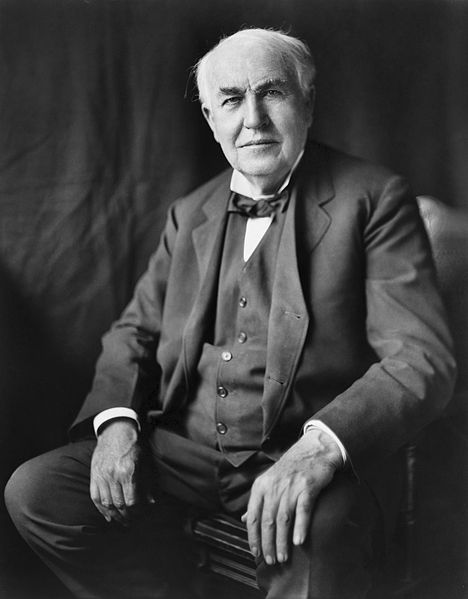
According to the Thomas Edison National Historical Park, “In 1879, he made an incandescent bulb that burned long enough to be practical, long enough to light a home for many hours.” Within 60 years there would be night baseball.

Louis Bachrach Studios Prints and Photographs Division, Library of Congress

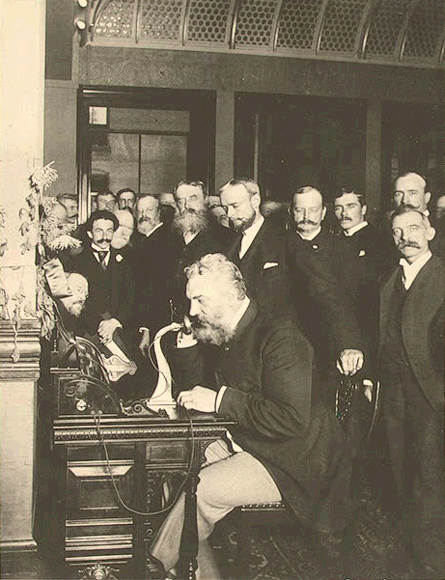
It was a period of peace and innovation. Inventors like Thomas Edison and Alexander Graham Bell pushed the boundaries of science. Their inventions had a great impact on raising America’s standard of living and helped push the world into an electronic age of light and communication.

Alexander Bell places the first long-distance call from New York to Chicago in 1892. There were no free minutes at that time or unlimited texting.

Gilbert H. Grosvenor Collection, Prints and Photographs Division, Library of Congress

With the influx of immigrants, a segregated population became more segregated with laws like the Chinese Exclusion Act of 1882. It was a law that restricted Chinese laborers from entering the country, among other restrictions. It also affected Chinese immigrants already in the country by making them permanent aliens. It was an act of denying them citizenship. It was also a time where women, citizens, were denied the right to vote.

And it was a time of full employment fueled by immigrants, where workers barley made $500 a year. It was also a time dangerous working and conditions for labor. One slip or injury could cause economic devastation for a family. Unions fought for survival. However most were crushed from the weight of business interests working in conjunction with the government.

  • There was the Haymarket Riot of 1886 where workers were rallying for an 8 hour day. A bomb exploded killing workers and seven policemen.
  • There was the Homestead Steel Strike of 1892 where workers battled Pinkerton Detectives brought in by Andrew Carnegie’s chief executive Henry Clay Frick to break the strike. Eventually the Pennsylvania Militia was called out and the union organization was crushed.
  • And two years later there was the Pullman Strike. Pullman manufactured railroad cars. In 1893 George Pullman laid off seventy-five percent of the work force and reduced wages for those still working. The the American Railway Union called for a nationwide strike shutting down rail travel in 27 states. Eventually, President Grover Cleveland sent in 10,000 troops to quash the strike.

The annual income of an American worker in 1890, at the height of the Gilded Age. Adjusted for inflation, that’s just under $1,500 in today’s dollars.–Investopedia

Sticking with the railroad motif, Louisiana in 1890 passed The Separate Car Act. Railroads were required to provide “equal but separate accommodations for white and African American passengers.” Additionally, according to Britannica.com, the law prohibited passengers from entering accommodations other than those to which they had been assigned on the basis of their race.

The argument necessarily assumes … that social prejudices may be overcome by legislation, and that equal rights cannot be secured to the negro except by an enforced commingling of the two races. We cannot accept this proposition. If the two races are to meet upon terms of social equality, it must be the result of natural affinities, a mutual appreciation of each other’s merits, and a voluntary consent of individuals. (From Brown’s majority opinion in Plessy v. Ferguson. In other words, don’t trip over the color line on the way out.

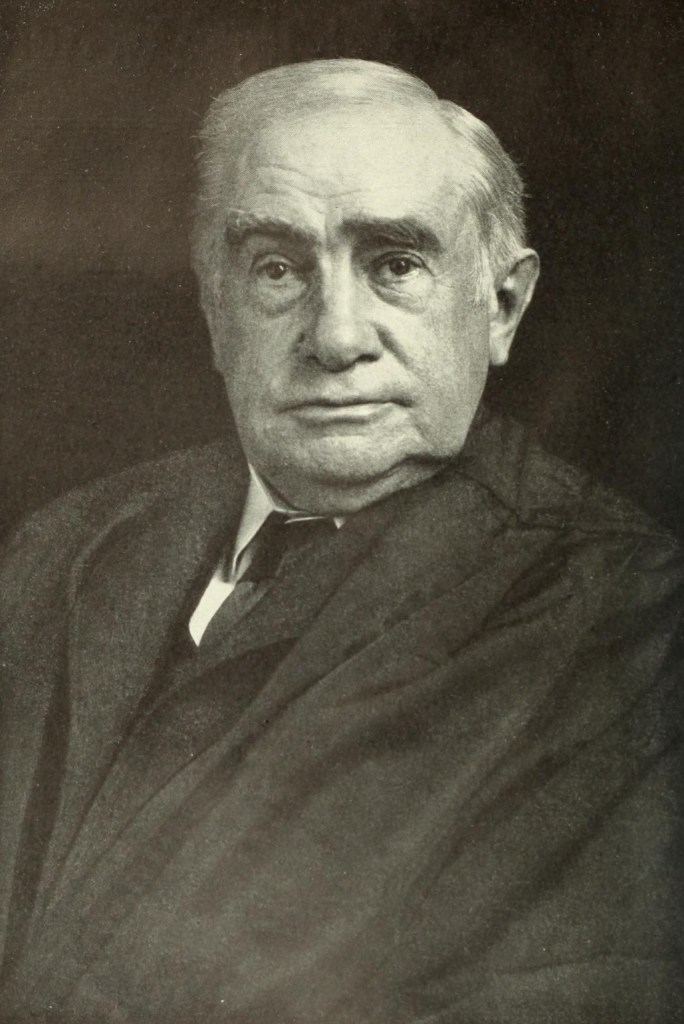
Original published in The American Magazine in 1905 Frances Benjamin Johnston

It is amazing how educated legal minds can interpret the Fourteenth Amendment to the Constitution. When this law was challenged in court it made its way to the Supreme Court. In Plessy v Ferguson, the Supreme Court ruled that separate accommodations did not violate the Thirteenth or Fourteenth Amendments. Justice Henry Billings Brown wrote for the majority. He “argued, because the amendment was intended to secure only the legal equality of African Americans and whites, not their social equality. Legal equality was adequately respected in the act because the accommodations provided for each race.” The lone dissenting vote came from John Marshall Harlan who fundamentally objected to the statute because “it interferes with the personal freedom of citizens.” The ruling gave us the concept of “separate but equal.” A dogmatic principle that hung around for another 50 plus years.

A Golden Age is a term used to describe a period in history where a culture, society, or nation experiences a period of prosperity, peace, and advancements. This era is characterized by significant achievements, significant contributions, and a collective sense of prosperity and unity. Golden ages are often marked by major advances in science, technology, art, and literature.–California Learning Resource Network

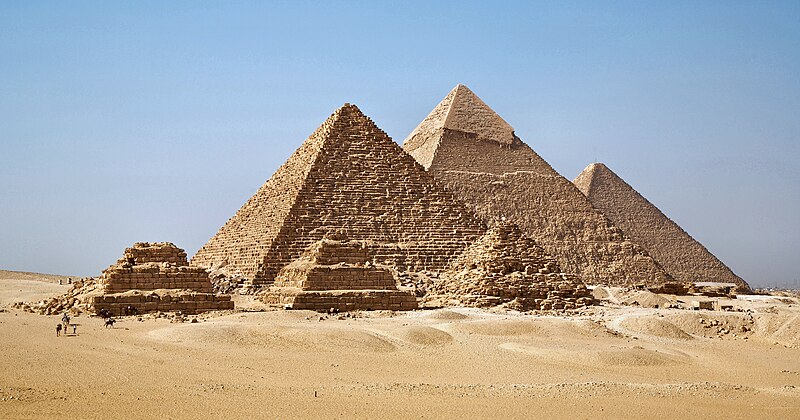
Before declaring a golden age Trump and company should look at what they are up against. They may have a hard time competing with the likes of ancient Egypt’s Fourth Dynasty. We might be going back more than 4500 years but in its golden age these pharaohs put up some impressive feats, like building pyramids. According to Pharaoh.se “the pharaohs of this dynasty only ruled for a little more than a century (and we think eight years is a long time), and yet they managed to have the three pyramids of Giza built in that time.” The pharaoh Sneferu started construction of the first pyramid and built three more, (no doubt letting the Nubians to pay for last two).

The Pyramids of Giza
Ricardo Liberato, Wikimedia Commons

His son Khufu continually improved upon his dad’s work. No pressure on Don Junior. In Trump’s first term he could not complete a wall along the Southern Border. (It was foiled when Mexico reneged on its fiduciary participation.) However Trump is proposing the Stargate Initiative. According to Forbes, this is “a $500 billion private sector deal to expand U.S. artificial intelligence infrastructure. Spearheaded by tech giants OpenAI, SoftBank, and Oracle, Stargate represents the largest AI infrastructure project in history.” Move over pyramids because the Yanks are coming! The sky’s the limit when billionaires get together. (At least three have skirted outer space.)

And then there is the Golden Age of Ukraine. If Trump plans to end Russia’s conquest of Ukraine he might want to bone up on Vladimir I or just Vladimir the Great. And no, this is not Putin but the “founding father” of Kievan Rus’. Putin might be using history to repeat Vladimir I’s medieval accomplishments. We have to harken back the 10th and 11th Century when Kievan Rus’ was Europe’s most powerful European state. A state without nuclear weapons. Vladimir I is credited with expanding Christianity to that region. Originally a pagan, much like Saul of Tarsus, he saw the light. When he converted to Christianity he oversaw the conversion of Kyiv and Novgorod to Christianity as well. For kicks he had all pagan idols thrown into the Dnieper River.

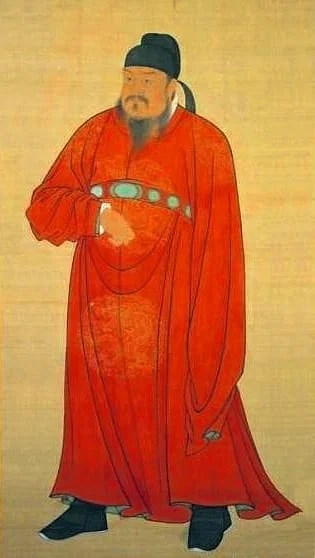
And lest not forget what was once “The Red Menace” from the East, China. Any golden age today has to take into account one of the oldest cultures in human civilization. Just look to the Tang Dynasty. Its first emperor was Gaozu (also Kao-tsu, formerly Li Yuan,-tsu (618-626 C.E.). According to ushistory.org, Gaozu “granted equal amounts of land to each adult male in return for taxes and continued the trend of local government rule…he also created a monetary system of copper coins.” Maybe Trump and Friends are onto something with Bitcoin. And he wrote a set of laws that were revised every two decades that lasted into the 14th century and the Ming dynasty. Sounds a bit like our Presidential Executive Orders, subject change but more frequently.

Emperor Gaozu was a Sui military commander who led a rebellion against his former masters, seized control of the state, and founded the Tang Dynasty
Public Domain

There is a cautionary tale here: “One of Gaozu son’s, General Li Shih-min, succeeded in eliminating all political rivals of the Tang and established firm control of the Tang dynasty over the newly reunified China. He then proceeded to murder his brothers, and forced his father (Gaozu) to abdicate the throne to him. Preferring his temple name, Tai-tsung took the throne in 626 C.E. The Golden Age of China had begun.” Nothing like a little fratricide and shoving the old man off the throne to get a golden age kicked off.

And if Trump wants to purse a Mideast policy he might want to look into the Islamic Golden Age. According Islamic History this golden age “is traditionally dated from the mid-7th century to the mid-13th century during which Muslim rulers established one of the largest empires in history.” It was period when artists, engineers, scholars, poets, philosophers, traders contributed “to agriculture, the arts, economics” mathematics and science. This was a time before OPEC, BP, Mobile, Exxon and Chevron–and Israel.

A little closer to our time the Elizabethan Age between 1558 and 1603 is referred to as a Golden Age of England. “According to Britannica, “it was a span of time characterized by relative peace and prosperity and by a flowering of artistic, literary and intellectual culture.” It was a time of Shakespeare.

With America’s stable economy and government, great universities and innovative thinkers, Trump has a lot to work with in getting a golden age cranked up. A lot of the elements needed to create a golden age are already present. They just need to be combined and conducted into a fine symphony. However, it is going to take more than handing out fries under the Golden Arches to create an age greatness.