A Conscious Awareness of Consciousness

Personally, I believe that the world is constantly riding spiritual waves of awareness. And when I say this I don’t mean it as a religious wave like say the Great Awakenings which swept this country in (and others possibly) the 1700s and 1800s. It is not mysticism either. I think philosphers, sociologist and psychologist beat around the concept of collective (universal) consciousness; and its role in our personal consciousness and in our collective life. Right now we are in the trough of spiritual consciousness. 

Two man-made institutions play heavily into creating our collective consciousness and awareness–and our material reality: governments and churches. (I would add a third entity to this: multinational corporations. But we know they are for-profit, godless heathen organizations.) Too often we Americans think of separation of church and state effecting just this country. God may have made man in His image and likeness; but man has made religion in his image and likeness, governments too. And all of this seeps into our awareness and our concsiouness.

Awareness is the key. Do we see the stories that we’re telling ourselves and question their validity? –Pema Chodron

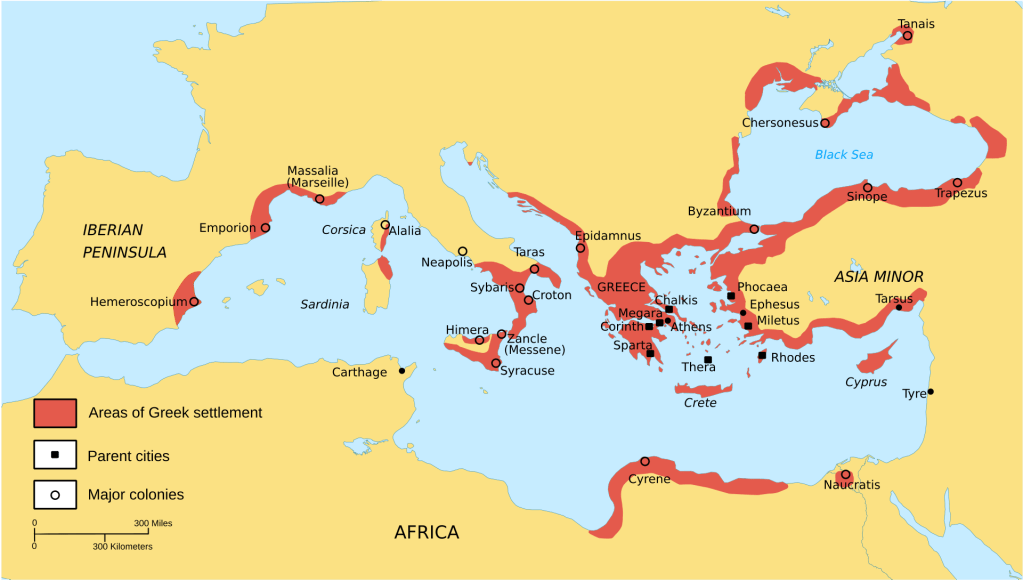
Collective consciousness knows no international boundaries nor time. Most of us do not realize the influence it has on our own consciousness and reality. It exists at levels we are not totally cognizant of. The latest flare up between the U.S. and Iran is a perfect example of where governments and churches come into conflict. This conflict is much like a strike-slip fault in the Earth’s Crust. The sliding plates of the Earth’s crust, like governments and churches pass each other creating tension, transforming human consciousness. (For the most part Americans had no real concept of Iran. To us the Persian Empire was something the Greek city-states fought way back in 499 BC to 449 BC. It wasn’t until the late 1970s AD did Iran’s chants of “Death to America” enter our national awareness and then into our consciousness.)

It happens all the time and it doesn’t have to be a war where empires clash. Henry the VIII transformed English religion and government without nocking an arrow when he broke with the Catholic Church. It all started in 1517 when Martin Luther rattled religuious awareness when he posted his 95 Theses to the door of the Castle Church in Wittenberg, Germany. Within 20 years Henry broke ties with the Catholic Church. In 1534 he set up his own church. Naturally, he was the head of this church. He also felt it was his job to seize church property in England, thus adding the church’s wealth to the royal coffers–religion for fun and profit. His strike-strip actions transformed England–and transformed the country’s collective consciousness, and ours. It spawned Separatists, Pilgrims and Puritans who ended up in what would become, collectively, the United States.

Life is a culmination of the past, an awareness of the present, an indication of a future beyond knowledge, the quality that gives a touch of divinity to matter.–Charles Lindbergh

Man may not always act in spiritual ways. But that does not stop religion from determining ethical and moral codes that help collectively keep society in line. Historically speaking, it is some sort of religious beliefs that influences the citizenry, the government and the institutions and hence the country collectively, The United States of America is a case in point.

Although we do not subscribe to one church, and some would preach the need to change this, we cannot deny that the spiritual beliefs of the collective consciousness of those who wrote the Constitution in 1787 still impact our nation today. To say they were not influenced by Judeo-Christian beliefs, as well as the collective beliefs of the Enlightenment, would be wrong thinking. These men combined a unique combination of beliefs to establish rule of the people–and not a monarch or some sort religious swami–or Ayetollah.

We are celebrating our 250th year of independence from a religious infused monarchy. This is something uncommon in human history. We took Henry the VIII’s concept of forming a religion in the image of a government and turned it around. We created a government based on religious and moral beliefs without the sanctimonious trappings of some sort of religious leader anonited by god in the mix. Our president has many roles as chief diplomat and commander in chief but he is not a shaman, medicine man or Levite in charge of a church. 

For 250 years we have managed without religious rules enshrined into our laws. The ancient Jews had 613 laws: 248 do’s and 365 don’ts. According to Chabad.Org only “369 mitzvot are still operative” today. But for centuries those laws have settled deeply into the Jewish collective consciousness, something we Americans may have a hard time comprehending but our awareness of these beliefs run deep in our collective consciousness.

As a nation–a nation basically a collection of immigrants from around the world–we have formed the basis for our national collective consciousness from the Declaration of Independence and the Constitution. And although property-owning white men wrote both documents, there was enough Christian diversity and mutual distrust of European religious disputes in their collective awarness to enshrine the belief of popular sovereignty over religious rule.

According to The Journal of the American Revolution the Constitution is purposely religious neutral, as is the theory of the government it embodies. “Whereas the Declaration explained and justified a rebellion to secure God-given rights, the Constitution is a blueprint for stable and effective republican government in a free country. The Preamble to the Constitution declares that its purposes are ‘to form a more perfect Union, establish Justice, insure domestic Tranquility, provide for the common defence, promote the general Welfare, and secure the Blessings of Liberty.’ These are wholly secular objects; religious references are extraneous in a document drafted to further them.”

If Christianity started out as an offshoot of Judaism then Judaic thought is a part of the Christian consciousness. Beliefs like: the love all humans, do not to stand by idly while another’s life is in danger, do not to cherish hatred in our hearts, or to bear a grudge and seek revenge are just a few Jewish beliefs that have effected our collective consciousness. And although these beliefs are not codified in our Constitution we do expect these sorts of beliefs to be reflected in our society; to guide our government and our leaders–to guide them and us in our collective consciousness.

They show that the requirements of the law are written on their hearts, their consciences also bearing witness, and their thoughts sometimes accusing them and at other times even defending them.–Romans 2:15 New International Version

The news today is full of stories on how our democracy, the Constitution is being shredded up before our very eyes. There may be some truth to that but it is not our Constitution that is failing us. It is how quickly virtue has been sapped from our collective consciousness and put us in a trough of spiritual (un)awareness. Each day we look up at the growing wave that surrounds us and see nothing but a gray wall of water fermenting discord and hostility within–not insuring any sort of domestic tranquility; or civility.

It is not that we are losing our democracy, that is only a side effect of losing our collective awareness and consciousness. We now debate what is morally and ethically right. We have collectively begun to abandon or Christian “values” that are ingrained in our consciousness whether you believe in God or not. We are being guided more by expedient pseudo-political/religious values that satiates the moment.

The current administration and its sycophants realize that collectively most Americans don’t hold the same zealous motivations that are being used to justify their actions. The current administration realizes that it could lose dramatically in the midterms if Americans recognize the fact that there is nothing wrong with our government. It is the lack of spiritual awareness, virtue and integrity of our leaders running government that has put us in this trough.

What America needs now is not an attitude adjustment but a retuning to its wave of awareness.

JD, You are No Dick Nixon–at least not yet

The other day Vice President JD Vance compared himself to President Richard Nixon. I think it is strange that he would compare himself to Nixon. In the very least Nixon is someone like Charles Dickens’ Fagin character in Oliver Twist. The leader of criminal gang. I am not sure if JD has risen to that level of malevolence.

To be clear, Nixon was a burglar. And a burglar, like Bilbo Baggins, no matter how honorable or lovable, is someone who breaks into a building with the intent to commit a crime. Is JD telling us that he intends to commit a crime; or maybe he already has.

With that said, Nixon himself did not break into the Democratic National Committee Headquarters in the Watergate Building. He had Bill Sikes and Fagin do it for him.–E Howard Hunt and James W McCord, ex CIA operatives, to plan and take care of that. These guys along with G Gordon Liddy, an ex FBI agent, led a group that was known as White House “plumbers”. The original Mario and Luigi plumbing brothers leading a bunch of bungling burglars. I am not sure who was Mario and who would be Luigi in that group. Their original intent was to find out who was leaking info from the White House. I guess their investigation led them to the Democrats. From there it morphed into stupidity. Or as ex White House Attorney, John Dean, testified at the time: “a cancer on the presidency.”

Staying with Vance comparing himself to Nixon, I take it Vance could be comparing himself to a more gentler kind of criminal, a thief, maybe. A thief unlawfully takes another person’s property without consent. Maybe he should be comparing himself more to Dickens’ Jack Dawkins, “the Artful Dodger” than Nixon. After all, Nixon was breaking and entering. The Dodger was a pickpocket.

Politicians can easily fall into the pickpocket/thief category. The big difference is that politicians can legislate their thievery; as Trump is trying do to with the 2026 mid-term elections. Although I would not put Trump in the pickpocket class of thief, more like grand theft auto.

What is happening in our government now is a premeditate heist, an Ocean’s Eleven, one we are watching live right before our eyes. JD should be comparing himself to Rusty Ryan while Trump could be Danny Ocean. But stealth has never been one of Trump’s strong suits. What Nixon and the plumbers were trying to do through covert operations Trump and his merry band of Trumpsters are trying to do legislatively and judicially–or legalizing the actual breaking and entering.

I have never been one to try and figure out the various Generations used to describe the demographics of our country. And I am not sure if JD is a true representative of the Millennials in this country. It is obvious that this 42 year-old Vice President has a different take on Nixon’s clandestine- criminal organization that was run out of the basement of the White House. I think conservative revisionist history has mesmerized him. I think like the 18 minute gap in the Nixon Tapes, Vance has a historical gap in his understanding of American history.

To some current GOPers, Nixon is the subject, object and the predicate nominative of a deep state witch hunt. I think maybe they have watched too many X-File reruns. Fox Mulder and Dana Scully were not real FBI agents being tailed by the Cigarette Smoking Man, The mysterious operative who worked for a “Syndicate” that according to Fandom allowed him “top level access to both the FBI and the Pentagon.” All this to thwart our heroes and conceal the truth from the American public.

Nixon’s use of former CIA operatives and various government agencies to help cover up his criminal missteps was a big breach of faith in our government at the time; and a step way out of bounds. It seems we take that for granted now because we have blown right through that X-File phase of our history and living in Jackass Forever.

Today, there is no need for a “deep state.” Now you just buy an entire political party, brow beat GOP legislators, let billionairs lose in the bowels of government and try and pack courts with sycophants like, U.S. District Judge Aileen Cannon to throw downfield legal blocks. Now you simply bypass the covert ex CIA and FBI agents; because, who needs them when the agencies are now being run by a never drained pool of boot-lickers and cronies. No more stealthy midnight raids busted by a minimum wage security guard. Just send the FBI in to raid whomever you choose in broad daylight. Oh, and get the Supreme Court to rule that presidents have broad range of immunity from prosecution that places the office above the law. We should check the US Geological Survey for strong earth tremors emanating from the Nixon gravesite in Yorba Linda when that decision was handed down.

Sorry Dick. You were 50 years too early for that one to save you. But your spirit lives on in JD Vance.

A/I, Follow the Money Part II

Way back in March of 2019 I wrote that “America is due for a big-time governmental/economic scandal of tsunami proportions.” I never considered myself as a some sort of wizard with a crystal ball or prognosticator of future events. And from the looks of it, if I did, I would consider myself ill-equipped to make it that in that sort of profession. Another words: Don’t quit your day job.

But yet here we are in 2026, seven years later with the stock market humming and the economy hanging tough; despite tariffs, tax cuts, Doge and a military excursion/operation against Iran–that’s only real accomplishment has been to raise inflation and gas prices around the world; and maybe spike EV sales.

It is easy to say something is going to happen, if you say it long enough it is bound to come true. I am sure there were New York Knick fans who said in 1974, and every year after, that the Knicks are going to win the title next year– 53 years later they were right.

Throughout history, for instance, there have been some bold predictions on when the world would end, which I guess could be a harbinger of economic scandal. Much like our recent belief in a computer meltdown with Y2K. We live in a tech world swimming with malware and hackers. It seems as if we are just one click away from possible doom. Especially now with all the talk of A/I ending humanity as we know it.

For a lot of us our first encounter with A/I was with “the computer” on Star Trek. We sat back and were absorbed with how the computer in Star Trek could figure out how many Class M planets there were in a certain quadrant of space. Or how some unknown space disease was mutating human bodies into some sort of alien creature–and then figuring out a cure to reverse the process! The other side of the story comes out around the same time. We learned from 2001: A Space Odyssey how a computer without “parental” controls could lock humanity in deep space.

But when it comes to the ending humanity it is religious leaders who squawk the loudest with their predictions of fire and brimstone. And like Y2K it was the millennium change as a reason to fear the end. According to historysnob.com, Pope Sylvester II put the Medieval world into a dither with the belief that the Second Coming was imminent when triple zeros showed up on the calendar. As if God is working on a manmade calendar. And then, I ask, which calendar: The Julian or the Byzantine. Or is God working of a lunisolar calendar? Just asking, because I think Sylvester didn’t inform God. I mean, who knows maybe the world ends in 2037 in the next year of the Snake. After all the snake shows up early in Genesis. That slithering serpent put an end to the Garden of Eden. I am just saying.


It’s the end of the world as we know it
(It’s time I had some time alone)
It’s the end of the world as we know it, and I feel fine
(It’s time I had some time alone)
I feel fine–REM

But back to the Popes. Not to be out done, Pope Innocent III predicted in 1213 “the world end in 1284–exactly 666 years after Islam’s founding.” I am not sure of the significance of that. An easy google search says: “The number 666 is commonly linked to the Roman Emperor Nero, known for his persecution of Christians. This connection arises from a method called gematria, where letters are assigned numerical values. This sounds more like figuring out the cryptogram quotes on the puzzle page of the daily newspaper. (What’s a daily newspaper?) When Nero’s name is transliterated into Hebrew, it adds up to 666. Good enough for me. I like the logic. However, my gut tells me the snake thing makes more sense.

Here in the United States we have had our religious prognosticators, too. Cotton Mather predicted the end times in 1697, 1716, 1736. I am not sure what methodology he used–the entrails of a witch, maybe. However, he died in 1728 not knowing he was wrong.

And then there was Harold Camping. History Snobs says: “This radio preacher twice announced Judgment Day: first on May 21, 2011, then again on October 21, 2011. Billboards went up worldwide, announcing the end of the world.” Both dates came and went and we are still here.

 There are others like Isaac Newton. I think I might take his prediction a bit more seriously. After all, he did give us the Law of Gravity and three Laws of Motion that seem to be pretty consistent over time. Newton “studied biblical texts obsessively and predicted the end might come around 2060.” We will have to wait and see.

I am more in the mode of Charles Wesley, a founder of Methodism, who had a more open-ended approach to predictions. History Snobs says, “To his credit, he didn’t try to set an exact date or time, although he made it clear in his sermons that he felt Christ’s return was imminent.” I am not sure what Wesley said about the Second Coming in his sermons, but he died in 1788. We may need to define the word imminent. However, I feel the same way about an economical scandal of Biblical proportions in the near future. It is imminent.

But to get back to the looming economic scandal just around the corner. I base my prediction on technological innovation and greed and a simple concept of follow the money. In my March 2019 blog I mention the coming of the railroads and the land grants handed out to railroads, particularly the Central Pacific and the Union Pacific. These two companies were involved in an 1860s version of a moon race. However the Russians were not involved. And like A/I today, the problem back then was not so much engineering as it was financing. Engineers and hard labor cleared the Sierra Nevada mountains but it was the good old use governmental funds greasing the palms of Congress that kept the Greenbacks flowing and the trains rolling.

“It’s gonna take-a money, a whole lotta’ spending money. It’s going to take plenty-a money. To do it right…”–George Harrison’s

The axle turning the wheel of this scandal was the Union Pacific’s construction company, the Credit Mobilier. The company over charged the government to the tune of $44 million and spread the wealth amongst their shareholders and several dozen Congressmen as well as the Vice President of the United States, Schuyler Colfax. Nothing really happened, nobody went to jail. A few Congressman were censured, the railroad got built and it was just chalked up to a typical business project during the Gilded Age.

The next governmental scandal centered around oil–drill baby drill. The global economy was shifting from a coal based economy to oil. One institution making that shift were navies of the world. So it really made sense back in 1910 to set aside land with known oil as a reserve for the US Navy.

This was an era before petrodollars. But shrewd oilmen knew the value of buck. There may not have been gold in “them there” Wyoming oil land reserves; but there damn sure was money to be had just lying there to be pumped. The Navy Department convinced President Warren Harding to transfer the land to the Interior department where Secretary of the Interior, Albert Fall, began leasing out the Teapot Dome oil reserves to Mammoth Oil Company and Pan American Petroleum and Transport Company–both in non-competitive bids. Sound familiar?

Interestingly leasing of the lands was not a crime. The real problem with these sorts of scandals is in the creative art of accounting; particularly when somebody is left out of the art of the deal.  It only takes one disgruntled individual, in this case a left out oilman, to start following a money trail of  illegal interest free loans and bribes. Just a few of the financial incentives Fall received as compensation for his generosity to Harry F Sinclair’s  Mammoth Oil Company and Edward L Doheny’s Pan American Petroleum and Transport Company. A Senate investigation of Fall’s financial shenanigans lead to Fall serving nine months of a one-year sentence. Sinclair spent six months in jail not for financial malfeasance but contempt of Senate. Doheny was acquitted of any charges. And so goes Jazz Era justice.

Now I will be honest. I could be shooting in the dark here. I don’t know whole lot about A/I. I am smart enough to figure out we are moving into the next phase of the Information Age. I also realize that there are various companies lead by very rich men that are developing the computers to run A/I and setting up data centers. (Check Forbes as a list of the top 50 A/I companies: forbes.com/list/ai50/) I do know from watching the news and reading about A/I is it is going take a ton of financial investments to get A/I to become a reality. And here again, I don’t want to sound like someone predicting the end of the world when A/I spreads its roots deep into humanity and really comes to some sort of fruition. But before that happens it has to be built. And if history is any indicator there is always somebody ready to jump the line with a paper bag of cash or stocks to get a leg up.

From what I can gather, A/I is here and being used today. My guess is we have only scratched the surface. It took the Union Pacific and the Central Pacific nine years to complete the transcontinental railroad. In 1914 the USS Texas was the last US Navy battleship built with coal burning engines. The “Mighty T,” was converted to oil in 1925. I am sure A/I can be rolled out just as quick as linking the coasts with a railroad line or putting a gas station on just about every corner in America. Of course with the right financial government funding you can send celebrities into low earth orbit. I am sure right now there is a money trail being laid out from Wall Street to our governmental hallways attracting the right palms to grease to give somebody a leg up on everybody else. But as George Harrison sang it is going to take a lot of spending money, which brings us to the mantra “follow the money. Once the grease is applied, then we can worry about the end of humanity.

A Bridge to Far

We know that our current President is a builder. His most recent project involved knocking down of the East Wing of the White House to make way for 90,000 square foot ballroom. He is also proposing a colossal 250 foot Arc de Trump. In his first term the MAGA chant was “Build the wall.” Now, his commission for Religious Liberty is proposing to build a bridge, maybe a skyway between the hedges, over the conceptual wall that separates Church and State.

According to The Washington Post that “The Trump administration took aim at the separation of church and state Friday, issuing a draft report from the president’s Religious Liberty Commission that says the separation concept is a legal error and that Americans should view religion as an “’essential support” and always remember it is “the Creator who made us and bestows our rights.’”

I am not sure what “essential support means.” I have heard of essential oils as the chemicals from plants that can support health. And I can see where religious beliefs can be supportive in life. But I think, that despite some of our “founding documents” invoking God, the men who collaborated on those documents were not thinking about churches as part of the state. (Case in point: Iran.) But that is me. I don’t know what the committee that wrote the Declaration of Independence was thinking–other than stating the causes to break away from Great Britain.

I am not a religious philosopher or Biblical Scholar but if God is the bestower of our rights, and if God is all knowing, I just even wonder if God cares one way or another about some of man’s doings. God may not be a Micro-Manager. And I am not sure what God’s opinion is on, say, posting the Ten Commandments on a public building or classroom. Isn’t that what churches are for?

I am also befuddled a bit with the idea that the separation of church and state is a “legal error.” It is a unique concept that has been around for 200 plus years. A concept that has been fundamentally important to stability in the United States–and in our churches. And now we find that we have been believing in a fallible “assumption.” Sticking with the Ten Commandments; and using my illogic reasoning, if we can post the Ten Commandments in public places the reverse reasoning should hold true, too. What is keeping somebody from demanding that Thomas Paine’s Common Sense be placed in every church pew next to the hymnal?

It is important to note that the words, God, Jesus and Christianity are not mentioned in the Constitution as evidence that the writers of this basic governing document wanted to put up a strong wall of separation.–Bridgewater State University

GovFacts says “the phrase (separation of church and state) itself appears nowhere in the U.S. Constitution;” but instead comes “from a metaphor used by President Thomas Jefferson in an 1802 letter.” The Supreme Court since then has adopted that metaphor “as the definitive interpretation of the First Amendment’s religious clause.”

Believing with you that religion is a matter which lies solely between man and his god, that he woes account to none other for his faith or his worship, that the legislative powers of government reach actions only, and not opinions, I contemplate with sovereign reverence that act of the whole American people which declare that their legislature should make “no laws respecting and establishment of religion, or prohibiting the free exercise thereof,”thus building a wall of separation between church and State.–Thomas Jefferson in an 1802 letter to the Danbury Baptist Association in the State of Connecticut

And yes, the Declaration of Independence references God the origin of our “unalienable rights.” And yes, we can see, if we look hard enough–maybe–we will see the hands of providence in the destruction of slavery, the women’s suffrage movement and Martin Luther King’s civil rights efforts for racial equality. (Which seems to be a retrograding belief with this ideological crew in charge now.)

Some people have managed to look over the separation of church and state wall to see religious liberty as the “proper allocation of authority between religious–both individual beliefs and communal religious practices–and government power,” this according to the Presidential Religious Commission’s draft report.

I don’t know but when I hear the word “communal” I think of Hippies growing their own vegetables and naked toddlers running freely on the grass. According to the commission, like those hippie kids, “for us to have liberty, we have to allow religion to be utterly free.”

I am utterly confused because I never thought there was any problem with religious freedom. But I guess I am wrong. For instance, according to the report the public schools are rife with religious prejudices. But I am not going to go into that because it really is old hash that just attracts flies.

What I want to look at is the time is right after the publication of the Declaration of Independence. In Emily Sneff’s book When the Declaration of Independence was News she follows the trail of the Declaration from its first printings and its travels to the Thirteen states, the Continental Army, to churches, towns to be read to soldiers, citizens and church goers; and then across the Atlantic to Europe. In fact one copy of the Declaration indented for Silas Deane in France, ended up being thrown overboard to keep it out of British hands. Ironically, British ministers knew about the colonial independence before our representative in France did.

Anyone who has read anything on the our Revolutionary War has to realize that not everybody agreed with breaking ties to Great Britain. In Chapter 7: Embarrassment Clergymen Close Churches and Change Prayers Sneff describes the dilemma of Anglican clergymen who did not necessarily agree with breaking from the King and with their spiritual vows.

Sneff recounts how “The Declaration of Independence caused a moment of reckoning for…clergymen in the United State.” The reckoning had to do with the Anglican Book of Common Prayer. Then, as it is today “His Majesty the King is the Supreme Governor of the Church of England.” He gets to appoint bishops. (Today he does so with the advice of the Prime Minister–maybe not so much in 1776.)

Herein lies the dilemma. Sneff writes, clergymen, “whether they were born in the colonies or in Europe and to be ordained by a bishop in England, because there were no bishops in North America.” In addition, ministers “had to swear an oath to the king’s sovereignty over every earthly power and promise to adhere strictly to the Book of Common Prayer.”

The Book of Common Prayer guides Anglican services to “include prayers for the king to defeat his enemies.” And as Sneff says as the Revolutionary War “raged on the king’s enemies filled the church pews.” Leaving ministers to choose between three uncomfortable paths as newly formed states and parishioners demanded that prayers for the King be omitted.

The first dilemma was ministers “could change the liturgy to eliminate prayers for King George III and the royal family.” Doing this would put them at risk of “betraying their ordination oath and being excommunicated.”

Secondly, they could close their churches for the safety of themselves, their families and their parishioners.” It seemed some hardcore patriots found it counter productive to be fighting the King and then praying for his well-being in defeating his enemies. Many Anglican ministers were forced to change the liturgy to keep their churches open and for their own personal safety.

And finally, they could abandon their congregations, homes and take the first boat out to Nova Scotia.

Often time when it comes to looking at our history we miss the subtle nuances of little Jeffersonian “metaphors” like “separation of church and state.” Or the “rule of law and nobody “is above the law.” By placing a king above the law he can command anything from how people pray to the color of a reflecting pool.

When James Madison cobbled together the First Amendment words, “Congress shall make no law respecting an establishment of religion” I don’t think he did it because his cousin, James Madison was the first Bishop of the Episcopal Diocese of Virginia and president of William and Mary College, where according to Wikipedia “he occupied an influential position in the (Virginia) commonwealth, which he used to agitate for an ideology that blended radical Republicanism, Christianity, and the ideals of the Enlightenment.” Little Jemmie was probably more aware of the difficulties of keeping the pulpit out of politics and politics out of prayer.

Spanning the wall between church and state with bridge is one best left unbuilt.

https://www.justice.gov/religious-liberty-commission/media/1449896/dl?inline


“It isn’t what you do, but how you do it”

I stumbled across a quote from John Wooden the other day that made me stop for a moment and think about what is going on in this country right now. Wooden said, “It isn’t what you do, but how you do it.”

This is not some sort of topsy turvy quote from Soren Kierkegaard like, “It is the duty of the human understanding to understand that there are things which it cannot understand.” Okay. I get it sort of. But try putting that on a T-Shirt or running that thought through a town hall meeting.

Wooden, according to UCLA athletics was “the most successful coach in the history of college basketball, guided his UCLA teams to an unprecedented 10 national championships in his 27 seasons (1949-1975).”

People who watched Ted Lasso on Apple TV saw Jason Sudeikis, as Ted Lasso, pin Wooden’s Pyramid of Success on his office wall. It was a pyramid of success that took Wooden’s teams to the peak of success. His teams “compiled an overall record of 620-147 (a winning percentage of .808) and won 19 conference titles. Under his direction, the Bruins captured a remarkable seven consecutive NCAA titles from 1967-1973.” Whether you are a sports fan or not Wooden’s record is impressive. So maybe we can twist Wooden around a bit and say something like “how you do it, is what you get.”

To me, how we are doing things today militarily, with AI, government, immigration to name a few, has created a lot of confusion, discontent, discord and given us, for the large part, what we don’t want; and creating an existential crisis, within and without.

Britannia says that such a crisis is a “period of inner  conflict during which a person is distraught over questions about identity, meaning, and purpose.” Britannia further says that at the heart of this crisis is a period of anxiety and a conflict “often considered to be related to spirituality.” Can this existential crisis befall an entire country? It looks to me as if we are there or if not hurtling towards it quickly.

Now I may be straying a bit from Wooden’s quote a bit. But, the Socratic-Method.com says at first glance we can see it isn’t what you do, but how you do it. How you do it “emphasizes the importance of the approach or methodology employed in any given task, rather than solely focusing on the outcome. This idea challenges the conventional notion that success is solely determined by the end result.”

This brings to mind the popular idiom: The ends justify the means. This phrase is attributed to Nicolo Machiavelli. Biography.com says he was an “Italian diplomat best known for writing ‘The Prince,’ a handbook for unscrupulous politicians that inspired the term ‘Machiavellian’ and established its author as the ‘father of modern political theory’.” The main theme of the book has been interpreted by many as a “political philosophy that one may resort to any means in order to establish and preserve total authority.”

Machiavelli may not have actually said the ends justify the means, but according to academichelp.net, the phrase “embodies a fundamental principle of consequentialism. This ethical theory suggests that the morality of an action is entirely dependent on its consequences. It’s a perspective that looks at the end result of an action to determine its ethical value, contrasting sharply with deontological ethics. Deontology, on the other hand, posits that certain actions are inherently right or wrong, regardless of their outcomes.” I believe we are living in a time, more than ever before, where we focus solely on the outcomes, particularly besting the other side–as if that is the sole purpose of life.

Wow, slow down. Too many isms, ologies and theories in there. We have now gone from the simple sentence into the compound world of and ethics. As far as I know philosophers theologians are still trying to determine “how many angles can dance on the head of a pin.” The two groups were perfectly confused unit a third group, mathematicians got involved.

In a round about way both Wooden and Machiavelli are talking about the same thing. The “consequences.” And it is here things get tangled up in ethical theory. We started out with two phrases. Wooden’s is ten words with no word longer than four letters. Machiavelli’s is half as much with one word seven letters long. How did we end up with fundamental principles of consequentialism to existential crisis?

To clarify let’s look at ethical theory. Philosophy Terms says, “ethical theories are ideas that help us decide which actions are good and bad by leading us to ethical choices that bring positive outcomes for everyone. These theories go deeper than just following rules; they help us see the bigger picture and understand why certain actions are better than others…(it) show(s) us the way to make decisions, even when it’s hard, and help us think not just about what’s good for us, but what’s best for everyone involved.”

This brings us back to consequentialism, which ebesco.com states “is a normative ethical theory that evaluates the morality of actions based on their outcomes. The central tenet of consequentialism is that an action is deemed morally right or wrong depending on the results it produces, with a focus on maximizing positive outcomes for the greatest number of people.”

I think the normative ethical theory can be dicey because of what is normal, particularly today. Wikipedia defines it as “the standards of what people ought to do, believe, or value. It is a quality of rules, judgments, or concepts that prescribe how things should be or what individuals may, must, or must not do.”

For instance, we have always been a country based on two legal concepts: One, the legal rule of law; and two, nobody is above the law. We have seen the Constitution’s words twisted around like a pretzel to achieve certain outcomes never before imagined. Thus creating a period of conflict and anxiety across, gender, race and religion. Never mind political beliefs. Those beliefs have been trashed long time ago.

Our existential crisis is not one of doing but how we are doing it. We have cast aside the ethical norms that have guided our country for 250 years. And without a doubt those norms have changed, in some case drastically, through our history. But we have always, as a nation had guiding principles that we could look to. We knew what was the right thing to do. It may have taken us awhile to come around but we have. We have been a beacon on a hill that has attracted people from all over to our shores because of those guiding principles.

Frederich Nietzche said “There will always be rocks in the road ahead of us. They will be stumbling blocks or stepping stones; it all depends how you use them.” It seems to me that we are living in a glass house in the mist of a rock fight.

Life is Easy if You have the Updated Operating System

Sometimes in life things change and we just don’t even notice. It is like when an old building that has been sitting tucked off the street for years gets pulled down; or that store on the corner that has been there forever goes out of business. And then one day you drive by and say to yourself “when did that happen.? When did they go out of business?” “Things” like that happen everyday. 

For instance, I have had a certain bank app on my iPhone for several years now. The reason I put the app on my phone was because I was moving to a state where that bank did not have any branches. So the app was a logical next step in the new electronically internet connected world we live in.

Now, I know I am aging myself because for the longest time in my life communication devices were connected to a landline to the home. The big upgrade was a cordless phone and answering machine. The mobile phone, soon to become a smart phone, changed all of that with voice mail. And I will admit, it is much easier now than back then. 

When it came to doing banking I would sit down on a Saturday morning with a cup of coffee and begin the task of writing out any bills that had arrived in the mail that week, put a stamp on an envelope and I was good to go. And with the advent of direct deposit I no longer had to stand in line, or wait in the drive through window at the bank on Friday to cash my check.  Things are starting to get easier.

Gone are the days when you would have to fill out a deposit slip indicating how much of your paycheck went into the checking account and how much cash you wanted back. The ATM soon became the go to place to get cash. You could go into just about any store and get  cash with a newly issued debit card. Today, the banking industry with its cash back bonuses has weened us away from carrying any cash at all—what’s in your wallet: no folding money. 

There were weeks when I would guard that last one or two dollars in my wallet as if it were the Dresden Green Diamond—waiting for Friday, Pay Day! Things seem to be getting easier.

But I have digressed from the banking app. I really did not use the app that much. Most of my banking is done remotely now. Now my bills either go directly to my bank to be paid or to an email account, no trip to the mailbox and no stamps needed. It was like when radio music went from AM to FM: “No static at all…”

Occasionally, however, there is the need to cash a check. That’s where the app comes in. It was awkward at first logging in, fumbling around with user names and passwords—which I never remember—and now getting an authentication code texted to me. Then there is taking a picture of the front and back of the check. I feel like an Olan Mills photographer cajoling a toddler to sit still. Here I am trying to get a check to smile at me while instructions pop on the screen demanding me to get closer, center the check or use a darker background. It was the modern version of fumbling in the bank with pen on a chain and trying to remember your account number for the deposit slip–if you did not have a slip that came with the checkbook. It keeps getting easier.

I never thought about the app beyond trying to log in until the other day when I went to cash a check. I went to the app and logged in, which I finally could do without having to fumble around for my user name and password. My phone remembered that for me. Life just keeps getting easier.

However, a slight glitched popped up. Before I could do my banking I needed to update the app. No problem I thought. I would just hit update, which then took me to another screen to get the new updated app. I hit “get” but I got nothing but a return to the previous screen that said update app. I thought I just did that. So I demonstrated one of two lesser desired qualities of human life, either stupidity, insanity or both, and I tried again to update. It sent me back to the app screen to get the app. I hit “get” again and was promptly sent back to update. I was putting myself into a human controlled flow loop, the proverbial dog chasing his tail. I thought things were supposed to be getting easier.

As in most cases it is me, as the user, who is lost in the tangle of internet webs that connect us to the cyber universe. It was now that I examined the screen closer. In the upper portion of the screen in small writing next to a triangle with an exclamation point was a small message.

I want to shuffle off a side street here for a moment because one, I have fat fingers and any typing I do on my iPhone ends up with numerous typos. Secondly, it takes more than my reading-glass cheaters set at 1.5 magnification to read something that small. Those little messages are treated like a Yield Sign in Dade County Florida, a strong suggestion to the other guy to look out for you because you are coming through. I just thought if they wanted me to stop or slow down the message would have been a bit bigger with a Stop Sign symbol: Please read before continuing.

The message said I needed IOS 17 on my Apple iPhone to download the new app. I went to Settings to see what my operating system was. I and fumbled around some more only to learn that my iPhone was operating on some version of IOS 16. Getting the app for my iPhone now  required an additional update—to my operating system. Further research on the internet reveled that my phone cannot be updated to IOS 17. I would need to buy a new phone to get the banking app to run.

I was dumbstruck. In my mind this would be like having to buy new shoes because you have a broken shoelace.  Why do I feel like I am being scammed? Maybe because I am; or we are. 

But, there is a happy ending to the story. I went to my iPad, which did have IOS 17. I uploaded the banking app and was able to cash the check–for $11.49.

However, I have to wonder is this like the old house tucked back on the street or the business that just closed. How many other of my seldom used apps are just sitting on the home screen waiting to be pulled down or sign placed in the front window that simply says “closing.”

Life is getting easier if you have the updated app.

A True Vulgarian: To Offend and Upset and the Art of the Upside Down Apology

I have to laugh at the recent Trump settlement with the IRS for what most people are calling $1.776 slush fund. I refuse to get offended or upset with these financial and legal shenanigans Trump is, and has, pulled over our heads. He has really refined the art of the steel from land deals with city and county commissions to the fleecing at the federal level.

And further more, I think we should just chuck all the democracy talk of, Mr. Smith Goes to Washington, as too esoteric. We need to push that sort of fear and the death of our Republic to one side and look at what is going on with this administration’s shenanigans. Or as Merriam-Webster describes as the “devious trick(s) used especially for an underhand purpose;” or the “activity or behavior that is not honest or properdeceptive or questionable practices or conduct.” Trump and Associates have refined the tools of democracy to boldly walk through the front door and then walk out the front door in broad daylight in plain sight with loaded pockets.

The funny part in all of this is we opened the door and let him. Their methods appears to some as a smash and grab, which was the case with his January Sixers cohort. With that said these are not the activities of say a cat burglar who tries to avoid being seen using stealth and deception like Cary Grant in the 1955 Alfred Hitchcock film To Catch a Thief. What we need to do is dumb the Trump administration down to something Hollywood could produce and everybody could see in relation to what the viewing public understands.

For instance, we could go back to the 1988 film A Fish Called Wanda. I am not going to rehash the entire movie but to quote Wikipedia the movie is a “heist comedy film…(that) follows a gang of diamond thieves who double-cross one another to recover the stolen diamonds hidden by their jailed leader.” Although, in our current state of affairs the leader is not jailed.

But according to PBS News, “As part of the (Anti-Weaponization) IRS settlement agreement, the U.S. is ‘forever barred and precluded’ from examining or prosecuting Trump, his sons and the Trump organization’s current tax issues, according to a one-page document posted to the Justice Department’s website on Tuesday’.”

I get it, there is a slight difference in the plot; but, get out of jail or stay out of jail, it seems to me to be the same side of the soon to be minted coin. A one-dollar commemorative coin featuring Trump’s image on both sides. Heads its Trump, tails its Trump. Unfortunately, it won’t be minted in time for the country’s 250th birthday. Too bad, we could honor our First President by going down to the Potomac River and see if we could throw them across the river.

Whatever the case may be, we are more familiar with heist movies than movies about democracy. If we consider what is going on in our government as a heist operation instead of governing or some sort of governmental effort to make America better, I think we can better understand the current workings of our government. I reference the movie A Fish Called Wanda but we could probably insert any of the Oceans movies going back to the 1960s with the Rat Pack, or the 2003 The Italian Job, or the Tower Heist (2011). It is all about the grift.

The reason I picked A Fish Called Wanda is for one particular scene where Otto, the vulgar American weapons expert hangs the sophisticated British barrister, Archie, out a window upside down demanding an apology. I just feel like Archie represents the American people. We are being hung upside down. Shaken down and now forced to apologize for crimes that somehow we were complicit in. (See Youtube link below for video)

Instead of ranting or raving about the current state of affairs we should do like what Roger Ebert said in his review of this Anglo/American comedy, laugh loudly when “eccentric people behave in obsessive and eccentric ways and other, equally eccentric, people do everything they can to offend and upset the first batch” Their motto could be: Find out how much there is, get it, and get.

https://www.youtube.com/watch?v=lwfuUyTMpVY

The Structure of the Government Must Furnish the Proper Checks and Balances Between the Different Departments.

A good government implies two things; first, fidelity to the object of government, which is the happiness of the people; secondly, a knowledge of the means by which that object can be best attained.–James Madison

It is an oft told story about Benjamin Franklin that after signing the Constitution being met by Elizabeth Willing Powel who asked the good doctor “what have we got, a republic or a monarchy?” To which Franklin replied, “A Republic madam, if you can keep it.”

According to Historynet.com “By upbringing, experience, and nature, Eliza Powel was politically astute and acquainted with the leading lights of the American political scene.” Like many Americans in Philadelphia at the time, It is not hard to imagine her waiting at the steps of Independence Hall anticipating the results of the secret meetings that took place that long hot summer.

Eliza Powell is one of the many women who have been pushed aside as a footnote in the pages of history. According to Historynet.com she was a Philadelphia socialite, ” a fixture in her hometown’s most influential circles, and a proto-feminist who delighted in her intellect, broad range of interests, and social rank…” with “a first-class mind, and, unusual among women of her class and era, a serious interest in and engagement with the details and nuances of politics and statecraft.”

I would bet that when addressing Eliza after signing the Constitution, Franklin was not speaking specifically to her when he used the word “you.” The 81 year-old Franklin would only have two more years to live. So the “you” was sort of a collective second-person pronoun referring to a group of people, Americans from 1787 to the present, rather than one person at the time, and a disfranchised woman at that.

Franklin had his concerns about the Constitution. In final remarks before approving the Convention’s work. He said, “I agree to this Constitution, with all its Faults, if they are such: because I think a General Government necessary for us, and there is no Form of Government but what may be a Blessing to the People if well administered.” The key words in his comments, like, “you” is “well administered.”

A big fear today among many is the fear of losing our democracy. Various polls in the last couple years show an increasing fear that our democracy is under pressure, mostly from the extreme ends of the political spectrum and their hardcore entrenched views. But it not really our democracy that is under threat. We will always be a country with a democratic foundation. What we are witnessing of late is democracy manipulating the republic’s foundation for political belief or factions as the framers of the Constitution called them.

In this famous Federalist Paper (51) essay, Madison explained how the Constitution’s structure checked the powers of the elected branches and protected against possible abuses by the national government. With the separation of powers, the Framers divided the powers of the national government into three separate branches: a legislative branch (called Congress), an executive branch (led by a single President), and a judicial branch (headed by a Supreme Court). By dividing political power between the branches, the Framers sought to prevent any single branch of government from becoming too powerful. At the same time, each branch of government was also given the power to check the other two branches. This is the principle of checks and balances. Madison and his fellow Framers assumed that human nature was imperfect and that all political elites would seek to secure greater political power. As a result, the Framers concluded that the best way to control the national government was to harness the political ambitions of each branch and use them to check the ambitions of the other branches.–National Constitutional Center.gov

For instance a lot of debate during the Constitutional Convention centered on the make up and function of the Legislative Branch of the proposed new government. Some delegates were in favor of a unicameral others a bicameral Congress. (The Continental Congress under the Articles of Confederation was unicameral.) The real problem today with Congress is it is still bicameral but completely divided along factions, with political parties providing the checks and balances in a unicameral way. Yes it is representative democracy at work. But, it is a complete disfunction of legislative design. Congress cannot even do its most essential task: pass a budget.

The House of Representatives is the people’s House. Its elected officials, because of their two-year elected-terms and smaller districts, are closer to the wishes of the people than a Senator with a six-year term representing an entire state. Madison’s belief, explained in Federalist Paper 62, was that “No law or resolution can now be passed without the concurrence first of a majority of the people (the House), and then of a majority of the states (the Senate).” The entrenched two-party system has done away with that concept.

He further explains that the Senate “as a second branch of the legislative assembly, distinct from, and dividing the power with (the House), a first, must be in all cases a salutary check on the government. It doubles the security to the people, by requiring the concurrence of two distinct bodies.” An impossible feat under today’s government.

Additionally, he writes that “The necessity of a senate is not less indicated by the propensity of all single and numerous assemblies, to yield to the impulse of sudden and violent passions, and to be seduced by factious leaders, into intemperate and pernicious resolutions.” (my italics) Does January 6th come to mind. On January 6th the Republic held firm against the democracy, or mobocracy, taking place on the Capitol steps and then within the Capitol itself.

There is, in my mind, no chance of losing our democracy. Later this year we all go to the polls and vote. The real problem in my mind, is how those administering our Republic will try to rig the democratic process. We have witnessed states gerrymandering legislative districts to favor one party. We have seen the courts upturn the gerrymandering process in one state but not another. We have seen the courts roll back voting rights. We have seen an Executive branch try to impose voting changes through executive orders. All of this is democracy but as Franklin said, it is a republic–if we can keep it.

God’s own Anointed

The recent memes of the President of the United States as a Christ-like entity is a unique concept for this country. It was a common in the ancient world that the leader was either a direct decedent of some sort of god or the that leader would eventually morph into a god, like the caesars of Rome. However, it was belief that never crossed the ocean. with English refugees of 17th Century.

Historians recognize the ancient world to have started around 3000 BC to around 500 AD. During that time there were a lot of god-like rulers running around. Elected presidents or prime ministers running Democratic/Republics would come later. Back then the closest thing to Democracy or a Republic was Athens and Rome. After their fall they left some nice buildings but it would be some time in the future before their governing principles would come up for discussion or consideration.

Kings, potentates, emperors, pharaohs were common rulers of the day. Some of these rulers were considered gods and looked upon as such. In Europe it was the Divine Right of Kings; in China it was the Mandate of Heaven; in Japan it was a belief that the emperor was the direct descendent of the Japanese sun god, a belief that ended with their defeat in WWII. Africa in the 1800s had Shaka Zulu. History Collection.com says that Zulu kings “were regarded as possessing special divine powers. Their leadership was deeply intertwined with religious rituals and ancestral beliefs, which reinforced their political and spiritual authority over the nation.”

Other modern day god-like leaders were Emperor Haile Selassie of Ethiopia, the “Lion of Judah.” According to History Collection.com Hailie Selassie linked “his rule to a biblical lineage said to descend from King Solomon…inspiring the Rastafarian movement, which revered him as a messianic figure.” The Dalai Lama is another modern day spiritual/political leader, “Believed to be the human incarnation of Avalokiteshvara.”

So why not the United States? In 1 Samuel the Israelites begged Samuel for a king. Even though it displeased God (it seems to me when you read this it is really a frustrated God telling Samuel go ahead and find a king. I have had enough of Israels complaining) he tells Samuel to give the people what they want.

Here in America governmentally and politically we have probably inched our way past monarchism. The next logical step is to turn the king into a god, or at least god’s representative on earth. Who needs elections, rigged or otherwise, when we can have a crown prince, a god-anointed, dancing with angeles.

If there was one place in Europe that was a hotbed of religious turmoil it was 16th and 17th Century England. Protestants had no problem loping off the heads of Catholic leaders or other heirs to the throne and vice versa. One minute you are a king or queen’s minister the next minute you are a heritic. Some Catholics sought an escape route out of England, settling in Maryland. Some Protestant sects like Quakers went to Pennsylvania and ticked-off Calvinistic Puritans headed for New England. They all felt the need to flee to the New World. This country, despite what may pass for common knowledge, was not founded on religious tolerance, it learned that tolerance was the path towards a stable civil society–and government.

Fortunately for us, In 1787 the framers of our Constitution were more hooked into Enlightenment thinkers of the time than the Calvinistic reformers riping religious dogma apart like jackals on carrion. The idea of a king never took root in the colonies after the Revolutionary War. And the whacky notion that the executive power of the new government should be held in the hands of theocratical clergy never came up. That political theory never washed upon the Eastern shore of any colony, despite that many were founded on firm religious beliefs. (A side note: Since 2001 we have engaged two ultra theocracy in Afghanistan and now Iran. If we cannot beat them maybe it is time to really get a god on our side.)

That magistrate is to be elected for four years; and is to be reeligible as often as the People of the United States shall think him worthy of their confidence. In these circumstances, there is a total dissimilitude between him and a King of Great-Britain; who is an hereditary monarch, possessing the crown as a patrimony descendible to his heirs forever;–Federalist Papers No. 14

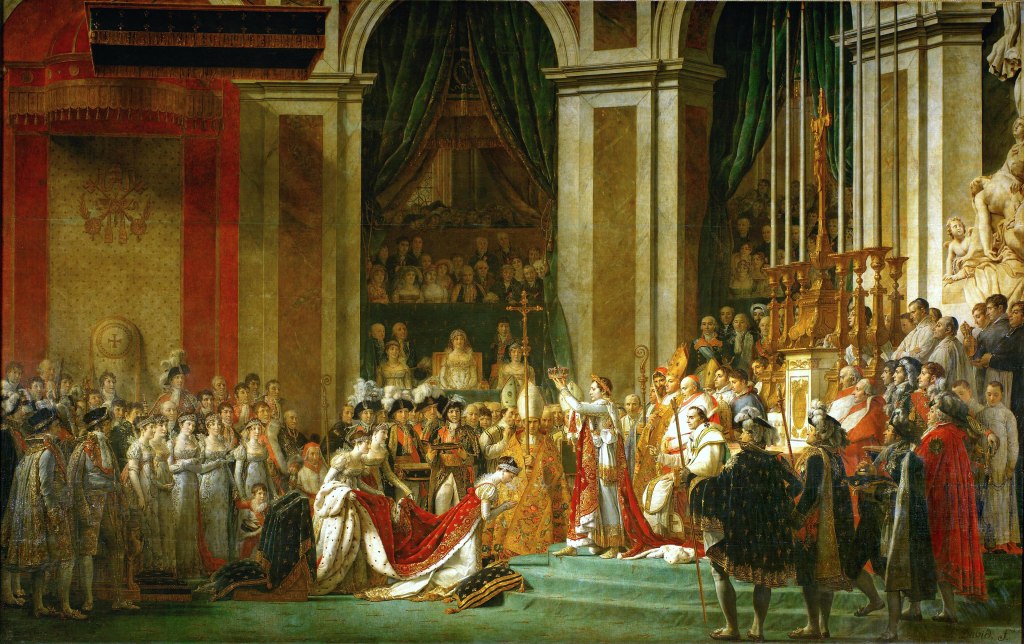
Ask any middle school civics student and they can tell you that the “executive power shall be vested in the President.” Section II states the powers of the president as being the Commander-in-Chief of the military, the president has the power to make treaties, appoint ambassadors, judges public Ministers and Consuls. The president can even propose legislation. Simply put, he is not only the Chief Executive but also Chief of State and Chief Legislator. But nowhere does it mention that he is Healer-in-Chief or High Priest. If a president can make his son-in-law a special envoy without portfolio, why not make himself a deity. Napoleon crowned himself emperor why can’t a president issue an executive order making himself a saint.

Here is where things tend to get sticky. The Constitution never references God, Jesus or a higher divine authority. Religion is only mentioned once in Article VI stating “no religious Test shall ever be required as a Qualification to any Office or public Trust under the United States.” And in the free exercise clause in the First Amendment it states: “Congress shall make no law respecting an establishment of religion, or prohibiting the free exercise thereof…”

It would appear to me, and I am not either a Constitutional or Biblical scholar, that any president is free to proclaim his or her’s relationship to a higher divine authority, particularly in a country like ours that holds Christian values so high. It may even be spiritually logical that our president is so in-tuned with the oneness of Christ that he follows what Jesus told his disciples in Matthew 28 that a president today is like the disciples of the past, and has “All authority in heaven and on earth has been given to me. Therefore go and make disciples of all nations…” And if it takes a few Tomahawk missiles and laser guided smart bombs to enhance your ministry, so be it.

In John, Jesus says that He is the light of the world. He tells the disciple that works he has been doing “they will do even greater than these.” He says ask me for anything in my name and I will do it. Maybe not wiping out aa whole civilization, just knock the fear of god into them. Getting a god to put a Sodom and Gomorrah on Iran would ensure a regime change and help in disposing of all that enriched uranium. And it would be divinely authorized.

However, there is a catch portraying one self as a disciple; and it is more than making a catchy internet meme; or proclaiming that you are all about the Gospel or publically reading the Bible with fellow Pharisees. Because throughout the New Testament, Jesus commands his followers to love God and love one and other. Paul tells the Galatians 5:13 “serve one another humbly in love.” Which really means showing some compassion for the down trodden and the sick. Paul tells the Ephesians to “Be kind to one another, tenderhearted, forgiving one another, as God in Christ forgave you.” You never heard Jesus issuing criminal indictments to those who disagreed with him.

What good is it, my brothers, if someone says he has faith but does not have works? Can that faith save him? If a brother or sister is poorly clothed and lacking in daily food, and one of you says to them, “Go in peace, be warmed and filled,” without giving them the things needed for the body, what good is that? So also faith by itself, if it does not have works, is dead.–James 2:14-17

Christian values are not just based on faith as James writes, that faith by itself without works, is dead. In a letter to Titus Paul writes that our people should “learn to devote themselves to good works, so as to help cases of urgent need, and not be unfruitful.” I am not sure but this does not look like the America I have been living in for the last 10 or so years. And certainly seeing a the leader of the free world portraying himself as a divine being while immolating Iran with Old Testament wrath is not channeling the Christ. It makes me wonder if the presidential meme should replace Jesus with Moses or Abraham and a time when turning the wrong way would turn you into a pillar of salt.

I have to ask what is next. It would not surprise me to learn that some sort of burnt offerings and animal sacrifices are being planned on the Ellipse Grounds on the National Mall celebrating 250 years of independence–without kings and religious potentates.

Regime Change: The Art of the Deal Meets The Art of War

I am sure somewhere in the annals of military history there are wars that were just “quick excursion.” The Franco/Prussian War of 1870 was quick and decisive as a European war can be but it lasted almost a year. A quick excursion sounds more like a raid, capturing Osama Bin Laden: In and out before anybody knows you were in. 

It is hard to believe that an air campaign bombing Iran with missiles, drones and smart bombs is a quick excursion. It is also hard to  argue with the Trump Administration’s reasons for bombing Iran. Most people can agree that Iran’s religious leaders, for almost 50 years, have exhibited a national religious psychosis that has kept the country in an 8th Century frame of mind. Instead of bombing them back into the Stone Age are we trying to push them into the A/I age?

It also would be delusional to believe that if the current Iranian regime was to have nukes they would behave rational with them; or any other weapon of mass destruction, considering they don’t play nice with the weapons that they already have. 

In many ways it makes sense that a regime change is in order. But we tried that already in Iran after World War II. The group we overthrew in the 1950s over threw our group in the late 1970s and now we are trying to overthrow them–again. Are we locked in some sort of irrational Twilight Zone circular reality that comes around like Haley’s Comet.

There is one point I would say is completely off the rails. This is the idea that it will be a short war. History indicates that we might be in for a longer haul, depending on objectives. And as crazy as it sounds it maybe over based sooner if we go by one man’s feelings. The rational for bombing, or going to war with Iran may seem logical. Practical? What is not rational or logical is to think a war can be won in two or three weeks simply by dropping bombs from above–or one man’s feelings.

Most wars have been irrational in terms of means or ends or both together. This is because choices for war are influenced by emotions, ideologies, domestic politics, and the tyranny of history, as well as by the more rational pursuit of material and strategic interests. Decisions for war have been almost invariably made by a handful of rulers and their advisors and entourages, and this is as true of democracies as authoritarian regimes.–Michael Mann, a Distinguished Research Professor of Sociology Emeritus at the University of California, Los Angeles, writes in  Yale University Press 

The Israelis have had a series of short duration wars with their Arab neighbors. In 1948 they dispatched their Arab foes in less than a year. Then in 1967 they fought a Seven Days War and then a twenty-day Yom Kippur War in 1973. In all of those wars Israel came out on top. I am not a historian by trade or a military history by practice; but, those engagements were called “wars.” I would call them battles in a continuous war starting with the UN carving out a hunk of Palestine and thus creating the state of Israel in 1947. 

On a side note, when Western Powers have gotten involved militarily in the Mideast, it has not turned out well. The French and British found out during the Suez Crisis in 1956. Egyptian President Gamal Abdel Nasser had nationalized the Suez Canal and closed the Straight of Tiran and the Gulf of Aqaba. The Anglo/Franco force, along with the Israelis tried to regain control the Suez Canal, and at the same time topple Nasser. They left within a year. According to Britannica “Nasser emerged from the Suez Crisis a victor and a hero for the cause of Arab and Egyptian nationalism….(and) Britain and France, less fortunate, lost most of their influence in the Middle East as a result of the episode.”

In 1982 President Ronald Reagan had the bright idea of sending the Marines into the region. His thinking was they could stabilize the fighting that always seems to be going on in Lebanon. Lebanon is not a Central American “banana republic” or Grenada. American troops in the Mideast tend to attract more attention, particularly those with bombs and guns. We left after terrorist blew up the Marine’s barracks killing 241.

I am not going to argue the logic one way or the other on the UN decision to create Israel. It seemed like a good one after WWII and still is a good one. The geopolitical/ religious change in Palestine just hasn’t worked out like the 1940s planners thought.

So if we look at the Mideast starting in1947 there has been some sort of conflict going on for nearly 80 years. We have to look back to Europe circa 1330 to The Hundred Year’s War to find that kind of stamina (or blunt trauma stupidity) to sustain a war of that length. England and France fought a for a century in war that resulted in France chucking the Brits out of Continental Europe. (* see link below for a more comprehensive list of long-lasting wars)

“There is no instance of a nation benefitting from prolonged warfare.”
― Sun Tzu, The Art of War

In 1568 there was an Eighty Year’s War or the Dutch Revolt. And some how in the same time frame Europe managed to roll in a Thirty Year’s, both ending in 1648. I am not sure what those wars settled but knowing just a tad of European history I would say it didn’t settle anything. 

A student who paid attention in their middle school US History class might recall the French and Indian War being fought in North America in 1756. In Europe it was known the Seven Year’s War. 

And, in April of 1861 President Lincoln called for 75,000 volunteers to serve three month enlistments after Confederate forces bombed Fort Sumter. That three month enlistment was a pipe dream.  Before long Lincoln was calling for 300,000 volunteers to serve three-year enlistments. Eventually Lincoln initiated a draft; and that still did not cover the entire war effort. 

But those wars were fought without strategic air bombardment. Let’s jump to World War II, the ultimate regime change war. It was a war that looked like it would be over within a year. In fact there was an eight month period in Europe called the “Phony War” where Germany, France and Britain just sat there looking at each other–I dare you. No. I double dare you.

Finally, Hitler took up the dare and blitzed France. In a month they went through France as if it was a wedge of Brie cheese. They chased the British once again off the continent leaving the Wehrmacht to sit at the English Channel looking across at the White Cliffs of Dover. Hitler turned the war over to the Luftwaffe. Its commander Hermann Goering, thought he could bomb his way into England. The German army continued to lookacross the channel. They had no way of getting “boots on the ground” in England. 

When the Luftwaffe gave up the British just kept calm and carried on. Hitler, however, turned his attention to the East. Before long he got snowed-in in Russia where his lightening warfare froze up and lost its thunder against the Red Army and the Russian winter.  

Meanwhile, the US Army Air Corps was batting around a theory with British Bomber Command that the war could be won by simply bombing Germany around the clock, and hence into submission. By destroying the military industrial complex Germany could be brought to its knees—and possibly a regime change could be had. An arial theory that appears to still be a work in progress and may never be proven.

Without a doubt the the British and American air forces’s Combined Bomber Offensive played a significant role in Germany’s defeat, but it was two ground offensives Overlord (D-Day) on the Western Front and Russia’s Operation Bagration in Byelorussian (Belorussia) on the Eastern Front in June and August of 1944 that brought Germany to its knees. From there it was a race to Berlin and a regime change. 

In the Pacific the Japanese Empire rolled up the Dutch the British and the Americans like a wet blanket in the early weeks of 1942. Within months they upended the control of just about the entire Pacific Ocean from the shores of Australia to India and the Himalayas and north to parts of the Aleutian Islands in the Bering Sea. Only after four bloody years of ground troops “island hopping” across the Pacific and two atomic bombs was there a regime change in Japan.

And did we not learn anything in Vietnam. After nine years, despite virtual air superiority over most of Vietnam, and some nifty named air campaigns like Rolling Thunder and Linebacker, and the belief that a country could be pushed back into the Stone Age with strategic areal bombardment, the US Air Force, Naval Aviation and more than 500,000 ground troops could not secure victory or a regime change. The best deal hoped for was hollowed out “Peace with Honor.”

A significant lesson concerned the ethical and political challenges associated with bombing campaigns, especially their impact on civilian populations and infrastructure. These issues prompted a reassessment of air campaign strategies to balance military objectives with humanitarian considerations. The war also demonstrated that air operations alone could not achieve decisive victory without effective integration with ground and naval forces.–armistia.com

I am not saying the Trump administration will not be successful in bombing Iran. At this point most of us have an only a vague idea of what success would be–in the short term or long term. We also need to be leery about first round successes. If military history bears us out it is a good chance this war will not end in few weeks or months. Which leads me to ask: What are 2,500 Marines going to do? If there is any consistency in military history, we might as well settle in for the long haul; and wait for a negotiated deal: “Peace with honor” has already been taken.” 

* https://247wallst.com/special-report/2023/04/30/these-are-20-longest-wars-in-history/