Not that I was looking; but I did not see one mention about the Apollo 11 moon landing 57 years ago. It was a race to the moon that ended on July 20, 1969. I know it was a basically a bunch of white men doing their thing; but it was still one of the greatest achievements of mankind, until they did it five more times. And now we are talking about going back in another race, this time with the Chinese. Historically speaking it should be a day remembered.
Like most Americans of that time I was swept up with the Space Progam. It was an outgrowth of the Cold War with the Soviet Union and became the noble quest of President John Kennedy who challenged the country to begin searching the final frontier. Or was it a modern version of Camelot with space as our search for the Holy Grail–on the moon.
We shall send to the moon 240,000 miles away, a giant rocket, more than 300 feet tall on an untried mission to an unknown celestial body, and then return it safely to Earth. But why some say the moon? Why choose this as our goal? And they may well ask, why climb the highest mountain? Why 35 years ago fly the Atlantic? We choose to go to the moon. We chose to go to the moon. We choose to go to the moon in this decade and do the other things not because they are easy, but because they are hard. Because that goal will serve to organize and measure the best of our energies and skills, because that challenge is one that we’re willing to accept. One we are unwilling to postpone. And therefore, as we set sail, we ask God’s blessing on the most hazardous and dangerous and greatest adventure that man has ever gone.–President John Kennedy “Moon Speech” on September 12, 1962 in Rice Stadium.
It is interesting in what motivates man. I really do think President Kennedy comparing space flight to sailing was apropos. He said, “we set sail, we ask God’s blessing on the most hazardous and dangerous and greatest adventure that man has ever gone.” But when you think about it, most voyages of exploration are hazardous and dangerous excursions into the “unknown.”
Take Ferdinand Magellan’s voyage to around the Earth. With five ships and 270 men he left Spain on September 20, 1519. His expedition returned September 6, 1522 with one ship and about 40 men–he was not one of them. Magellan’s three-year trip would be more on line with going to Mars today. Currently it would take Elon Musk about three years to get there and back.
But blasting off for the moon was an adventure on the level with the ancient mariners. I love Kennedy’s metaphor of sailing. It reminds me of John Masefield’s poem Sea Fever:
I must go down to the seas again, to the lonely sea and the sky,
And all I ask is a tall ship and a star to steer her by,
And the wheel’s kick and the wind’s song and the white sail’s shaking,
And a grey mist on the sea’s face, and a grey dawn breaking.
Man has always been blessed, or cursed, with a natural curiosity of what is on the other side of the mountain or beyond the horizon. When I think of going into space it reminds me of the sea voyages of the ancients, particularly the Greeks. The various Greek city-states might have been in competition for land in Greece but it was the open sea that allowed them to expand their horizons.
Geographically Greece is on the Balkan Peninsula with the longest coastline in Europe. The real factor though is that the land on this peninsula is mountainous–80 percent. Greek city-states trying to feed growing populations on mountainous land became a real problem. The solution was to establish over-seas colonies that relieved over population; but colonization also increased trade bringing to the city-states much needed food stuffs from as far away as the Black Sea and Spain. (I am not sure if the concept of colonizing the moon or Mars would either ease any over population issues on Earth or create trade.)
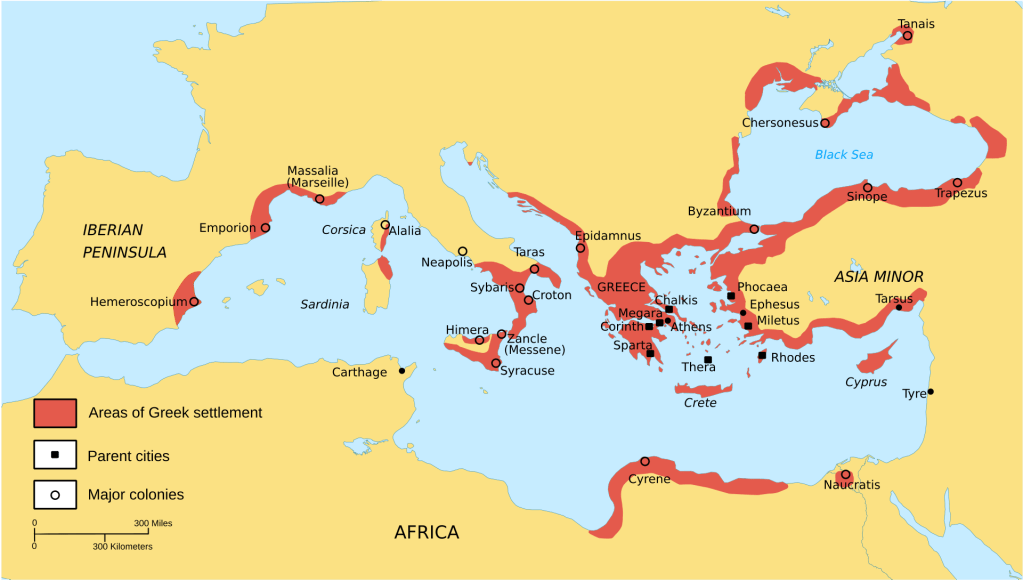
Greek sea travel was not so much the age of sail as it was a man-powered voyage. Facts and Details says, “a ‘long day’ journey by an oared vessel” could be 140 miles “believed to be 16 hours traveled at seven or eight knots an hour.” Most Greek mariners hugged the coast line using line of sight and recognizing land features. This type of sailing made it easier to navigate. Plus, it made necessary stops for resupplying essential needs, like fresh water, easier.
Although longer voyages across the Mediterranean were not uncommon it wasn’t until more sophisticated navigational instruments were developed, like the Astrolabe, did mariners become more confident in pushing further out to sea. It took centuries for Mediterranean sailors to refine navigation that would allow sailors, like Columbus and Magellan, to take longer voyages across the Atlantic and to circumnavigate the globe. It took centuries to build better ships to utilize better navigation.
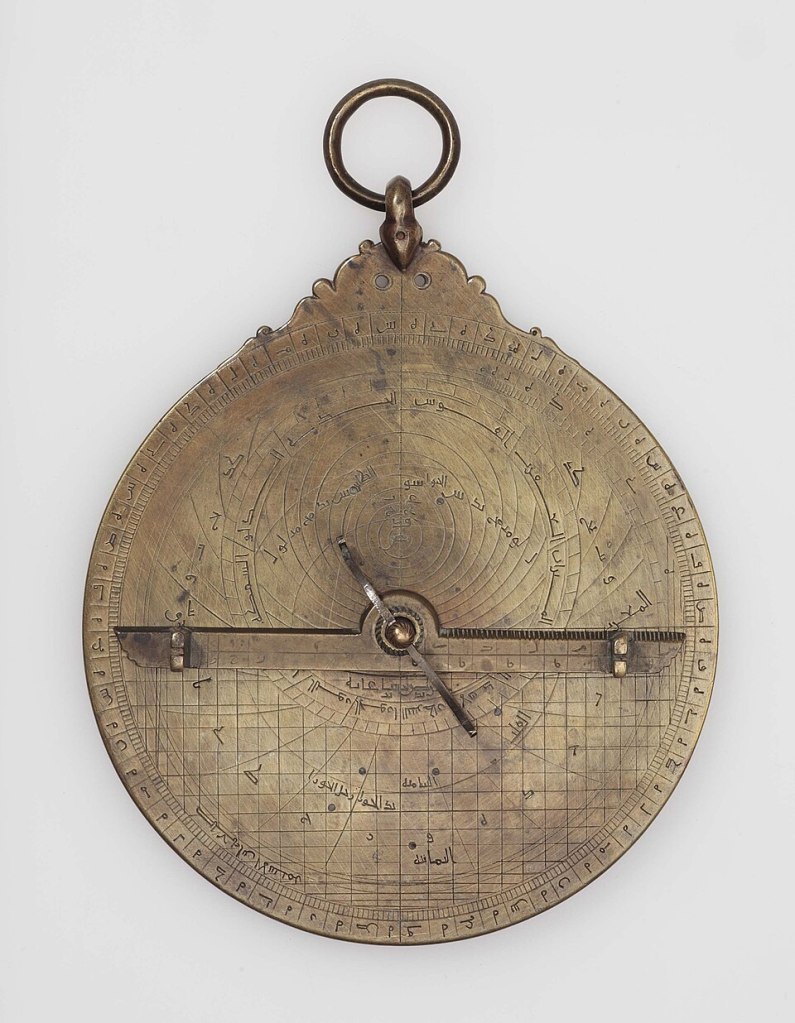
“The astrolabe, which is a precursor to the sextant, is effective for determining latitude on land or calm seas. Although it is less reliable on the heaving deck of a ship in rough seas, the mariner’s astrolabe was developed to solve that problem. It is able to measure the altitude above the horizon of a celestial body, day or night; it can be used to identify stars or planets, to determine local latitude given local time.”–Wikipedia
Khalili Collections /via Wikimedia Commons
And since we are talking about seafarers one cannot omit the Polynesian. Seafarers whose navigation skills, according to Wikipedia relied “heavily on constant observation and memorization. Navigators have to memorize where they have sailed from in order to know where they are. The sun was the main guide for navigators because they could follow its exact points as it rose and set. Once the sun had set they would use the rising and setting points of the stars. When there were no stars because of a cloudy night or during daylight, a navigator would use the winds and swells as guides.”
In the 1960s NASA was tasked with assembling, scientists, fledgling aerospace companies and test pilots to come up with how to traverse 240,000 miles of open space and put men on the moon–with no stop overs. And, to do it in less than 10 years. Unlike past seafarers NASA had to invent and improvise. There was very little institutional knowledge of human space travel. What they did from Kennedy’s Moon Speech in 1962 to that one giant leap in 1969 is really a technical miracle. Especially if we look at what they had to use compared to what we have today.
For instance if we just look at the computer used on Apollo 11: the Apollo Guidance Computer. Apollo 11Space called this 70 pound computer, about the size of carry-on luggage, “a pocket sized pioneer (for its time.)” It was a 20th century astrolabe.
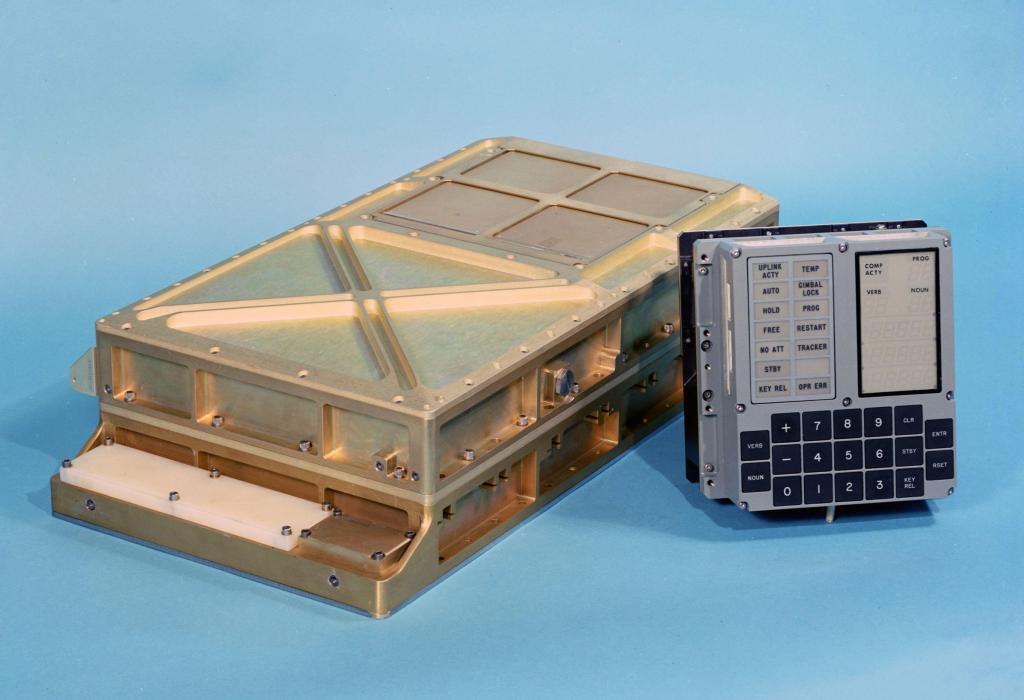
Each Moon flight carried two AGCs, one each in the command module and in the Apollo Lunar Module. AGC in the command module was the center of its guidance, navigation and control (GNC) system. The AGC in the lunar module ran its Apollo PGNCS (primary guidance, navigation and control system).”–Wikipedia
The original uploader was Grabert at German Wikipedia., Public domain, via Wikimedia Commons
I am not some sort of techno-geek. I do not know the first thing about what RAM is or how it works. I know nothing of processing speeds, or what 4G or 110 Megabits per second translates to. So comparing the AGC on Apollo 11 to the iPhone by the numbers means nothing until it is put into layman’s terms. I find what RealClear Science says “that the iPhone in your pocket has over 100,000 times the processing power of the computer that landed man on the moon” pretty impressive. There is our giant leap.
A leap, to paraphrase John Gillespie Magee, Jr. poem High Flight: Man has “slipped the surly bonds of Earth” and has “trod the high untrespassed sanctity of space,” and has “touched the face of God.”
Whether it was the ancient sailors on the seas or the astronauts in space, it really gives meaning to what Masefield meant when he said “all I ask is a tall ship and a star to steer her by.”