War, What is it Good For…Absolutely Something?

In June of 1970, several months after President Richard Nixon decided that the best way to get out of the Vietnam War was to invade Cambodia, the hit song War was released. Originally a Temptation song, Edwin Stars’s version become a Billboard Number 1 hit. It held that spot for three weeks in August and September; and was later rated the Number 5 song of 1970.

Most of us are familiar with the bold drum opening and guttural question shouted out in the song: “War, huh yeah! What is it good for? Absolutely nothing uhuh…”

It must be good for something or someone because it seems as if we humans are constantly at war or continually marching towards it. If one pursues the files of history we come across several significant political and military events that occured in the month of June that sit right up with what is going on in the Ukraine and Gaza.

The first event that comes to mind is D-Day, the “Longest Day,” June, 6, 1944. It was the largest amphibious, airborne assault in history. Its aim was to liberate Europe from Nazi domination. Once the Allies established a foothold in Nazi occupied Europe, it was the beginning of the end for Hitler and his Nazi cronies quest for a thousand year Third Reich. A Germanic fascist pipe dream built from a belief that Charlemagne’s Holy Roman Empire was the First Reich.

The National Socialist German Workers’ Party, according to historians, the complicated moniker reveals more about the image the party wanted to project and the constituency it aimed to build than it did about the Nazis’ true political goals, which were building a state based on racial superiority and brute-force governance.–snopes.com

Three years earlier, on June 22, 1941, Hitler launched Operation Barbarossa, the invasion of Russia. This invasion was the largest military operation in history. The invasion had more soldiers, armored vehicles, artillery and aircraft than any offensive in WWII. It resulted in four years of brutal war. The Eastern Front racked up more death than the all the other theaters of war including the North Africa, Italy, Pacific, India and China Fronts. Russia alone lost 8.6 million soldiers and another 26 million Russians citizens were killed in WWII. It is estimated that 1,700 towns and another 70,000 villages were destroyed. This does not include a death toll from the countries that the two armies fought through to get each others homeland. I really don’t want to sound flip, but I will. It makes what is going on in the Ukraine and Gaza look more like urban renewal compared to the carnage of WWII bombing campaigns, concentration camps and nuclear attacks on Japan. But it is still War, and to those who are experiencing it–“it ain’t nothing but a heartbreaker…’cause it means destruction of innocent lives…

On June 28, 1914 “The Great War, The War to end all Wars,” was instigated with the assassination of Austrian Archduke Franz Ferdinand. For the next four years European troops gassed each other, dug trenches throughout France and Belgium and started aerial bombardment of cities: all giant steps forward for mankind. France, Britain and Germany had a whole generation gutted from their populations creating social and economic upheaval. “The point of war blows my mind, War has caused unrest within the younger generation…”

As for the Russians, the 500 year rule of the Tsars came to an end from the weight of the war. Eventually, the Bolsheviks under Lenin took control bringing about the world’s the first communist socialist government. The end of WWI just reset the pins back up to be knocked back down again in WWII.

One might have thought the Europeans would come to their senses, but not so. As the Soviet Union slowly rusted away from Cold War pressures, the grip it held behind the Iron Curtain started to disintegrate. It could be argued that the Balkan Wars of the 1990s started with the breaking apart of the six republics that made up the federated Yugoslavia. According to United Nations International Criminal Tribunal for the former Yugoslavia, “experienced a period of intense political and economic crisis. Central government weakened while militant nationalism grew apace. There was a proliferation of political parties who, on one side, advocated the outright independence of republics and, on the other, urged greater powers for certain republics within the federation.” The melting pot that was Yugoslavia was beginning to boil over.

Political leaders from used nationalist rhetoric to erode a common Yugoslav identity and fuel fear and mistrust among different ethnic groups. By 1991, the break-up of the country loomed with Slovenia and Croatia blaming Serbia of unjustly dominating Yugoslavia’s government, military and finances. Serbia in turn accused the two republics of separatism and the displacement of both Croats and Serbs. –United Nations International Criminal Tribunal for the former Yugoslavia

This nationalist rhetoric began “to erode a common Yugoslav identity and fuel fear and mistrust among different ethnic groups. On June 25, 1991, Slovenia became the first of six Yugoslav republics to declare its independence.” From there it became a domino effect with Croatia declaring its independence. Its claim for independence became a back-and-forth conflict with Serbia, which resulted in more than 20,000 deaths.

But the disintegration of Yugoslavia was just getting warmed up. As Gill Scott Heron sings in B-Movie “…first one wants freedom, then the whole damn world wants freedom…” To intensify hostilities, throw in a spark of religious difference to the already centuries of smoldering ethnic divisions. Without the central control of the communist government a flash of ethnic cleansing ignited In Bosnia and Herzegovina. “It is estimated that more than 100,000 people were killed and two million people, more than half the population, were forced to flee their homes as a result of the war that raged from April 1992 through to November 1995.”

And then there was Kosovo. “Serb forces heavily targeted (Albanians) civilians, shelling villages and forcing Kosovo Albanians to flee. NATO entered the fray with a 78-day-long campaign of air strikes against Serbian targets in Kosovo and Serbia. In response, Serb forces further intensified the persecution of the Kosovo Albanian civilians.”

This year long war, according left more than 10,000 civilians killed or missing and displacing thousands. When the shooting finally ended the UN estimated that, “Some 750,000 Albanian refugees came home and about 100,000 Serbs – roughly half the province’s Serb population – fled in fear of reprisals.

In the 19th century, the U.S. Government’s drive for expansion clashed violently with Native Americans’ resolve to preserve their lands, sovereignty, and ways of life. This struggle over land has defined the relationship between the U.S. Government and Native tribes.–National Archives

The United States had its June moment, too. This moment actually starts on April 29, 1868 with a treaty signed between the U.S. Government and the Sioux Nation at Fort Laramie. Native Americans have been scammed out of their lands signing treaties since Colonials first crossed the Appalachian Mountains. But yet here they were signing another treaty. According to the National Archives The Treaty of 1868 “recognized the Black Hills as part the Great Sioux Reservation.” The treaty “set aside for the exclusive use by the Sioux people.” That is until Gold was discovered in 1874.

It is obvious that the Plains tribes did not hear about what happened to the Cherokee and The Trail of Tears when gold was discovered on their land in Georgia in 1830. Or maybe they had and saw history repeating itself. Because when interloping miners in the Black Hills discovered gold in 1874 the land was about to change hands. By the end of 1875 and early 1876 the gold rush was on trampling The Treaty of 1868 in a cloud of gold dust.

But unlike the 1830 Indian Removal Act, the Great Plains Native Americans had no intention of walking off to reservations under U.S. Army escort. Granted, a large portion of the Native American population were on the reservation, but those that were not raised concerns among miners and the government. There were skirmishes and battles between the Army and Native Americans. But none as the the battle that would take place at the Little Bighorn River. As one Indian Inspector wrote: “The true policy in my judgement is to send troops against them in the winter, the sooner the better, and whip them into subjection.”

The U.S. Army was tasked with whipping the Sioux, Cheyenne, Crow and other tribes that refused to relocate to their reservations into submission. A military operation of three columns of infantry and cavalry were sent out from various forts and directions. Any coordination between distant columns quickly fell apart and was exacerbated when Lt. Colonel George Custer galloped off on his own. What Custer found was was a Native American encampment of about 7,000 people that included 1,500 to 2,000 warriors.

The Battle of Little Bighorn was really a minor affair compared to already mentioned battles and wars. However, it was the worst defeat the U.S. Army suffered in all of the battles fought with Native Americans; and possibly one of the most complete defeats the Army has ever suffered. Although, the casualty figures were low, it was a massacre. All 210 soldiers with Custer were killed. It is estimated that Native Americans killed was around 100. As for the duration of the battle, according to some sources, Custer’s last stand lasted less then a half-hour. One Native American survivor later said the fighting lasted only “as long as it takes a hungry man to eat a meal.”

Custer’s Last Stand shocked the nation that was celebrating its Centennial. How could such a defeat happen? If anything, Custer’s defeat, as decisive as it was, only increased the demand to relocate the Plains tribes to reservations. It may have been Custer’s last stand, but it was also the Native Americans last stand.

The Americans Indian Wars started with the massacre of the first settlers at Jamestown in 1622 when the Powhatan tribe killed nearly 350 colonists. Of course no massacre goes unpunished. Colonist began attacking Native American villages and hence the dogs of war are unleashed. For more than 260 years a crude and brutal frontier justice was practiced between Native Americans and the U.S. Army, farmers, miners and settlers moving west. The war was officially ended with another massacre at Wounded Knee in December of 1890.

Trying to answer “what war is good for” could come down to why people go to war in the first place and what they are willing to die for. Mexican revolutionary Emiliano Zapata said, “It is better to die on your feet then to live on your knees.”

Others might see war as Prussian General Karl von Clausewitz saw it, as “the continuation of politics by other means.” The definitions and the rationalization for wars are varied. Today we could ask what was Hamas thinking when it invaded Israel? What makes the Ukraine land so special that Putin would launch a “special operation” to have it become part of Russia? We could then question what good can come out of supporting combatants. What good will Iran get supporting Hamas or the U.S. supporting Ukraine?

However logical (or illogical) a war starts, it soons starts to slide down the slippery slope of faulty reasoning into some sort of elongated circular reasoning making it impossible to determine if the death and destruction, the outcome have any worth.

Gaza: A Battle of Biblical Proportion*

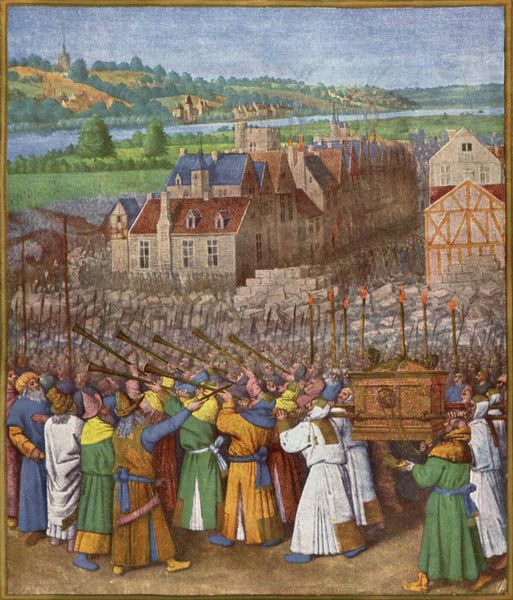
If the Abel-Shittim area east of the Jordan River had a newspaper in 1400 BCE, the headlines one day might have read: Joshua defeats Canaanites at Jericho. Israelites burn the whole city.

The Israelites storm Jericho with the Ark of the Covenant.

Jean Fouquet, Public domain, via Wikimedia Commons

Joshua’s march into the Promised Land had just began. However, the second battle at Ai did not go so well for the Israelites. It is hard for me to say because I was not at Joshua’s war councils. But I would assume that most Israelite leaders of the time were familiar with Deuteronomy Chapter 20:10, “When you march up to attack a city, make peace…If they refuse to make peace and they engage in battle lay siege to the city. When the Lord your God delivers it into your hands, put it to the sword all men in it. As for the women and children, the livestock and everything else in the city, you may take these as plunder for yourself.”

But, if you read down to verse 16 it says if “God is giving you an inheritance, do not leave alive anything that breathes. Completely destroy them–Hittites, Amorites, Canaanites, Perizzites, Hivites and Jebusites–as the Lord your God has commanded you.” It doesn’t look like the verse mentions Palestinians. Not being familiar with Middle East ethnic descent and genealogy, I will not speculate on any sort of Biblical DNA connection to today’s Palestinians.

However, according to the National Institute of Health’s Pubmed National Center for Biotechnical Information, “Archaeologic and genetic data support that both Jews and Palestinians came from the ancient Canaanites, who extensively mixed with Egyptians, Mesopotamian, and Anatolian peoples in ancient times. Thus, Palestinian-Jewish rivalry is based in cultural and religious, but not in genetic, differences.”  Talk about an ancient melting pot.

But keep away from the devoted things, so that you will not bring about your own destruction by taking any of them. Otherwise you will make the camp of Israel liable to destruction and bring trouble on it.

Joshua 6:18 New International Version

It appears to me that the God of the Old Testament had some serious issues with the Israelites of that era. Take the Ten Commandments. The first two deal with God. He flat told the them I didn’t bring you out of the clutches of Egyptian deities, so don’t think about having other gods before me. And don’t let me catch you dancing around idols and wearing amulets. I think this is why God instructed them to what may be called devoted destruction. Basically, don’t be carrying back any of that junk from your conquered people. In Exodus 20:20 God tells Moses, “Whoever sacrifices to any god other than the Lord must be destroyed.” Maybe it is a short jog from carrying off idolitory war booty to finding yourself on the wrong side of the First and Second commandment.

For instance, Saul, the chosen King of Israel, ran afoul of God. In 1 Samuel 15 Saul was told to “attack the Amalekites and totally destroy all that belongs to them. Do not spare them; put to death men and women, children and infants, cattle and sheep, camels and donkeys.”

But Saul did not listen to his marching orders from God. He spared Agag, king of the Amalekites and took with him the “best of the sheep and cattle, the fat calves and lambs—everything that was good. These they (the Israelites) were unwilling to destroy completely, but everything that was despised and weak they totally destroyed.”

After the battle the prophet Samuel shows up in Saul’s camp. He ask Saul about “all this bleating of sheep in my ears? What is this lowing of cattle that I hear?” Saul like any good leader caught not following orders, blamed it on his underlings, his soldiers.

Samuel, however, was having none of it. He said, “Let me tell you what the Lord told me last night…he sent you on a mission, saying, ‘Go and completely destroy those wicked people, the Amalekites; wage war against them until you have wiped them out.’  Why did you not obey the Lord?”

Saul was not talking his way out this. In fact, he may have done his best Flip Wilson imitation, if Flip was around at that time, saying the “Devil made me do it.”

Let’s fast forward to the present day. There is nothing flip about what is happening in Gaza. The death and destruction could easily be compared to the Romans salting Carthage; or some of the bombing campaigns of World War II; or what is taking place is parts of the Ukraine. It is easy to say that this all started with hang gliding terrorist flying into Israel on October 7. But did it?

Senate Majority Leader Chuck Schumer is calling for new elections in Israel to replace Prime Minister Benjamin Netanyahu. Schumer says, “The world has changed — radically — since then, and the Israeli people are being stifled right now by a governing vision that is stuck in the past.”

Schumer might be right, although, he did not indicate how far in the past. According to the highest elected Jewish official in the United States government, Netanyahu is allowing “his political survival to take precedence over the best interests of Israel ” But is his he?

I don’t know that much about Netanyahu’s right wing religious leaning government. But if the Zionists are as dedicated to God as some of our Evangelicals here in America, they may be more worried about running afoul of God then world opinion. Especially when Hamas is preaching “From the River to the Sea.”

God sent them into the Promised Land and a multitude of people from Joshua’ time to now have run them out what they believe is rightly theirs. The long Biblical story of this area has the Jews going up against some of the strongest empires in history: Assyrians, Babylonians, Persians, Greeks and Romans to name some of the ancients they battled. And now Hamas.

I am not condoning or defending Israel’s actions in Gaza; but from an Old Testament point of view it does not surprise me.

*As little as I know about the Bible I know even less about the Koran and Islamic writings and history. So this blog may sound one sided. I am sure if it were the Israelis being pushed into the sea we could find numerous Islamic writings that would religiously justify Palestinians’ actions if the tables were reversed.

https://www.timesofisrael.com/senior-hamas-leader-quran-tells-us-to-drive-jews-out-of-palestines-entirety

pubmed.ncbi.nlm.nih.gov

Variations on a Theme on the House of Representatives

The recent four day 15 ballot vote marathon to determine who the next Speaker of the House reminds me of classical music. Classical music has always been a mystery to me, much like the comings and goings of Congress. I know Classical Music did not start out like Willy and the Poor Boys out on the corner, down on the street–“bring a nickel, tap your feet.” It’s developed through several centuries of evolution starting out from monks chanting away in church music to Bach, chamber music, secular operas like The Marriage of Figaro and flying Valkyries in Norse mythology, to today’s atonal compositions that sprang forth in the early 20th Century. It is a musical history spans nearly 400 years.

One term that I associate with classical music is a “variation on a theme.” Take Sergei Rachmanioff’s Rhapsody on a Theme of Paganini. Here is where it gets confusing. Niccolo Paganini was an Italian violinist and composer born in 1782 and died in 1840. According to Wikipedia he “was the most celebrated violin virtuoso of his time, and left his mark as one of the pillars of modern violin technique.” His 24 Caprices for Solo Violin Op. 1 has “served as an inspiration for many prominent composers.”

The Genoa born Niccolo Paganini was a European touring rock star of the early 1800s.

http://paganininiccolo.blogspot.it, Public domain, via Wikimedia Commons

Rachmaninoff, on the other hand was Russian/American pianist and composer who died at the age of 69 in 1943. According to utahsymphony.org. Paganini’s 24th Caprice “has a tonal structure that is ripe for variation.” And from what I can determine many composers through time have created some sort variations and themes off of Paganini’s work.

I am going to stop right there on the music because I feel like I am getting way over my head. It is all beginning to sound like an apple and orange sort of comparison. It is like comparing Tom Brady, a modern day quarterback, and Walter Johnson, a baseball pitcher from the early 1900s. They both threw a ball but they did it at different times and used different balls. Somehow in music it works but I cannot picture Brady on the pitcher’s mound with a football shaking off the catcher’s signals.

Washington Senator, Walter Johnson one of the greatest pitchers in baseball pitched for the Senators for 21 years (1907-1921). He won 417 games and not one was voted on by the House of Representatives.

Library of Congress, Public domain, via Wikimedia Commons

Take poor Kevin McCarthy. He is no political virtuoso. In fact some say his skills are suspect. He looks like a weekend kayaker on a Class V rapids. His election to become Speaker of the House will go down in history. For what, I am not sure. At the very least he was played like an historical variation on a theme.

Sitting on a sofa on a Sunday afternoon
Going to the candidates debate
Laugh about it, shout about it
When you've got to choose
Every way you look at it you lose

Mrs Robinson by Simon and Garfunkel

This is not the first time the House has had to deal with this sort of legislative mobocracy. Take the 1800 Presidential election between President John Adams and Thomas Jefferson. The first time the House had to make an odiferous hold your nose choice. Bipartisan bickering was the theme of the day with partisan newspapers sniping away at anything that crossed onto their side of the street. The framers of the Constitution failed to take into consideration party factions putting up individuals to run specifically for president and vice president. In this election the Jeffersonians, Republicans (later to become Democrats) voted lock step for Jefferson as president and his running mate, Aaron Burr. The problem is that each had 73 electoral votes–a tie. Oops. John Adams, the Federalist nominee, received 65 while his veep choice recieved 64 to avoid the confusion of a tie had they won. The House found themselves with a rat stuck in the plumbing. The Constitution says the candidate with the most electoral votes becomes president and the candidate with the next highest becomes Veep. In some ways this was like the 2000 election in when officials examined hanging chads to determine the president.

Aaron Burr, a patriot, the third Vice President and a true American scoundrel just behind Benedict Arnold in notoriety.

John Vanderlyn, Public domain, via Wikimedia Commons

The rat in the pipe was Aaron Burr. He was a smarmy guy, a cad known as much for his carnal exploits as his political and business hustlings. He was later tried for treason and acquitted. But in 1800, Burr brought Jefferson New York’s 12 electoral votes and the presidency. It was twofer for Burr because not only did he give Jefferson the presidency but at the same time he gave Federalist Alexander Hamilton a sharp poke in Hamilton’s political eye. Burr being a Republican and Hamilton a Federalist. Hamilton and Burr did not get along in New York politics and the 1800 election did nothing to improve their relationship. It only hasten their meeting on a a New Jersey dueling ground several years later.

So you think we think are divided now. Today, we are just playing a variation on an 1800 theme. This election was the first real game of political cutthroat where ties didn’t go to the runner. A lot of personal animosity played into this election. Hamilton and Burr did not play well with each other; and, Hamilton and Jefferson had been smacking each other around in Washington’s cabinet from the beginning, pulling at the old General’s ear for his soul. They took their personal battles into the fledgling press ripping each other apart like hyenas on carrion rotting away in the Serengeti. Party faithful and stalwarts shared this acrimony. And we haven’t even added the real loser in this mess, President John Adams’, and his cantankerous political and personal outlook as the first one-term president. After the election he shuffled off to Braintree and political exile–sort of like a ticked off unindicted Nixon.

The three remaining ambitious patriots created what Star Trek fans know as the Kobayashi Maru–the no win scenario. Despite being the vice presidential candidate Burr found himself within an arm’s length grasp of the presidency. The 1800 version of Gulum/Smeagol waiting to snatch the One Ring to unite them all from Jefferson. One catch though, everybody had to scale Mount Doom–The House of Representatives.

Much like the National Football League, the Constitution does not do ties very well. Most of the time the losing teams walk away after an overtime game feeling like they were cheated out of win. The framers, however, in their parochial wisdom, threw tie games into the House giving each state one vote to break the presidential tie. This would be like letting sports writers or gamblers pick the winner of tie games. At the time there were 16 states and nine votes were needed to cross the goal line.

The real kicker for Jefferson was that the old Congress still sitting was a Federalist Congress and they had no love for the red-headed Virginian. The Republicans swept the new Congress but those newly elected Republicans had not been seated. This “never Jefferson” Federalist Congress held him in high contempt. Jefferson’s chances were slim. The first ballot took place on February 11, 1801. Eight states voting for Jefferson and six voting for Burr with two states split. It remained that what for the next week and 34 more ballots.

Hamilton the clairvoyant sees Federalist support growing for Burr. Although not a member of Congress, Hamilton is the de facto leader of the Federalist party. Before 1800 is over he begins a letter writing campaign to fellow House Federalists urging them to vote for Jefferson. This perplexes many of the “never Jeffersonians.” Making a deal that hands the presidency over to their arch enemy is like replacing Saint Peter at the Pearly Gates with Beelzebub. But as the old saying goes: The devil is in the details. The country is facing its first apocalyptic moment.

Mr. Jefferson, though too revolutionary in his notions, is yet a lover of liberty and will be desirous of something like orderly Government – Mr. Burr loves nothing but himself – thinks of nothing but his own aggrandizement – and will be content with nothing short of permanent power in his own hands.

Alexander Hamilton to Congressman Harrison Gray Otis

Say what you will about Jefferson, and Hamilton said a lot through the years. But despite their drastic differences in principles and attitudes on government, Hamilton saw the that Jefferson’s principles heavily outweighed Burr’s ethics, or a lack thereof. In a letter to Massachusetts Congressman Harrison Gray Otis “In a choice of Evils let them take the least – Jefferson is in every view less dangerous than Burr.”

Eventually Hamilton convinced enough Federalist that Jefferson would not tear the government down and turn the US into a junior partner in the French empire. On February 17, on the 36 ballot 10 states voted for Jefferson with two states not voting for neither Jefferson or Burr making Jefferson the third president of the United States.

History like music may be written down and cataloged in a library–Googled today. But every now and then, like McCarthy’s Speaker election, we get to witness a variation on theme that reminds us of what once was, still is, and yet to come.


A Capitol Hill to Die On

Five members of the far-right libertarian militia group known as the Oath Keepers are being charged with with seditious conspiracy for their suspicious behavior during the January 6th Trump rally at the Capitol to disrupt Congress from certifying the 2020 Presidential election. Some called it a tourist lead coup.

According to CBS News seditious conspiracy is “a Civil War-era crime accusing the defendants (Oath Keepers) of seeking to overthrow, levy war against, or prevent the execution of U.S. law.” Or as the Oath Keepers claim: they “were in Washington, D.C., that day as security personnel for the president’s rally.” Their “primary role was apolitical and meant to provide volunteer disaster relief and security.” They were an amalgam of the Salvation Army and FEMA. One of their main fears, however, was to prevent the ubiquitous Antifa and other left-wing assailants from assaulting the White House.

The Oath Keepers reasoning is straight from Cheech and Chong’s 1971 album of the same name, track three: Trippin’ in Court. A lawyer is trying to defend his client who has been arrested with 24 pounds of marijuana by saying his client merley found the pot and was on his way to the police station to turn the contraband in. To the layman on the street this may seem suspicious–but in today’s conspiracy driven reasoning it’s a valid defense strategy.

The January 6th the stop the steal movement is not the first time Congress has been disrupted and had to hunker down from doing its legislative duty. Way back in June of 1783 about 400 disgruntled Pennsylvania Militiamen were seeking back pay for their years of service during the Revolutionary War. The British had been defeated at the Battle of Yorktown in October of 1781. Preliminary peace negotiation were going on with Great Britain–and the soldiers still had not been paid. Their fear was not from Antifa and far left socialist but that Congress would send them home without pay. Out of sight out of mind. In fact, Robert Morris, who was in charge of finance for the Confederation said it could take years to figure out how much was due individual soldiers. On top of this was a worthless currency. Once furloughed and at home, and with Congress’s financial record of paying off the Confederation’s bills, they felt they would never get paid or receive any bonuses, land patents promised when they had originally enlisted.

Much like the 117th Congress, the Continental Congress of 1783 found itself besieged and crying for militia assistance. On January 6th Congressional leaders sent out calls to Maryland and Virginia governor’s for National Guard help. Calls went out to the Defense Department for help in bolstering the thin blue line that was being stretched beyond the bike-rack defensive perimeter of the Capitol. Capitol and DC Metro Police decided that Capitol Hill literally was the hill to die on. It was their valiant effort that held the citadel of the Republic from what some assumed was an angry mob of tourist without gallery passes.

Congressmen in 1783 also called out to a state for help, Pennsylvania Governor John Dickinson. Congress wanted him to call out the militia to protect what was then the federal government. For some odd reason, Dickinson and his Executive Council sat on Congress’s request for a day. And then just basically said your on your own. Various reasons have been floated around why Dickinson and the state of Pennsylvania did not send help. As a former militia officer, Dickinson may have had sympathy for the soldiers’ position. There is some speculation that the militia being called out may have joined the mutineers. Or maybe it was a state’s right position where they were not going to respond to demands from Congress.

What we do know is that Alexander Hamilton, a Congressional delegate and a former colonel in the Continental Army, convinced the soldiers to let Congress adjourn and meet later to tackle the soldiers demands. Without Pennsylvania’s protection some delegates suggested that the capital should be moved. Given the opportunity to skedaddle Congress “left the building”–and Philadelphia. Without those reassurances of protecting their safety, Congress up and moved the capital out of Pennsylvania.They crossed the Delaware River and set up shop in Princeton, New Jersey.

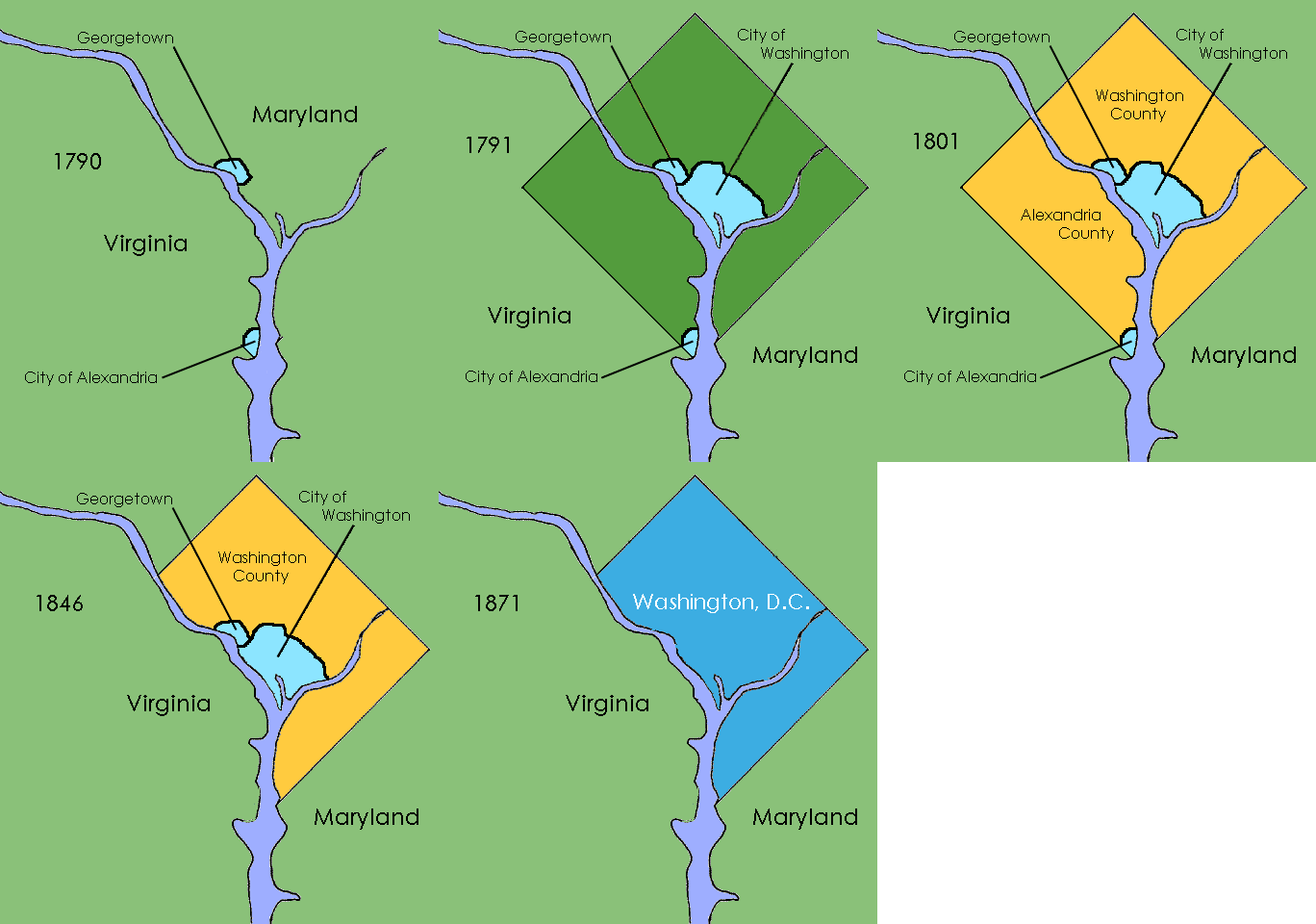
George Washington did send about 1,500 Continental soldiers to Philadelphia, all for nothing. Once Congress moved across the river the soldiers lost heart in their demands and relinquished the fate of their back pay to a future time. The big consequence of this mutiny was when the Constitutional Convention meet in Philadelphia in 1787. Some of those delegates present remembered their last meeting in Pennsylvania and how the state could not protect the government. The framers of the Constitution felt the need to create a federal district under Congressional control. Hence, the creation of the District of Columbia as the capital of the United States.

epicAdam, CC BY-SA 3.0 https://creativecommons.org/licenses/by-sa/3.0, via Wikimedia Commons

To exercise exclusive legislation in all cases whatsoever, over such District (not exceeding ten miles square) as may, by cession of particular states, and the acceptance of Congress, become the seat of the government of the United States, and to exercise like authority over all places purchased by the consent of the legislature of the state in which the same shall be

Article One Section 8

Creating a federal district under Congressional control sounded like a good idea at the time. But it didn’t appear to play out the way the framers intended. On January 6th it seemed like the 117th Congress was no better off, and subjected to the same lack of power in their pleas for help as the delegates to the Continental Congress in Philadelphia were on June 20th 1783.

As for the Oath Keepers, their service is suspect at best and maybe judged seditious. Congress’s ability “to exercise like authority” over Washington D.C. creates the impression they have no more control of an angry mob at their doorsteps than their predecessors did in 1783.

some suggested links

https://military-history.fandom.com/wiki/Pennsylvania_Mutiny_of_1783

https://journals.psu.edu/pmhb/article/view/43383/43104

https://www.battlefields.org/learn/articles/early-capitals-united-states

https://washington.org/dc-information/washington-dc-history#


The Unregulated Mob and the Militia

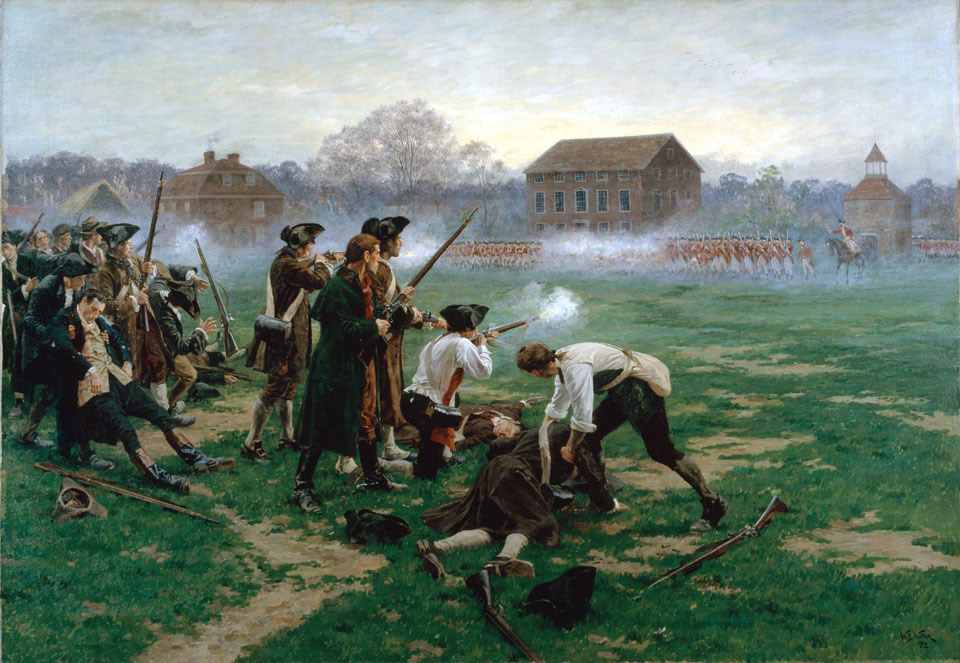
A well regulated Militia, being necessary to the security of a free State, the right of the people to keep and bear Arms, shall not be infringed. The Battle of Lexington by William Barnes Wollen National Army Museum Wikimedia Commons

I was nowhere near Kenosha, Wisconsin on the night of August 25, 2020 when rioters and looters met up with Kyle Rittenhouse and other so-called militiamen. They might feel like modern Minutemen but others might call them, and rightfully so, vigilantes. In either case, I could not begin nor would I try to unravel the mind frame of the individuals, armed or otherwise running through the streets that night. To say that there was any rational thought taking place that night is not really up for debate. The same could be said of the Second Amendment debate following Rittenhouse’s acquittal.

Many are saying that Rittenhouse’s trial is a victory for self-defense and the Second Amendment right “to keep and bear arms.” I am not really sure if that it is so. The right to bear arms will always be debated but never be in jeopardy. But probably one of the most ignored phrases or clauses in the Constitution one that gets batted around like a handball; and gets lost in any Second Amendment debate, is the first phrase concerning the necessity of a “well regulated Militia.”

There are many arguments about gun ownership and a militia. The exact legal definition of “well regulated” civilian militia, has not been completely addressed. If a civilian militia cannot be determined what it is, it might be easier to determine what it is not. For instance, well regulated militia is not a Western posse out looking to lynch horse thieves and cattle rustlers. And it is definitely not an ad hoc group of gun owners protecting a used car lot.

A very brief look at the concept of a well regulated militia can be traced back to England’s Glorious Revolution. It made its way across the Atlantic and into the New World basically out of necessity. The way it shapes out in America in the 1700s is that in order to form a militia the individual militiamen needed to arm and equip themselves. Hence, the need to bear arms.

The Militia Act of 1792 required that all able-bodied white male citizen between the ages of 18 and 45 be enrolled in the militia. (An interesting concept. I wonder how many white males would willing enlist today.) It also stipulated that each militia member “provide himself with a good musket or firelock, (or rifle) a sufficient bayonet and belt,” among other accoutrements. Again, the need to own, and keep a musket or rifle was an essential part of the local “well regulated” militia. In essence, you could not have one without the other.

The act makes some sense when we look at the frontier lifestyle of early Americans and the education of James Madison and others of his time who wrote the Constitution. Their education was steeped in the classics of Rome and Greece. In the beginning of the Roman Republic only a Roman citizen could be a legionnaire. And, as in Greece, it was up to the citizen to provide for his own equipment. The concept of the citizen-farmer leaving his plow and taking up his shield was rooted in the ancient world and grew and nurtured in the English colonies.

Here once the embattled farmers stood,
And fired the shot heard round the world.
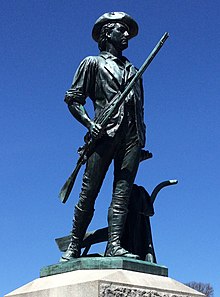
The Minute Man by Daniel Chester French National Parks photo

For most of our history state militias were an integral part the local and national defense. However, their training and performance in combat was suspect, particularly during the Revolutionary War. Militia units were never the most reliable troops on the field of battle. In the Revolutionary War, British troops could break militia units with one volley of fire and then get them high-tailing it off the battlefield for home with a bayonet charge.

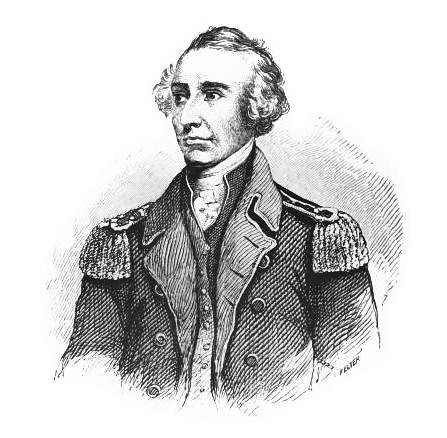
George Washington knew that if the United Colonies were to gain their freedom they would need a “well trained” Regular Army. It was Baron Von Steuben, a Prussian, who Washington looked to whip his tattered army from civilians into soldiers who could stand toe-to-toe with one of the best trained army in the world. This is not to say the militia did not play an important role in defeating the British they did. It was, however, more in the role of irregular troops lead by the likes of “The Swamp Fox” Francis Marion and others: harassing British foraging parties and supply columns. Fighting more like the Native Americans than shoulder to shoulder soldiers.

During the Civil War armies were almost exclusively volunteer. Units were recruited and trained at the state level. They did nearly all of the fighting and dying. At the time the US Army had less than 20,000 soldiers, and those that did not resign to join the Confederacy, were mostly posted across the frontier.

The Swamp Fox” Francis Marion used his irregular militiman in guerrilla tactics of hit and run to help defeat the British in the South. James Dabney McCabe (1876) The Centennial Book of American Biography, P. W. Ziegler & Company, Philadelphia Unknown

It was not until the Spanish American War did the need for a better well regulated militia become obvious. There was a lack of leadership, training and standardized equipment in state militias. The Militia Act of 1903 aimed to address the discrepancies among state militias. The Act reorganized state militias into what we now know as the National Guard. The Act ensured that there was a basic standard of training, leadership, equipment and organization in Guard units, not an ad hoc group of civilians showing up with a variety of weapons and uniforms on a whim.

Since then, the National Guard has become significant and integral fighting force of the US Army. The term part-time soldier probably does not apply to National Guard units that served multiple tours of duty in Afghanistan and Iraq.

But despite being well regulated, the Guard has had a few moments where they found themselves in confusing circumstance where their leadership and training was called into question. For instance, on May 4, 1970 Ohio National Guardsmen shot and killed four Kent State students and wounded nine others. This occurred during a demonstration protesting President Richard Nixon’s expansion of the Vietnam War by invading Cambodia.

Like Kyle Rittenhouse, some Guardsmen said they feared for their lives. Some felt they were being surrounded, others feared snipers and the general press of the demonstrators. Whatever the fear, it was a breakdown in leadership. Eight Guardsmen were indicted with the intent to deprive students of their civil rights. None was convicted. In the judge’s opinion he said:

“It is vital that state and National Guard officials not regard this decision as authorizing or approving the use of force against demonstrators, whatever the occasion of the issue involved. Such use of force is, and was, deplorable.”

Judge Frank J. Battisti

The Rittenhouse verdict should be viewed in the same manner. His acquittal should not be a decision “authorizing or approving” armed, untrained civilians to use lethal force against fellow citizens. Military tactics and club swinging police with dogs wading into crowds is an ineffective solution as seen at Kent State, during the 1968 Democratic Convention in Chicago or in any city dealing with riots. According to the US Army’s Field Manual on Civil Disturbances:

Crowd control requires its own thought process. Emphasis should be on prevention rather than confrontation. In combat, military forces are taught to fight and eliminate threats. In crowd control, military forces must deal with noncombatants that have internationally (Constitutionally) recognized rights. These rights must be respected while maintaining public order.

Partisan, politically motivated civilian militia, with teenagers armed with long rifles, is an unregulated mob, not a “well regulated militia.” Because of their lack of training and organization they have no business being on the streets. They are not the modern day Minuteman defending public safety or property.

https://www.npr.org/2020/08/30/907720068/are-citizen-militias-legal

https://everytownresearch.org/report/armed-assembly-guns-demonstrations-and-political-violence-in-america/

A Pirate’s Life for Me…

Stephen Decatur leads a boarding party onto Tripolitan gunboat in the First Barbary War.


The ongoing and recent cyber attacks of governments, internet giants and corporate computer systems—and then holding their systems and data hostages—reminds me of pirates from the past. 

Piracy, as a profession has been around for a long time. Today, pirates do not have to physically board a ship to gain riches. Today’s hackers can find a secret password, like “X marks the spot” on company’s website. Hackers marked an X on Colonial Pipeline website. Colonial is a company that transports around 2.5 million barrels of oil a day from the Gulf of Mexico to the states across the  Southeast. Hackers were then able to hold the company’s system hostage and, as Liz Lemon of 30 Rock says: shut ‘er down.”  Just the temporary shut off of oil was able to create shortages and long lines at gas stations throughout the South. 

According to Bloomberg, DarkSide was able to get into Colonial Pipeline’s system through a virtual private network (VPN) designed so employees could remotely access the company’s computer.  The best way that I can describe DarkSide is to compare it to the Death Star in Star Wars.  The Death Star’s superlaser can destroy a planet the DarkSide has the capability to destroy a company–and maybe a country.

According to KrebsonSecurity, DarkSide “is a ransomware-as-a-service platform that vetted cybercriminals can use to infect companies with ransomware to carry out negotiations and payments with victims.”  Somehow DarkSide was able to get Colonial’s leaked password off the “dark web” and plant the Jolly Rogers in their board room to the tune of $4.4 million. 

And here is where they get more like their colleagues of the past. A main source of income for pirates was the ransoming of captured people (slave trading) confiscating and reselling appropriated goods for individual wealth, in particular gold and other precious objects.  It was not necessarily easy money, but it did have certain benefits commensurate with the risks. If pirates did not go down fighting like Blackbeard, who after taking numerous gunshots and saber slashes, was decapitated by a Scotsman wielding a broadsword. Chances are, if they were  captured, they were unlikely to receive any quarter from their captors; and usually faced the short end of a rope. As of yet, I am not sure if any modern-day hackers have had their heads looped off or swung from a yardarm.

The thing is we have an idea of who some of these modern day pirates are.  However, most of what we know about pirates of the past comes to us from fiction or movies like Treasure Island, The Pirates of the Caribbean (Johnny Depp, like Errol Flynn of the 1930s and 40s, made a nice living portraying pirates.); or Tom Hanks in Captain Phillips. 

Piracy, like hacking and “legitimate businesses,” has a simple maxim: follow the money—or follow whatever it may be at the time that will get you rich. The question is the method used to gather those riches.  For pirates it could be following slave traders;  Spanish treasure ships from the Americas; or container ships rounding the Horn of Africa. As global trade increased so did sea going global trade routes. And so did pirates.

The Mediterranean Sea has always been infested with pirates. The ancient Egyptians under Ramses III fought the “Sea People” in the latter era of the Bronze Age, which goes back to around 1000-1100 BCE. (Historians are still not sure who these Sea People actually were.) 

The Romans were constantly battling Cilician pirates, (from the southern coast of what is now Turkey), particularly those taking advantage of the slave trade. When Julius Caesar was 25 years-old he was captured by slave traders in 75 BCE.  He was eventually ransomed back.  While he was in captivity he told the pirates he would come back and crucify them. Not only did Caesar keep his word; he got his ransom money back. It is hard to imagine a CEO of a major company today doing the same. 

Piracy continued after the fall of the Roman Empire.  Mediterranean pirates were fighting a quasi-religious sea war in the classic Christians vs Muslims well after the Crusaders were pushed out of the Holy Land.

Well up into the 1800s these pirates were demanding tribute and still wreaking havoc on trade.  When they captured US merchantmen, Thomas Jefferson sent in the Navy and Marines “to the shores of Tripoli” to battle the Barbary Pirates and recover the captured merchantmen destined to be sold into slavery. The US needed to protect and secure its trade routes for the new country was no longer under the protection of the British navy. 

Pirate and scourge of European merchants, Hayreddin Barbarossa, was appointed Grand Admiral or Kapudan Pasha of the Ottoman Navy by Suleiman the Magnificent in 1533.

As Europe came out of the Dark Ages countries and empires grew they fought on land.  Europeans took to the sea and  began to expand and develop lucrative trade routes.  One of the first countries of this era in the maritime global trade was Spain. The Spanish not only found themselves fighting on land but also trying to protect their ocean going trade routes.  As their empire expanded to the Americas and beyond, they now had to fend off the English, Dutch and French pirates attacking them in the Atlantic and Pacific Oceans, the Caribbean Sea as well as their long time Muslim nemeses in the Mediterranean Sea. 

 Despite their illegalities and the killings, and in some cases they were pretty gruesome.  For instance, Algiers pirates were known to have fired alive French captives from cannons back at besieging French ships. What made all this possible is that pirates could not operate unless they were in league with somebody on land. Somebody who said: what’s in it for me. People who would look the other way when pirates shot somebody off in a cannon. 

A pirate’s ship at sea needs a port. In most ports they would have been tried and hanged for their seafaring ways. They would need safe harbors for protection; willing merchants to sell their appropriated plunder to; and willing able bodied seamen to man the rigging and board ships. Piracy, for the average seaman, paid a lot better than serving on a merchant vessel or a man-of-war in a navy. (The same case can be made today about some of the international hackers prying on the global economic cyberspace—they need a port.)

Queen Elizabeth I dressed in all her finery no doubt looked the other way while her “sea dogs” were plundering her Spanish rival.

By the 1700 and 1800s the Spanish, French and English had well established colonies in the New World that provided valuable resource and wealth.  And as the old adage says: trade follows the flag and so does attacking trade—and the flag. Pirates like Francis Drake, Henry Morgan and John  Hawkins no doubt received a wink and nod from Queen Elizabeth I, while they operated with impunity against the Spanish in a Catholic vs Protestant face-off.  Not only were pirates making themselves rich; but later as privateers they were filling England’s coffers with plundered Spanish riches. Eventually all were knighted for their naval exploits. (I would bet that some of Putin’s geeks have been richly rewarded by Mother Russia for their efforts, too.)

Here is where piracy takes a bit of a turn.  First, there was just plain old greed motivating pirates.  Then came a religious twist.  Not only were pirates making themselves rich, they could intertwine it with religious leaders offering safe harbors for crippling infidels and heretics. 

It did not take long for the landed-ruling elites to realize why should pirates and religious potentates cash in on the riches.  The wars that European countries were waging against each other was done at a considerable cost. Piracy was a double a whammy way to get back at your enemy.  It denied them of colonial resources; and at the same time, filled their treasury to finance the war. It was a way of using your enemy’s wealth against them. 

Soon some of the most successful pirates became privateers.  Privateers were basically government licensed pirates who were given a “Letter of Marque and Reprisal.” A letter of marque was a contract issued to a ship or a captain and outlined who got what and how much from captured enemy shipping. What made privateering attractive to the ruling monarchs and governments of the time was that it privatized the cost of putting a navy out to sea. 

For instance, in 1794 it cost the United States almost $700,000 to build six ships, one the USS Constitution, and then three years to build. A privateer could batten down the hatches, unfurl the mainsail and hit the seas ready for action in the time it took to get supplies onboard and a crew. In fact, Article I Section 8, Clause 11 gives Congress the right “To declare War, grant Letters of Marque and Reprisal, and make Rules concerning Captures on Land and Water.”

During the War of 1812 the US government issued more than 500 letters of marque as sort of militia of the sea to attack, not so much the British navy, but it’s commerce. In the two years of war US privateers captured 2,000 ships. 

Pirates are still out and about on the the sea today but it’s the ones on land that surf the internet hacking their way on board a corporate website not with blunderbusses, pistols and cutlasses that are causing the trouble. It is a bloodless profession fought in dark cold buildings with special software tools like: Rookits, software that allow cyber attackers to take control of a computer. This is an innocent program designed originally to remotely fix computer problems. That sounds like dropping the Union Jack and then running up the Jolly Rogers

Then there is Keyloggers. Software that records a computer’s keystrokes to get to credit card numbers passwords etc. 

And in this era of pandemic who can forget the specially placed malware virus and worms.  Once on board your computer it begins to steal your data and infect other computers. No mask needed here. What is needed is a safe port to launch their attacks from. 

What started out in the 1980s with MIT students goofing around on the newly launched internet, has turned into global trade (and piracy) with organized groups, like REvil and SolarWinds, operating out of countries like Russia, Iran and China—and who knows even the USA.  North Korea has a cyber army of about 7,000 soldiers to carry out cyber terrorism. 

And like those privateers of the past, who fought wars for king and country, they proved to be a handy force when it came to attacking their benefactors enemies. For all we know we could be in the early stages of the next war with these newfangled pirates/privateers. Instead of bombers or a missile strike taking out key infrastructures like a pipeline; several well paid geeks can corrupt and shutdown corporate or government computer systems; launch trojan horses, worms or whatever to bring a country’s commerce, and infrastructure to its knees. And they can do it and never have to climb over a gunwale carry a cutlass and pistols. 


http://www.bbc.co.uk/history/british/empire_seapower/white_slaves_01.shtml

https://www.upguard.com/blog/biggest-data-breaches

https://thecinemaholic.com/movies-about-pirates/

https://www.worldhistory.org/Piracy/

https://www.worldhistory.org/Sea_Peoples/


https://www.wired.com/2001/03/inside-russias-hacking-culture/

https://www.usni.org/magazines/naval-history-magazine/2014/march/yes-privateers-mattered

https://www.battlefields.org/learn/articles/militia-sea

Ain’t Missing you at All, Maybe a Little


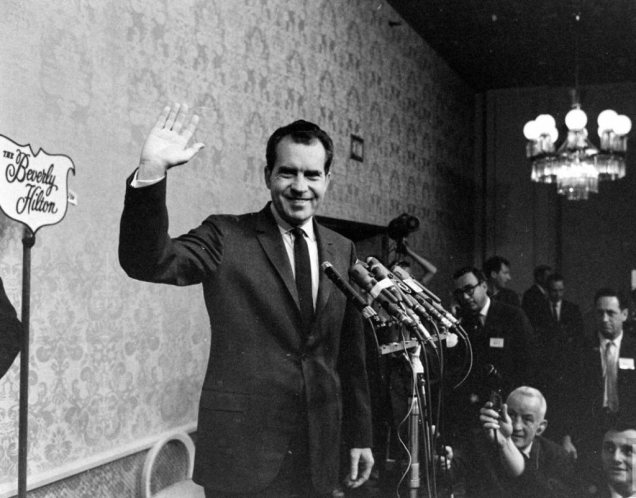
“Just think how much you’re going to be missing. You won’t have Nixon to kick around any more, because, gentlemen, this is my last press conference.”

Oh if that were only true. 

Richard Nixon spoke those words after incumbent California Governor, Edmund Brown, defeated him in the 1962 gubernatorial race. In reality the real kicking would not start until ten years later with the Watergate scandal. 

One of the anomalies about Nixon is that people loved to hate him.  And, despite never really being trusted  “Tricky Dick” completely swamped George McGovern in the 1972 presidential election carrying 49 states, racking up 502 Electoral votes and getting 60 percent of the popular vote. However, he was not so successful in his first run at the presidency in 1960 losing to John Kennedy. 

After that defeat, Nixon would head back to California where he would suffer still another political defeat only to reemerge to win the 1968 presidential election. 

Attaching the word “gate” to some sort of scandal may have never happened if in 1960 Nixon had accepted the urgings of the Major League Baseball players to become the Commissioner of Baseball. The legend of Bowie Kuhn fades in memory but the Nixon legacy is still with us; considering he resigned the presidency in 1974 and died in 1994 at the age of 81. And since that original gate scandal, we have had plenty of “gates” since.  

One of the first gates following Watergate was “Billygate.” Billy Carter was the youngest brother of President Jimmy Carter. If TV networks at the time would have made a 30 minute sitcom starring Billy, TV Guide would have described him as that zany but lovable peanut farmer from Georgia—and how he drives his older brother crazy. But then NBC was already airing Chico and the Man. 

During Jimmy’s presidency, according to RoadsideAmerica.com, Billy could often be found at his filling station attracting reporters on slow news days making “blunt statements about his brother, government oil policies and anything else that came to mind.”

Jimmy and Billy in a moment of brotherly love back in 1979.

Like many presidential brothers that created Oval Office controversy,  Billy became a presidential pain when he took money from Libya and did not register as a foreign agent, hence the “gate.”  All of this was going at a time when OPEC had already slapped a couple of oil embargoes on the West that created higher gas prices; long lines; and even-and-odd days with 10 gallon limits at the gas pumps. 

Jimmy’s presidency was a rocky one to begin with even if Billy had kept to brewing beer and “barbecuing ribs and catfish behind the gas station.” The big issue brother Jimmy was dealing with was trying to free Americans from Iran after Iranian Revolutionary Guards took over the US Embassy in Tehran. 

Foreign machinations, intrigue and buying influence is nothing new. One of the next gates was a bit more complicated than just pumping some cash into the political process. The Iran-Contra Affair or Contragate  was more of a menage a trois with various trysting places during Ronald Reagan’s administration. A real quid pro quo.

The US was going to sell arms to Iran to help its war effort against Iraq.  Additionally, Iran was supposed to help the US in its efforts to release hostages being held in Lebanon.  The money raised from the arms deal would go to fund anti-communist forces in Niagara in their war with Sandinistas. There was a lot of moving parts in this gate. And it did not take long for this swinging gate to unhinge.

November 25, 1986 meeting President Ronald Reagan discusses his remarks on Iran Contra with Caspar Weinberger George Shultz Ed Meese and Don Regan in the Oval Office.

President Reagan denied any knowledge of the scheme, despite his Secretary of Defense being indicted along with 13 other government officials.  Not to worry, though.  President George H.W. Bush later pardon them.  

Some gates are quite simple and not political as Deflategate. In a 2015 playoff game where the New England Patriots trashed the Indianapolis Colts 45-7, the Patriots were accused of of deflating footballs. Patriot coach, Bill Belichick, had a post-Reagan/pre-Trumpian comment said: “I really don’t know what to say or know anything about what we’re talking about here.” 

The latest proposed gate is Obamagate.  Although it has not made it into an official gate yet, there is just enough history flying around to make some of the more shaky claims seem logical. The alleged premise is a deep state conspiracy that has the Obama administration spying on Donald Trump’s 2016 presidential campaign. 

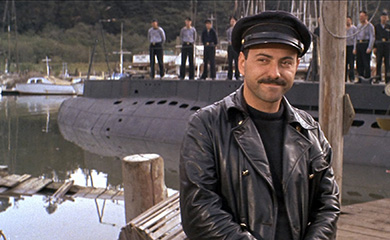
There is no disputing the fact that the FBI, the CIA and Russia’s Federal Security Service (the FSB which took over the duties of the KGB) snoop and follow important and suspicious individuals. So, when Russians start showing up at Trump Tower, it is a good bet it’s not Alan Arkin as Lt. Rozanov in the 1966 movie “The Russians are Coming! The Russians are Coming.”  And when the Russians left  Trump Tower I doubt they were walking out of with a  signed lease agreement or adoption papers.

Alan Arkin looking for away off Gloucester Island in Norman Jewison’s movie The Russians are Coming. They may be here now!

It would be easy to say that you cannot make some of this stuff up because there is just enough history and facts floating around that can be cobbled together to make a gate or a great fiction story.  A little embellishing here and there and it has all the makings of a Tom Clancy novel without high flying action or Harrison Ford.  

But any good story has to have good characters. This cast of characters of deranged mayors, convicted operatives, suspicious Eastern Europeans, family members meeting with slippery generals and foreigners reads more like a day-in-the-life of a Carl Hiaasen novel than Mission Impossible. After all, Mar-a-Lago is in South Florida. Now if we could only choreograph all this to music we might have another Marx Brothers’ Duck Soup.

The real question is what will be the next “gate.”  With the election coming up and legions of lawyers prowling state capitals in search of election irregularities we may well find us in a voting Verdun. An Electoral legal trench warfare that might last four years and not be settled until the next election.

Say what you will about Richard Nixon, he lost the 1960 election, one of the closest presidential elections in history, by 84 Electoral votes, 303-219, and the popular vote by less than 120,000 votes. But he knew enough to realize he lost, no matter what the margin of defeat was. Victory might be projected on Election Night; but as in baseball, they play all nine innings no matter how long it takes to see who wins. 


https://www.roadsideamerica.com/story/19421

https://www.noozhawk.com/article/joe_guzzardi_with_no_baseball_look_back_at_richard_nixon_all_stars_20200712

https://www.espn.com/blog/new-england-patriots/post/_/id/4782561/timeline-of-events-for-deflategate-tom-brady

The Covid-19 World War

I was not around during the beginning of World War II when Germany invaded Poland in September of 1939.  The Nazis had belief in the need for Lebensraum. Eminent domain was one of their many ethos that was backed up by force of arms. Simply put, they needed more living space and Poland and most of Central Europe was condemned property waiting to be re-developed

It is the post Polish invasion that reminds me of today’s battle with the coronavirus: Corvid-19. After Germany invaded Poland, France and England declared war on Germany. All sides sat around looking over their gun barrels for the next eight months in what was called a Phoney War.  There were a few minor battles but all sides were content at this time to prepare.  Britain began preparations for an aerial blitz that was sure to come. A conscription was put into place as well as rationing and the commandeering of public transportation for military use.  The Phoney War put them at ease, and made them little disgruntled with government efforts in the lew of any real combat.

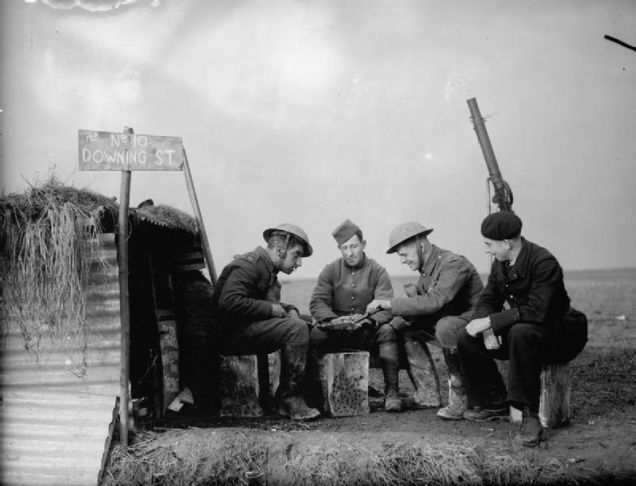
Allied troops sheltering in place

Despite the preparations neither side had any idea how this Phoney War turned out to be a life and death struggle. Little did France realize what would hit them in May of 1940.  German tanks rolled through France and on to the Atlantic in less than a month pulling France down.  The British barely had enough time to get their troops off the continent and  began the process of sheltering in place on their island fortress .

Before I go on any further there is no way that I am comparing the Nazi swarm to a coronavirus–the Black Death maybe.  But France and Britain  had eight months to prepare for war in which they declared. And the way the Germans rolled them up makes you wonder how well they used that time getting ready for the inevitable, particularly after witnessing how quickly the German army and Luftwaffe–along with the Soviets–put Poland in a box.

What puzzles me is that we watched what happened in China as the coronavirus roared through Wuhan, a city of eleven million. And much like the British and French in 1939, we just looked with unmasked faces during the month of January and February watching and waiting as the coronavirus marched through Italy.

For most of our history as a nation the two oceans have protected us from all foreign enemies.  These oceans may have even protected us to some extent from viral airborne invasions.  But the global world in which we live events and diseases can jump oceans and continents over night. A slow moving local disease can now become a blitzkrieg.

It was not long before the United States was dragged into the world at war. Much like our other Allies we were not prepared for battle. To quote a turn-of-the century Secretary of Defense who said before launching the nation into a decade of war in the Mideast: “You go to war with the army you have, not the army you might want or wish to have at a later time.”

Unfortunately, that is true and can be said about many things. But in World War II the United States got up from being sucker punched and began producing enough war material to supply not only our own armies but our Allies, too.  It was Rosie the Riveter: “We can do it.”

It brings to mind the story of the aircraft carrier USS Yorktown.  Badly damaged at the Battle of the Coral Sea, the Yorktown managed to get back to Pearl Harbor for repairs.  Engineers determined it would take at least two weeks around-the-clock to make the repairs needed. The problem was Naval Intelligence discovered that the Japanese Imperial Navy was in the process of invading Midway Island. They did not have two weeks. Admiral Chester Nimitz told the Navy Yard that the Yorktown was needed and that they had two days to get the Yorktown out to sea. Much to the surprise of the Japanese navy, the Yorktown was there and played a significant role in America’s victory, a victory considered the turning point of the war in the Pacific.

During that war we were cranking out tanks, airplanes and ships by the thousands not to mention all the other necessities.  I find it difficult to believe a country that could build a space program from the ground up, put a man on the moon and bring him back safely today cannot provide enough surgical masks, cotton swabs, and other simple medical needs to combat covid-19.

Granted, we might not have the necessary equipment now but in the past we could and did what needed to be done get the job done.  We may be going to war with the health system we have, but that needs to change. It is time to step up the A(merican)-game. Instead of talking about making America great again, realize We can do it!

Art of the Deal or a New Dealer

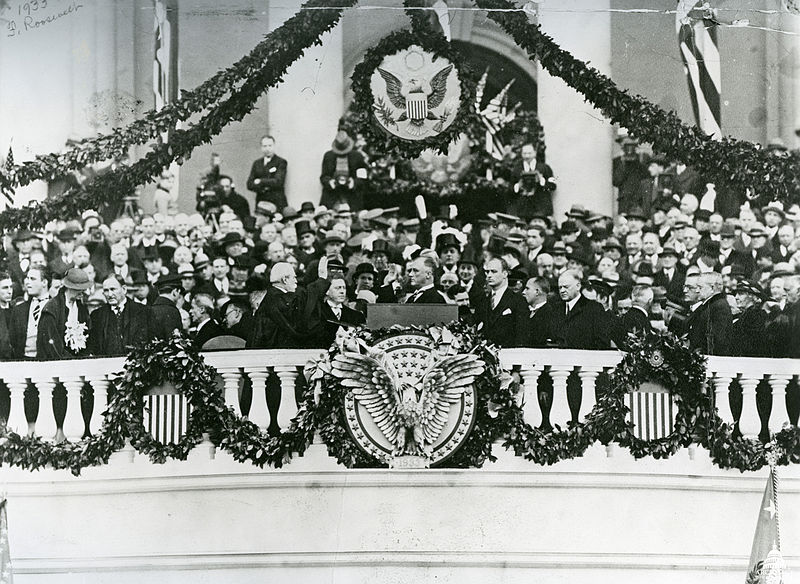
It is ironic that it was March 4, 1933 that Franklin Roosevelt gave his first Inaugural Speech. Most historically cognizant Americans may know only one thing from this speech and that is when Roosevelt told the country: “let me assert my firm belief that the only thing we have to fear is fear itself.”

The difference between now and then is that in 1933 the country was in the grip of the worst depression or panic the country has ever faced. More than 25 percent of the work force was out of a job. Businesses took it on the chin, too, losing $6 billion. Six billion sounds like chump change today. And it sort of is. When you adjust the 1933 loss for inflation that is close to throwing  $115 billion out the window today.  Jeff Bezos alone is worth close to $120 billion.

Today, we are witnessing a stock market collapse that is a throw back to the last recession but this time we can add a little oil to the fuel as the energy markets melt down. And of course the  pandemic virus adds to our economic woes with the possible overwhelming of our healthcare system.

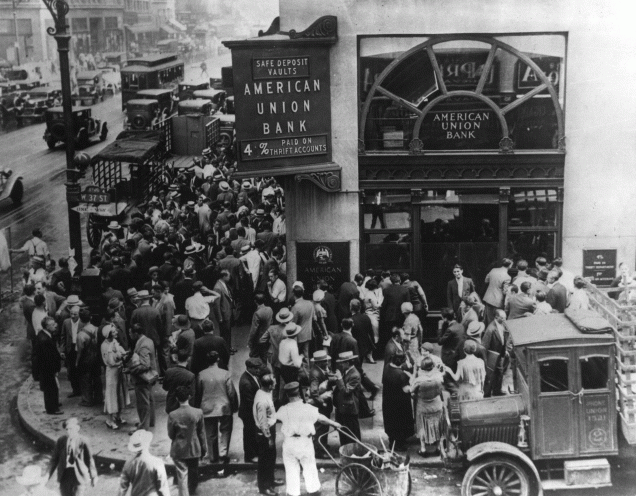
A bank run during the Great Depression or as Yogi Berra would say “A nickel ain’t worth a dime anymore.” If you could get a nickel for your dollar.

Historians say that the Great Depression kicked off on October 24, 1929 during Herbert Hoover’s Administration when the stock market tanked. Five days later the Dow Jones Industrial  had dumped 22 percent of its value.  This was a time investment bankers saw their portfolios go out the window. Contrary to popular belief, only two people literally followed their investments out the window


That was just the start. The Hoover Administration’s laissez faire affair approach did not help.  The idea of letting the markets do as they will was not working.  By 1930 consumer confidence went out the window with the Dow Jones. Interest rates were at rock bottom levels. production fell as did wages. Before long the country was in a deflationary spiral. Demand for goods fell, prices fell, wages kept falling and so did the Gross Domestic Product. Some estimated it fell by 15 percent. And we argue about 2 percent growth in the GDP as being a bad thing. Are things sounding familiar?

In the 1928 Presidential campaign Hoover campaigned on the promise of a “chicken in every pot and a car in every garage.” Boy would those roosters come back to peck Hoover. That little slogan sounded good at the time but I am sure it did not play well when people started bum rushing  banks trying to get their money out before banks defaulted. Forget about the car in the garage. When this was done people would be lucky to have a pot to piss in

Hands in pockets maybe but John D Rockefeller’s net wealth adjusted for today’s inflation was close to $420 billion.

Blaming Herbert Hoover for the Great Depression would be like blaming Donald Trump or even Barack Obama  for the coronavirus. The 1930s global economy was global pandemic waiting to happen. It was cooking off like a steaming tea pot.  Like the good business conservative Hoover was, he followed the belief of cheerful optimism that things are going to get better. And they usually do. But face it, when you have an old business tycoon worth $1.4 billion like John Rockefeller, probably the richest American ever,  sayingThese are days when many are discouraged. In the 93 years of my life, depressions have come and gone. Prosperity has always returned and will again.”  And he was right.  The business cycle is a double feature much like a roller coaster. It is a sure thing if it is going up at some point in time it will come back down and vice versa. However, for the out-of-work souls standing in a soup line that sounds encouraging but the real question was when. In the meantime, “brother can you spare a dime.

Today’s creeping coronavirus and the collapse of the oil market has not created soup lines or a rush on hospital beds–yet. It is, however playing havoc with the fear factor.

In his first Inaugural Address not only did FDR address fear but he also said, “Only a foolish optimist can deny the dark realities of the moment.” The dark realities of the Coronavirus may be embedded in its DNA but its stark realities are more than likely going to manifest in our bastardized healthcare economic system. Much like the 1929 stock market and banking collapse our healthcare system is humming along making profits for insurance companies, medical companies, pharmaceuticals and just about anybody else who can tag on to the medical gravy train. The question is if this pandemic gets out of hand what will happen to this single-payer profit system. It’s not where the buck stops put who will pick up the check.

In the Democratic debates we have heard a lot about “progressive ideas” that to some, border on socialism; or worst communism. One campaign slogan: “Medicare for all”  or “Universal Healthcare” already has people heading the Sheep’s Gate waiting for the stirring of the waters at the Pool of Bethesda to make them well of whatever disease they have.

Maybe one of the first National Healthcare Plans:The healing waters at the Pool of Bethesda

What Roosevelt stressed was a New Deal “because the rulers of the exchange of mankind’s goods have failed, through their own stubbornness and their own incompetence, have admitted their failure, and abdicated. Practices of the unscrupulous money changers stand indicted in the court of public opinion, rejected by the hearts and minds of men.”  We might not be there yet when it comes to healthcare. But we could be one patient away from a run on hospitals.

Now far be it for me to say what is what in the Healthcare Industry. It does, however, seem to be a system run for and by “unscrupulous money changers.”  I would venture that in the hearts and minds of most Americans there is some sort of agreement about changes to a system that favors profits over health. For some reason people are leery of a single payer national healthcare system. I think I can bastardize Churchill’s quote on capitalism and socialism by inserting the current healthcare system  is the unequal sharing of blessings (profits) with the inherent virtues of the equal sharing of miseries (lack of actual care).

I am not advocating for a single payer government system. However, the idea of national health insurance is nothing new.  FDR’s cousin Teddy Roosevelt, another reformer,  was bouncing the idea around when he ran for president in 1912.  Harry Truman tried unsuccessfully in 1945. John Kennedy floated the concept about, too. It was President Lyndon Johnson, a Roosevelt New Dealer, who managed to pull it off in 1965 for people over the age of 65. And here we are in 2020 debating the merits of Medicare for all.

At this moment there is a lot of speculation as to the short term and long term effect of the coronavirus on the world’s health as well as the economy.  Some countries have taken drastic quarantine measures. China even built two coronavirus hospitals in one week. Granted, this pandemic could be like a 25 year storm, but if it becomes worse it could possibly swamp our healthcare system creating a real need for a “new deal.”

The Phantom Call and Elections: You Make the Call

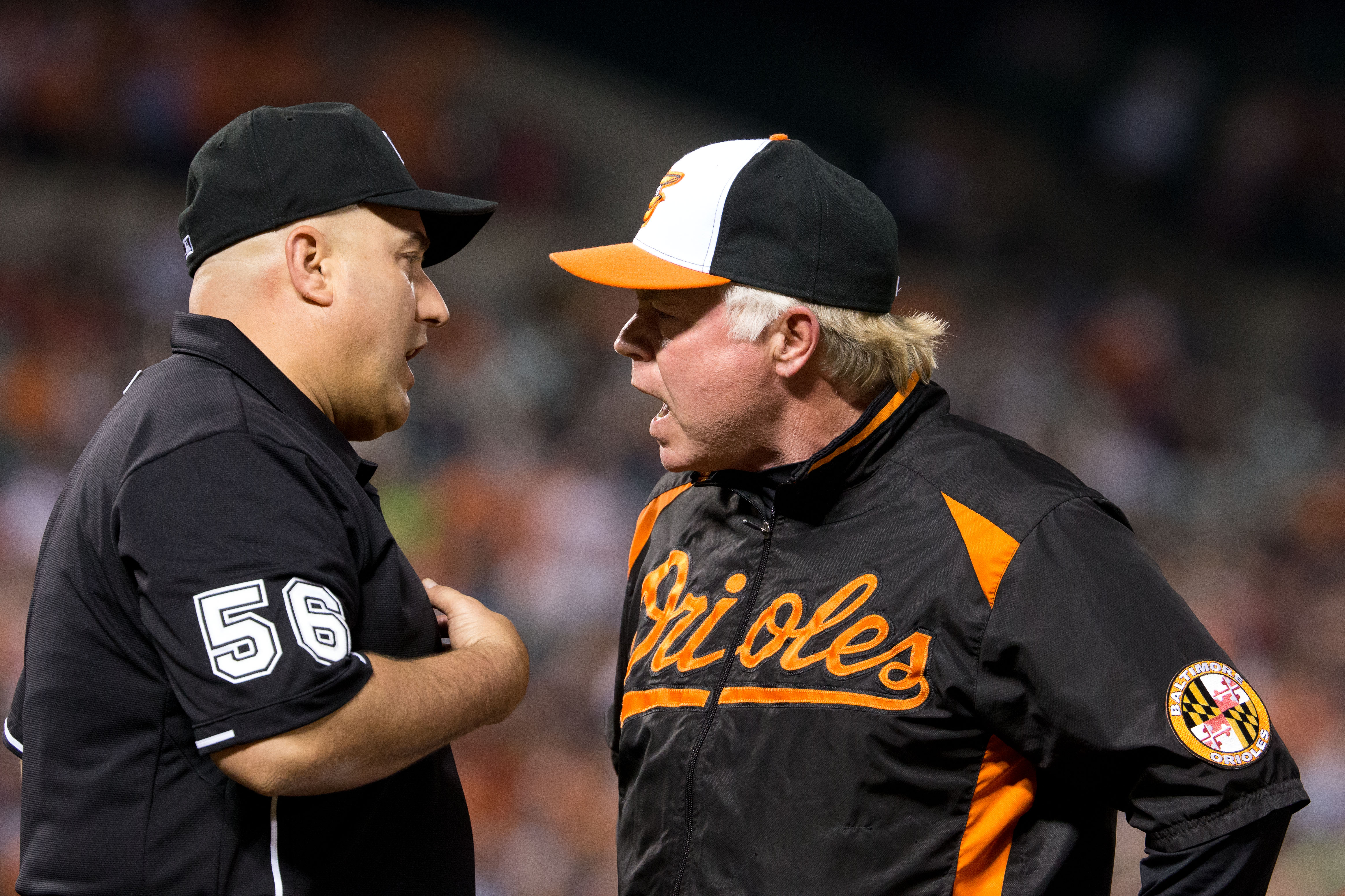
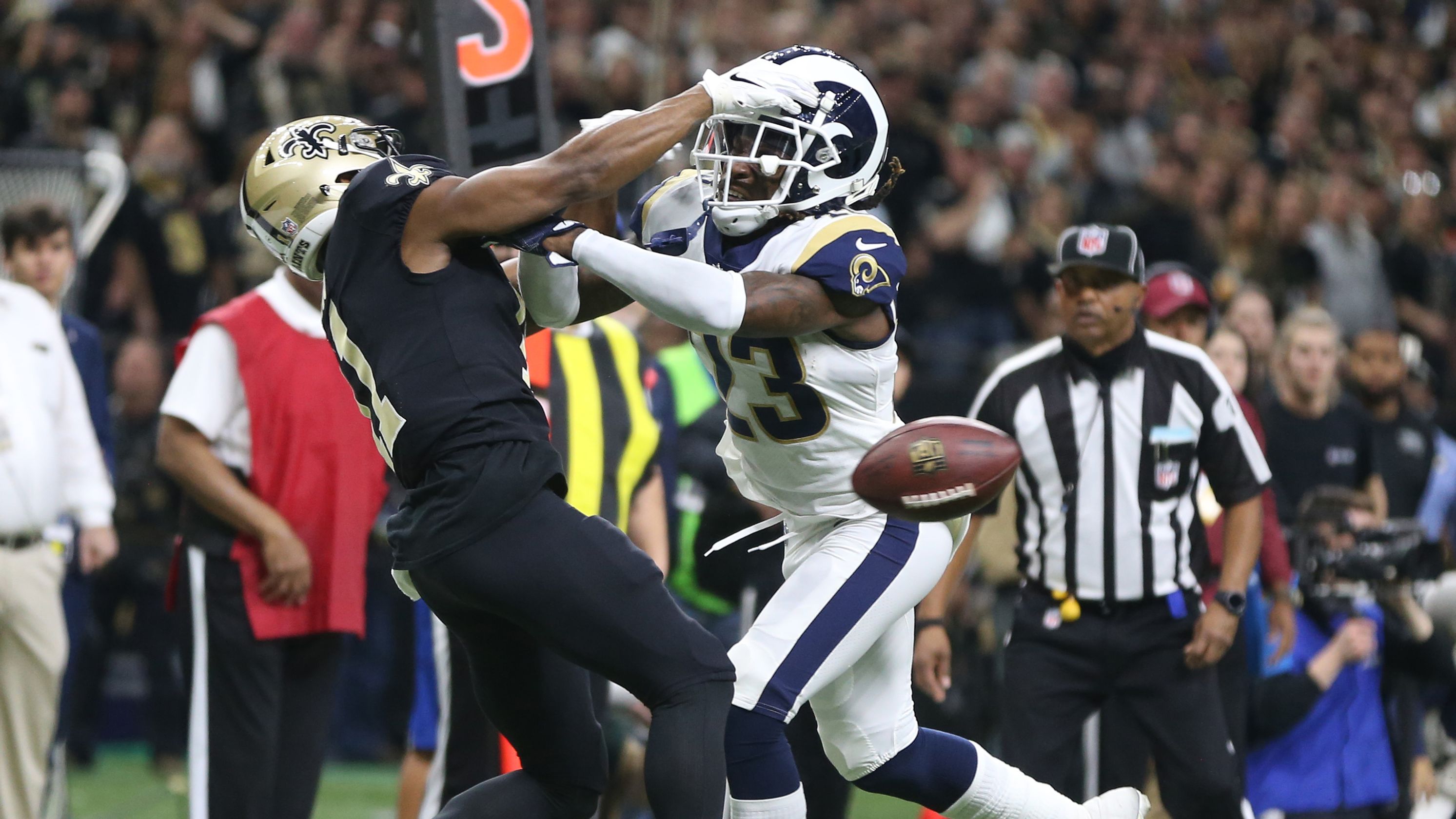
The problem with the Mueller Report, despite what ever Robert Mueller said in his press conference, has left us arguing like it was a play in a sporting event. What we have now are umpires on the sideline debating if a runner was safe or out but never coming to a decision.  It is almost as if the umpires know that whatever call they make they are going to end up ejecting one of the raging-mad manager from the game.  The report did not resolve a thing. If it proves anything, it is that modern day Americans want some sort of closure. We can live with a bad call so long as it looks like it was made judiciously with out some made up excuse like the ball was tipped or I would call the runner out if I could.

For instance, in the 1824 election Andrew Jackson won the popular vote and had a plurality of the Electoral College votes–but not the needed majority. In situations like this, according the the Constitution, the House of Representatives (a great bunch of umpires)  determines who becomes president. It seemed like an obvious call one with plenty of evidence on the ballot to make Jackson the president. But once Henry Clay, the Great Compromiser, became involved it was obvious that Andrew Jackson would be called out at the plate. A botched call. in what was called the Corrupt Bargain.  Thus, giving John Quincy Adams the walk-off Presidency–and giving Clay the Secretary of State position he wanted.  Back then, Secretary of State was the third base in getting to the Presidency.  It was a bad call but one that even Jackson accepted, albeit with retribution to follow.

I’m not crazy, my reality is just different than yours” ― Alice In Wonderland
Today, the polls on the Mueller Report are all over the place: Trumps approval is down; some say Attorney General William Barr mishandled the report; others indicate that most Americans are not in favor of impeachment but want to see the full report. And add to that, the report did not change too many people’s thoughts on Russian interference in the 2016 election. Putin is sitting on the Homeside of the field smiling like the Cheshire Cat. We are living  in an era of self serve.  It started with pumping our own gas and has moved to apps where we book our own flights.  It is now “you make the call.”

This is not a good concept.  The masses, or sports fans, have been known to go on a rampage flipping and burning cars, which is never a good idea.  The main reason we have judges, umpires and referees is to see that the game is played fairly with results we can all agree upon despite disagreeing with the call. Left to our own devices the masses or fans usually have a hard time coming up with an objective call.

Somethings, however, are not supposed to be open ended. We want a conclusion without illusion. I think one reason Americans like closure is because we watch sports.  Sports is on 24 hours a day. There are channels that even show college spring scrimmage games. The University of Nebraska had more than 85,000 fans show up for their spring football game  and maybe just as many sitting in a sports bar watching (this was a team that only won 4 games). There are channels dedicated to leagues, conference and individual teams.  There are now as many cameras on the sidelines and in the stands as there are players on the field.  We get to see those close plays at the plate, we get to see the replays from various angles. But not so with the Mueller report.  We just get to see the sideline arguments on cable news. We do not get to see the redacted version, the replay without slow motion so we end up with “collusion delusion.”

Preacher Roe out bear hunting.
It can be argued that having so many cameras and “slow motion,” instant replay has impacted officiating but maybe not the actual play on the field.  Any avid sports fan knows that bad calls are part of the game. People who played the game know of the phantom tag.  For instance, in baseball if the ball gets to the base before the runner in a bang-bang play, and if it was a good throw, the runner was usually called out even if the fielder “sort of” missed the tag.  There might have been a side comment by the runner as he dusts himself off and heads to the dugout, telling the ump out of the side of his mouth, that he missed the call.  But generally speaking, everybody accepted the call knowing that most of the time the good calls and bad calls even out unlike trying to determine how to call a “hanging chad.” As an old time baseball pitcher  “Preacher” Roe said: Sometimes you eat the bear and sometimes the bear eats you.  The same can be said of politics.  Just ask Merrick Garland.  He never even got on the playing field.

Today calls on the field can be reviewed.  Any fan watching from the stands;  ensconced on the couch; or slamming back a beer at the bar has been subjected to a break in play while an umpire or a referee–maybe two–head to the sidelines, put on the head phones or start looking at an monitor with instant replay trying to get the call “right.”  Most knowledgeable fans of sport will realize if the review was spot on or is inconclusive–that is not enough “evidence,” to use a legal term–to overturn the call on the field.

But what happens when there is not enough evidence to overturn a call.  For instance in the 1800 Presidential election, it was never in doubt who won the election.  It was Thomas Jefferson and Aaron Burr.  But hold on a minute there are no ties in Presidential elections. An election, unlike a football play cannot be replayed. A tie was was not the intended outcome in the 1800 election. Jefferson was supposed to be the president and Burr the vice president.  The Constitution at the time, however,  stipulated that the candidate coming in second would be the Veep.

Despite the intentions, Burr was not conceding the presidency to the Sage from Monticello. This was the first time an election was thrown into the House of Representatives.  It took 30 ballots and support from Alexander Hamilton’s Federalist party to get Jefferson into the Presidential Mansion.  It turns out that Hamilton hated Burr more than Jefferson. To avoid such election reviews the 12th Amendment was adopted specifying who would be president and who would be vice president.

However, the rabid partisan fan will never be happy. It is, as the old ABC Wild World of Sports saying “the thrill of victory and the agony of defeat.” No one wants to loose especially to their hated rival. Burr got his revenge on Hamilton in an 1804 duel.

But in sports, like politics,  a non call is not allowed–or is it? We cannot have two teams arguing on where to place the football or if a hooking fly ball to right field wrapping around the foul pole is a home run or a long foul ball.  We may disagree with the call but as they say in British football (soccer to us Americans) “Play on.” And we do.

No instant replay in 1985
In 1985 the Kansas City Royals were the benefactors of what was a bad call that some St. Louis fans would argue  cost them the World Series. It is not so much it was a bad call but more about when the bad call takes place.  In this case it was in the bottom of the ninth inning, the Royals down 1-0; game six  with the Royals one game down in the series   The Cardinals were three outs away from being world champions.  The Royals send up pinch hitter, Jorge Orta. He hits a squibber in-between second and first. Both the first and second basemen are going for the ball.  Jack Clark, the first baseman fields the ball and throws it to pitcher, Todd Worrell, who is on the run covering first base, something that is practiced over-and-over.  It was a close bang-bang play; and in sandlot baseball the saying is: Tie goes to the runner: play on.  In this case instant replay showed it was not a tie and that Don Denkinger, the first base umpire, missed the call.  There was no review and no appeal despite instant replay showing that Orta was out by less-than-a-half-a-step . The Cardinals complained from the dugout but as the British say: Keep calm and play on.  The next night the Royals slapped around their instate cousins 11-0 winning the World Series.

But a more recent call with national championship implications and reverberations was the NFC Playoff game between the St. Louis Rams and the New Orleans Saints.  Again, a close game. It was a tie game, 20-20, with 1:49 left in the game.  The Saints had a third-and-ten on the Ram’s 13-yard line.   Saints wide receiver, TommyLee Lewis was running a wheel route and was wide open inside the five-yard line;  Drew Brees sees the open Lewis heading towards the goal line. The pass  never made it to Lewis.  Ram’s cornerback Nickell Robey-Coleman was beaten and did what any cornerback in the NFL would do when beaten on a play that has touchdown written all over it: he mugged the receiver. If what followed happened in Walmart parking lot Robey-Coleman would have been charged with battery. He was not even charged with disorderly conduct as no flag was thrown on the play.  Without a doubt this was an obvious pass interference call. And a play that was not reviewed.

No call is better than a bad call?


The Saints, like the baseball Cardinals,  played on. They kicked a field goal but ended up losing in overtime 26-23.  For those in New Orleans it may have felt as if Mardi Gras had just been canceled. The NFL, however, “played on”: the Saints went marching out.

The Mueller report has been subjected to some real biased officiating leaving the American public unsure what the call really is.  It is not unusual in most sports to see officials gather around to get a call right. Much like the 2000 Presidential election where judges, legal experts, political hacks and pundits gathered and haggled for a month in an attempt to decide what a hanging chad was and ultimately who won the State of Florida’s electoral votes, and hence the presidency. It took the Supreme Court to put on the headsets and go to the monitors and review the vote.  The election stands with George W. Bush winning by less than a half-of-a-step. A lot of people hated the call but they lived with it.  We played on.

Today we are in situation where both sides are now calling balls and strikes; deciding where to place the ball on the playing field.  I even think some people have  been adding extra balls onto the playing field leaving us to argue about which ball is actually the game ball.  All this despite senators bleating from the stands: “case closed.” Until somebody comes out and makes a definitive call on the Mueller Report the 2016 election will always be a phantom call.  It took a disappointed Al Gore to say enough, the ”partisan rancor must now be put aside.” But for now the Mueller Report will remain a  “you make the call.”


https://www.mlb.com/news/don-denkinger-players-recall-blown-call-in-1985-world-series/c-99040244

https://www.sbnation.com/nfl/2019/1/20/18190891/pass-interference-rams-saints-nickell-robey-coleman

https://www.cbssports.com/nfl/news/rams-saints-ends-with-ugly-pass-interference-no-call-heres-the-simple-fix-for-the-nfl-going-forward/