
In President Trump’s Inaugural Address he boldly stated, “The golden age of America begins right now.” It has a nice ring to it but when you think about it, America’s last attempt at a golden age was called the Gilded Age.
Our Gilded Age was a time that was between the Civil War and the and turn of the 20th Century. It was a time when America was unfolding itself from sea to shining sea. History.com describes it as an era where “America became more prosperous and saw unprecedented growth in industry and technology.” But it was also an era as History.com says, that “had a more sinister side: It was a period where greedy, corrupt industrialists, bankers and politicians enjoyed extraordinary wealth and opulence at the expense of the working class. In fact, it was wealthy tycoons, not politicians, who inconspicuously held the most political power during the Gilded Age.”
For a Golden Age to be golden it needs to fit the following criteria:
- The age must have stable economic growth, trade and the creation of wealth;
- The age must have significant advancements in the arts, literature and science that contributes to the advancement of civilization;
- The age must be one of discovery and innovation where progress pushes the envelope of what is possible;
- Finally, it must be an age where there are peaceful relations among citizens and other countries.
Granted very few eras in history have hit all of the above criteria in full. It could be argued that for most of the United States history the US has come close to meeting most of the criteria to some degree some of the time; and at other times completely disregarded others. But even the Gilded Age with its moments of great wealth had its moments of economic panics, followed once again with the creation of great wealth. It was a time when the captains of industry controlled entire industries creating monopolies and trusts. and full employment. But it was a time where workers barley made $500 a year.
Like today, New York City was the center of the financial system. Between 1863 and 1913, eight banking panics occurred in the money center of Manhattan. The panics in 1884, 1890, 1899, 1901, and 1908 were confined to New York and nearby cities and states. The panics in 1873, 1893, and 1907 spread throughout the nation.–federalreservehistory.org
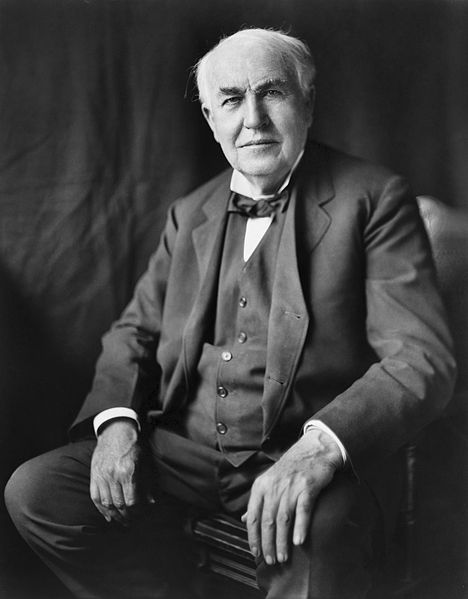
According to the Thomas Edison National Historical Park, “In 1879, he made an incandescent bulb that burned long enough to be practical, long enough to light a home for many hours.” Within 60 years there would be night baseball.
Louis Bachrach Studios Prints and Photographs Division, Library of Congress
It was a period of peace and innovation. Inventors like Thomas Edison and Alexander Graham Bell pushed the boundaries of science. Their inventions had a great impact on raising America’s standard of living and helped push the world into an electronic age of light and communication.
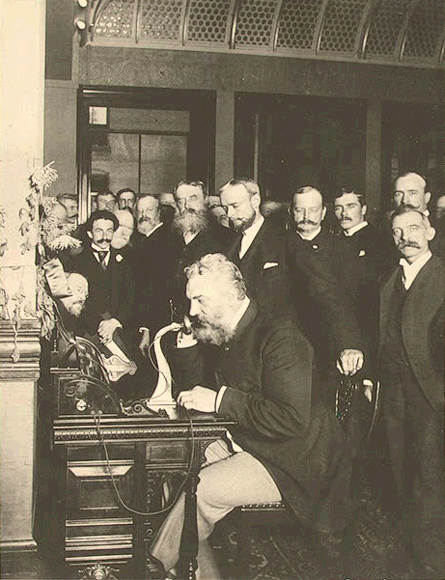
Alexander Bell places the first long-distance call from New York to Chicago in 1892. There were no free minutes at that time or unlimited texting.
Gilbert H. Grosvenor Collection, Prints and Photographs Division, Library of Congress
With the influx of immigrants, a segregated population became more segregated with laws like the Chinese Exclusion Act of 1882. It was a law that restricted Chinese laborers from entering the country, among other restrictions. It also affected Chinese immigrants already in the country by making them permanent aliens. It was an act of denying them citizenship. It was also a time where women, citizens, were denied the right to vote.
And it was a time of full employment fueled by immigrants, where workers barley made $500 a year. It was also a time dangerous working and conditions for labor. One slip or injury could cause economic devastation for a family. Unions fought for survival. However most were crushed from the weight of business interests working in conjunction with the government.
- There was the Haymarket Riot of 1886 where workers were rallying for an 8 hour day. A bomb exploded killing workers and seven policemen.
- There was the Homestead Steel Strike of 1892 where workers battled Pinkerton Detectives brought in by Andrew Carnegie’s chief executive Henry Clay Frick to break the strike. Eventually the Pennsylvania Militia was called out and the union organization was crushed.
- And two years later there was the Pullman Strike. Pullman manufactured railroad cars. In 1893 George Pullman laid off seventy-five percent of the work force and reduced wages for those still working. The the American Railway Union called for a nationwide strike shutting down rail travel in 27 states. Eventually, President Grover Cleveland sent in 10,000 troops to quash the strike.
The annual income of an American worker in 1890, at the height of the Gilded Age. Adjusted for inflation, that’s just under $1,500 in today’s dollars.–Investopedia
Sticking with the railroad motif, Louisiana in 1890 passed The Separate Car Act. Railroads were required to provide “equal but separate accommodations for white and African American passengers.” Additionally, according to Britannica.com, the law prohibited passengers from entering accommodations other than those to which they had been assigned on the basis of their race.
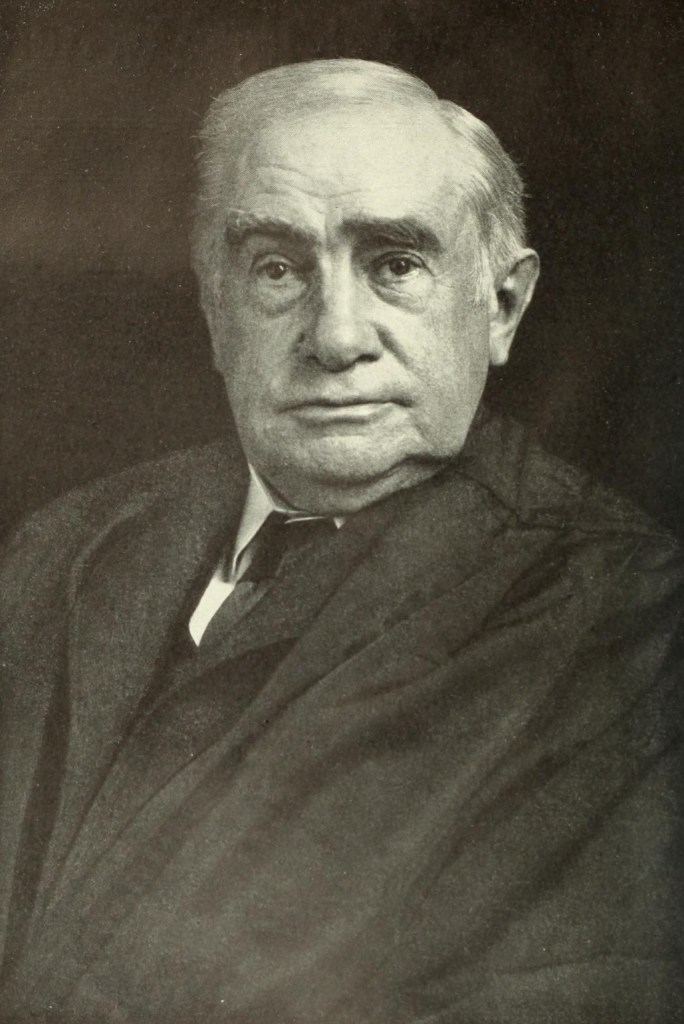
The argument necessarily assumes … that social prejudices may be overcome by legislation, and that equal rights cannot be secured to the negro except by an enforced commingling of the two races. We cannot accept this proposition. If the two races are to meet upon terms of social equality, it must be the result of natural affinities, a mutual appreciation of each other’s merits, and a voluntary consent of individuals. (From Brown’s majority opinion in Plessy v. Ferguson. In other words, don’t trip over the color line on the way out.
Original published in The American Magazine in 1905 Frances Benjamin Johnston
It is amazing how educated legal minds can interpret the Fourteenth Amendment to the Constitution. When this law was challenged in court it made its way to the Supreme Court. In Plessy v Ferguson, the Supreme Court ruled that separate accommodations did not violate the Thirteenth or Fourteenth Amendments. Justice Henry Billings Brown wrote for the majority. He “argued, because the amendment was intended to secure only the legal equality of African Americans and whites, not their social equality. Legal equality was adequately respected in the act because the accommodations provided for each race.” The lone dissenting vote came from John Marshall Harlan who fundamentally objected to the statute because “it interferes with the personal freedom of citizens.” The ruling gave us the concept of “separate but equal.” A dogmatic principle that hung around for another 50 plus years.
A Golden Age is a term used to describe a period in history where a culture, society, or nation experiences a period of prosperity, peace, and advancements. This era is characterized by significant achievements, significant contributions, and a collective sense of prosperity and unity. Golden ages are often marked by major advances in science, technology, art, and literature.–California Learning Resource Network
Before declaring a golden age Trump and company should look at what they are up against. They may have a hard time competing with the likes of ancient Egypt’s Fourth Dynasty. We might be going back more than 4500 years but in its golden age these pharaohs put up some impressive feats, like building pyramids. According to Pharaoh.se “the pharaohs of this dynasty only ruled for a little more than a century (and we think eight years is a long time), and yet they managed to have the three pyramids of Giza built in that time.” The pharaoh Sneferu started construction of the first pyramid and built three more, (no doubt letting the Nubians to pay for last two).
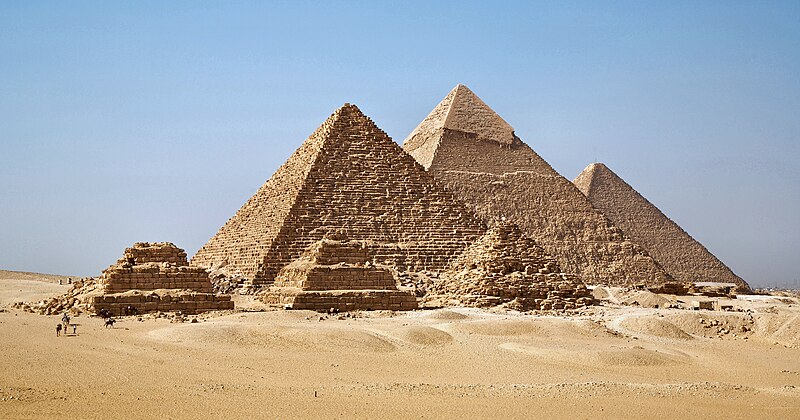
Ricardo Liberato, Wikimedia Commons
His son Khufu continually improved upon his dad’s work. No pressure on Don Junior. In Trump’s first term he could not complete a wall along the Southern Border. (It was foiled when Mexico reneged on its fiduciary participation.) However Trump is proposing the Stargate Initiative. According to Forbes, this is “a $500 billion private sector deal to expand U.S. artificial intelligence infrastructure. Spearheaded by tech giants OpenAI, SoftBank, and Oracle, Stargate represents the largest AI infrastructure project in history.” Move over pyramids because the Yanks are coming! The sky’s the limit when billionaires get together. (At least three have skirted outer space.)
And then there is the Golden Age of Ukraine. If Trump plans to end Russia’s conquest of Ukraine he might want to bone up on Vladimir I or just Vladimir the Great. And no, this is not Putin but the “founding father” of Kievan Rus’. Putin might be using history to repeat Vladimir I’s medieval accomplishments. We have to harken back the 10th and 11th Century when Kievan Rus’ was Europe’s most powerful European state. A state without nuclear weapons. Vladimir I is credited with expanding Christianity to that region. Originally a pagan, much like Saul of Tarsus, he saw the light. When he converted to Christianity he oversaw the conversion of Kyiv and Novgorod to Christianity as well. For kicks he had all pagan idols thrown into the Dnieper River.
And lest not forget what was once “The Red Menace” from the East, China. Any golden age today has to take into account one of the oldest cultures in human civilization. Just look to the Tang Dynasty. Its first emperor was Gaozu (also Kao-tsu, formerly Li Yuan,-tsu (618-626 C.E.). According to ushistory.org, Gaozu “granted equal amounts of land to each adult male in return for taxes and continued the trend of local government rule…he also created a monetary system of copper coins.” Maybe Trump and Friends are onto something with Bitcoin. And he wrote a set of laws that were revised every two decades that lasted into the 14th century and the Ming dynasty. Sounds a bit like our Presidential Executive Orders, subject change but more frequently.
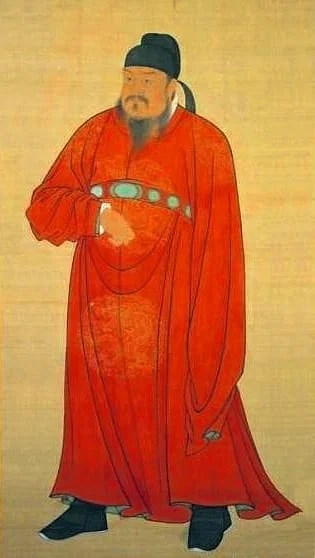
Public Domain
There is a cautionary tale here: “One of Gaozu son’s, General Li Shih-min, succeeded in eliminating all political rivals of the Tang and established firm control of the Tang dynasty over the newly reunified China. He then proceeded to murder his brothers, and forced his father (Gaozu) to abdicate the throne to him. Preferring his temple name, Tai-tsung took the throne in 626 C.E. The Golden Age of China had begun.” Nothing like a little fratricide and shoving the old man off the throne to get a golden age kicked off.
And if Trump wants to purse a Mideast policy he might want to look into the Islamic Golden Age. According Islamic History this golden age “is traditionally dated from the mid-7th century to the mid-13th century during which Muslim rulers established one of the largest empires in history.” It was period when artists, engineers, scholars, poets, philosophers, traders contributed “to agriculture, the arts, economics” mathematics and science. This was a time before OPEC, BP, Mobile, Exxon and Chevron–and Israel.
A little closer to our time the Elizabethan Age between 1558 and 1603 is referred to as a Golden Age of England. “According to Britannica, “it was a span of time characterized by relative peace and prosperity and by a flowering of artistic, literary and intellectual culture.” It was a time of Shakespeare.
With America’s stable economy and government, great universities and innovative thinkers, Trump has a lot to work with in getting a golden age cranked up. A lot of the elements needed to create a golden age are already present. They just need to be combined and conducted into a fine symphony. However, it is going to take more than handing out fries under the Golden Arches to create an age greatness.
 mystoryorhistory