You say dictator I say tyrant

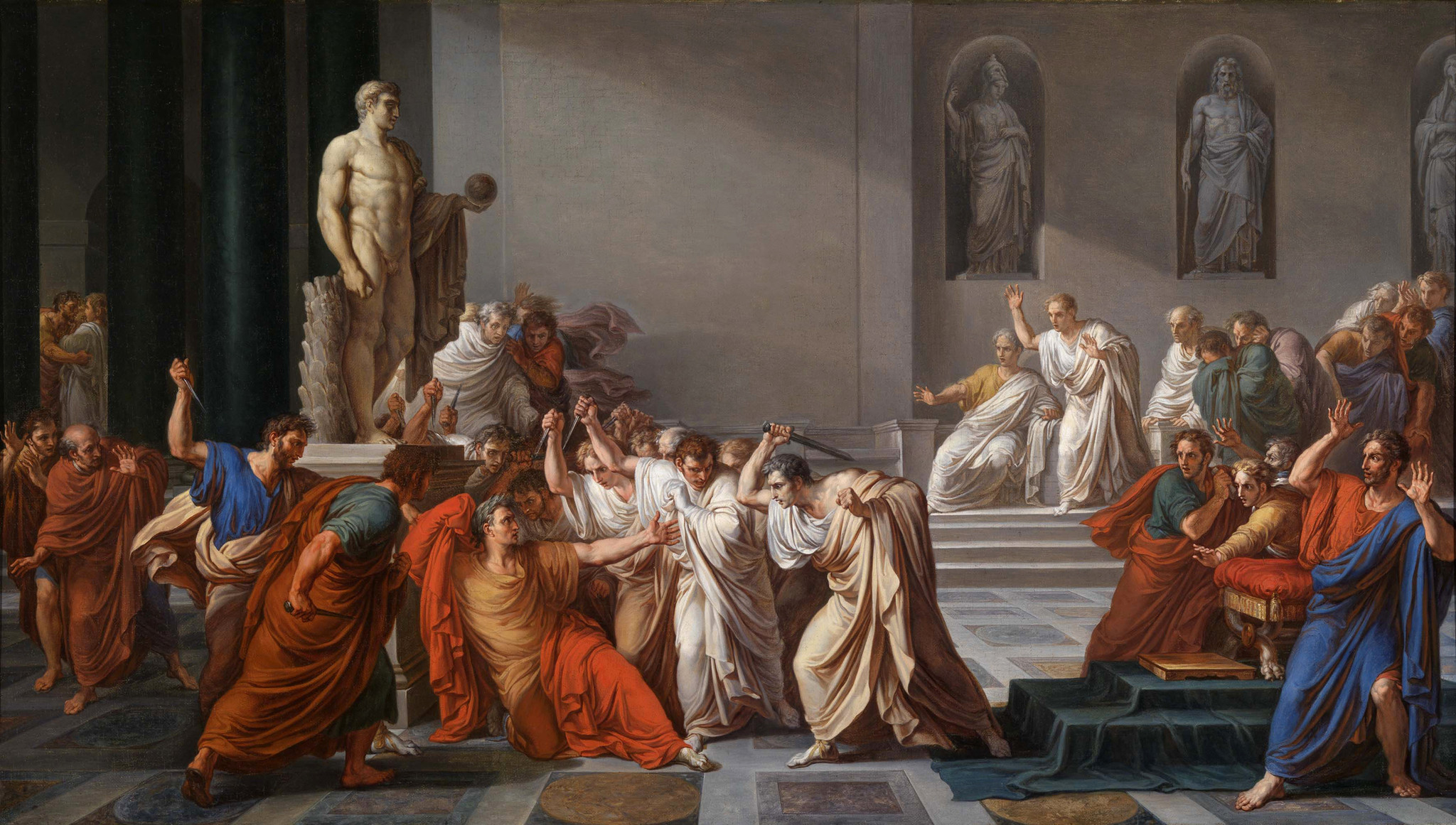
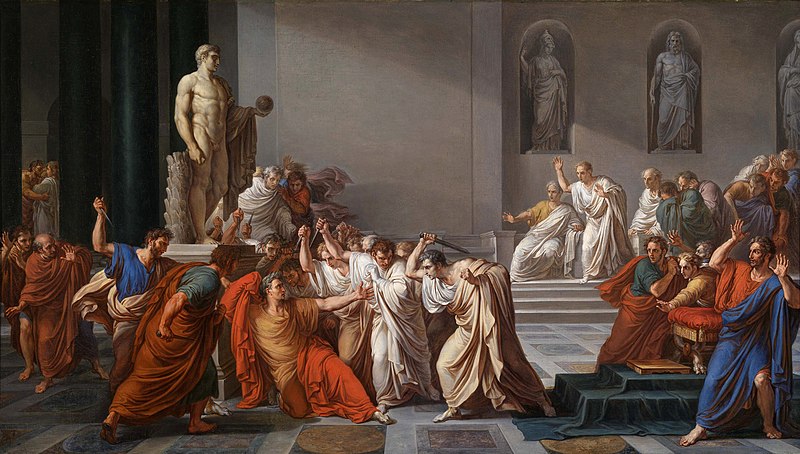
The assassination of Julius Caesar, led by Brutus, by the Senate
Camuccini, Public domain, via Wikimedia Commons

There has been a whole lot of talk about dictators and democracy lately. Donald Trump claims that if he is elected to a second term he would be a dictator for one day. When Americans think of dictators names like Mussolini, Hitler and Stalin come to mind. One has to take a deeper dive into history to come up with the name Cincinnatus.

Political Scientist still debate how fledgling democracies in Italy and Germany went from Fascism to dictatorships in a handful of years. Some go so far as to make comparisons to then and now and the path our democratic/republic might take to find a dictator in the Oval Office.

It is interesting to point out that when the writers of our Constitution sat down in Philadelphia in that hot summer of 1787 they were not talking dictator. More about tyrants. These men were well schooled in ways of the Roman Republic and Athenian democracy. They incorporated many of those ancient concepts and Enlightenment ideas into a working constitution. But one office they did not put into Article I or II of our Constitution is the office of dictator.

In the Roman Republic there was actually a governmental Senate appointed position for a dictator, which seems to be a creeping ad hoc possibility today. It was an office that was started around 500 BCE at the time when Rome moved from more than 200 years as a monarchy to a Republic. According to the Oxford Classical Dictionary, “The Romans introduced the office of dictator, initially to create an additional and ranking military command whenever required. Appointed by the chief annual magistrate by decree of the Senate, the dictator had no equal colleague, the main constraints on his authority being his official commission as defined by the Senate and the obligation to abdicate promptly following the completion of this specific task…dictators were mostly appointed according to the exigencies of the moment to execute one or more routine tasks ranging from military commands to the conduct of obscure religious rituals normally undertaken by consuls or praetors.” 

We have the 25th Amendment which deals when a president is unable to perform the duties of the office. It says nothing about appointing a dictator, though. The closest thing we have to a dictator is a czar. Richard Nixon appointed an Energy Czar and the first Drug Czar. Believe it or not Bill Clinton appointed the first Border Czar in 1995. How has that been working for us?

It was a Roman dictator the George Washington looked to for inspiration, Lucius Quinctius Cincinnatus. Cincinnatus was Roman senator and a farmer. In 458 was a called forth to be dictator. According to Ryan Burns, writing in Decentes, Penn’s Classical Studies Publication, “he was chosen (twice) to be dictator. Once to rescue a surrounded army. Under his command, Roman troops defeated the enemy in just sixteen days, and his victory was celebrated in a triumph in Rome. After just sixteen days as dictator, Cincinnatus stepped down from his post and returned to the countryside. Cincinnatus’ resignation from dictatorship demonstrated his support of allowing the government to run as it was intended—by the people.”
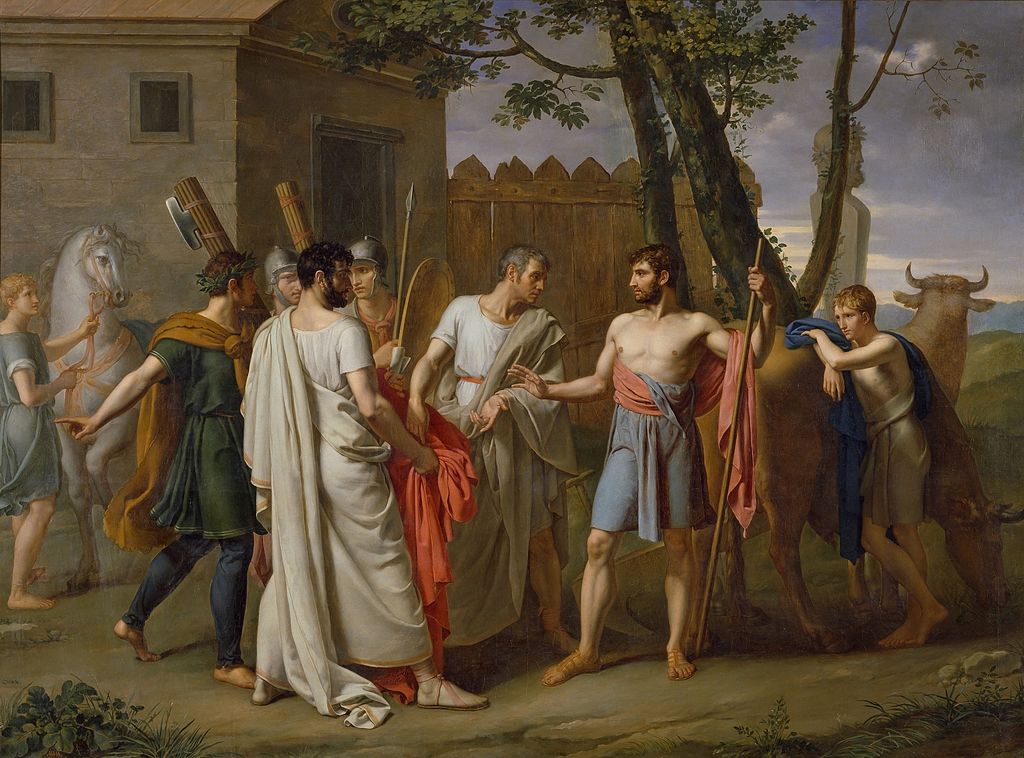
Cincinnatus Leaves the Plough to Dictate Laws to Rome
Antonio de Ribera, Public domain, via Wikimedia Commons

Cincinnatus’s actions inspired George Washington and the foundation of American democracy by relinquishing power when the job was done. In fact, the Society for the Cincinnati, founded in 1783 and named after Cincinnatus, was created to commemorate the Continental Army of the Revolutionary War. Its motto Omnia relinquit servare rempublicam (He gave up everything to serve the Republic) draws a direct reference to Cincinnatus’ influence on Washington

Ryan Burns,

Burns writes that “Cincinnatus is a figure who understood the value in a republican system of government. He knew that his duty as a Roman dictator was to ameliorate the situation as quickly as possible. When order had been restored, his job was to allow the state to return to its normal operations: one without a dictator. Cincinnatus symbolized the will of the people, and his act represents the ideals of modern American democracy.” (Today the term normal operations of government is one that no one can agree with. It is more if you are for it I am against it. Just look at the muddled mess at the border in Texas.)

Similarly, after the Revolutionary War General George Washington, like Cincinnatus, returned to his farm, Mount Vernon. And again, like Cincinnatus, he was called back to serve his country. This time as president of the newly formed United States where he set the precedent of the peaceful transferal of executive power practiced by most presidents who came after him. He then retired once more to Mount Vernon.
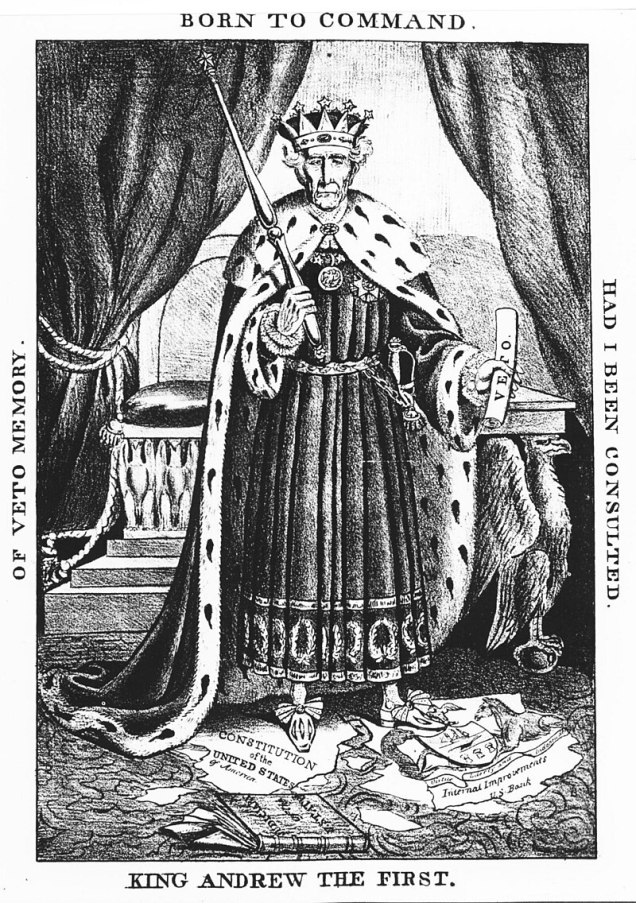
Although President Jackson stepped down after serving two terms, his presidency rankled his opponents, who accused him of being a monarch. They so dubbed him: King Andrew the First.

Public domain, via Wikimedia Commons

However, not all of Rome’s dictators were so virtuous. We are probably more familiar with the last two Roman dictators: Lucius Cornelius Sulla and Julius Caesar. After 100 BCE the Romans were having a hard time getting along with one another. Social disorder spilled out into civil war. In 82 BCE Sulla steps in to settle the matter as a dictator. It was more like to settle old scores. It was so bad even a young Julius Caesar had to flee for his life. His crime: not divorcing his wife, who was the daughter of one of Sulla’s enemies. Romans have always had a propensity for blood letting. This was a time of bloody political retribution in the Republic. The vengeance and political retribution was more than the Republic could stand. It fell in 27 BCE when Gaius Octavius, Julius Caesar’s adopted son, became emperor. Doing away with the need of a dictator.

Most of us are familiar with Julius Caesar through William Shakespeare or the many movies like Cleopatra, Julius Caesar and HBO’s Rome. We are familiar with the Ides of March. Scores of books have been written about rise and fall of the Roman Republic and how it turned into an Empire. An empire that both Sulla and Caesar helped usher in. Both were accused of being Tyrants.

“All in all, a tyrant is an absolute ruler who is illegitimate and/or unrestrained by law. To maintain himself in such a precarious position, he (for it is invariably a “he”) usually resorts to oppression and cruelty.”

Psychology Today

I would venture to say that most of the men who met in Independence Hall who helped draft the Constitution, were well aware of Plato’s views that “tyranny naturally arise out of democracy.” In 1776 they were able to smear King George III as the quintessential tyrant of the time. A monarch above the law. Hence, they wrote a Constitution that would attempt to keep tyrants and tyranny from forming.

In almost 240 years of Constitutional rule and legal precedent some people today are treating the Constitution like hackers trying to find a cyber backdoor to the bank vault. Nixon’s had crew of bumbling Clouseau-like Watergate Plumbers who were caught with monkey wrenches in hand breaking into the Democratic Headquarters. Trump had a cadre of second-story lawyers trying to sneak around the Electoral College. These lawyers were more like the mob in Jimmy Breslin’s book, The Gang That Couldn’t Shoot Straight. They were a group of lawyers who “couldn’t run a gas station at a profit even if he (they) stole the customers’ cars,” They should have been out chasing ambulances for an insurance settlement instead of shaking down voting machines.  

https://web.sas.upenn.edu/discentes/2022/05/19/cincinnatus-a-roman-dictators-resounding-impact/

https://www.politifact.com/article/2023/dec/07/donald-trump-was-asked-if-he-will-be-a-dictator-if
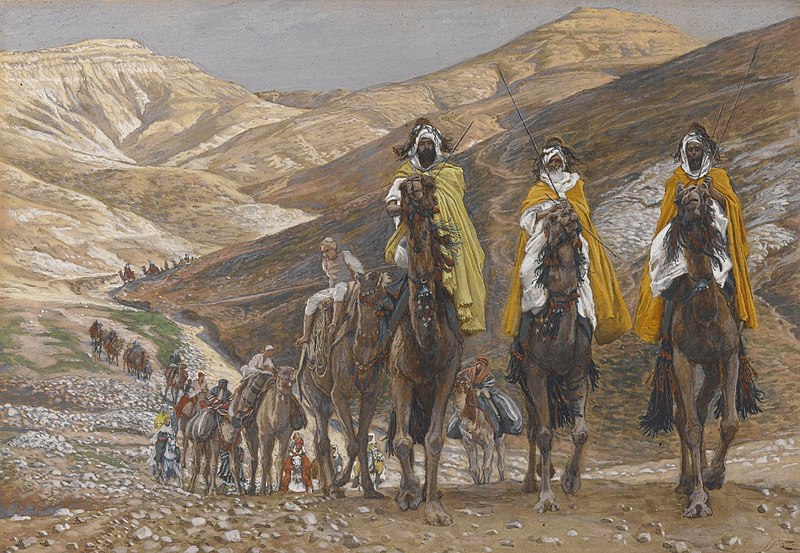
It All Started with the Magi

Brooklyn Museum – The Magi Journeying – James Tissot wikimedia commons

T’is the season to be jolly, unless one perceives that there is a war on Christmas. In today’s times, and maybe true of all times, people have been at war with someone or something. It could be a real hot war with bombs or a cold war of words. We have had a war on poverty, drugs, and terror. But just maybe, there is some truth to the belief that there is a “war on Christmas.” A war that goes beyond one of symbols and simply saying “Happy Holidays” as if it were a question about Happy Hour at the corner bar. Maybe it goes beyond putting up a Nativity scene in the public square or classroom.
When you think about it, we really have to go back at least two centuries when Jesus was born in Bethlehem to determine if there could be a War on Christmas. Most of us are familiar with the birth of Christ. The Scriptures prophesied the coming of a messiah in the Old Testament Isaiah 60:1-6. The arrival of the Magi in Jerusalem gets prophecies going and only re-enforces the mysticism of Christmas. The Bible also makes a reference to the Magi, or as in Psalms 72:11 “May all Kings fall down before him.” And hence a 2,000 year tradition is started.
The Bible, however is vague on details when it comes to the Magi. The first verse of Matthew Chapter 2 says: “Now when Jesus was born in Bethlehem of Judaea in the days of Herod the king, behold, there came wise men from the east to Jerusalem.” No names are given and we are not sure how many wise men there actually were. Some say that there were just three because the Bible only mentions three gifts given to the babe in swaddling. Others think there could be as many as 12. For having a big part in the Christmas culture, they do not get any cast crediting.

One clue that Biblical scholars can use to decipher where the Magi came from is by the gifts that they brought. This may indicate where they came from. Take frankincense for instance. Frankincense grew and was widely traded on the Horn of Africa for 5,000 years, making its way as far as the Silk Road. The ancient Egyptians used frankincense in their mummification process. Myrrh, a herb also grown throughout the region in countries like Somalia, Oman, Yemen, and Eritrea could give an indication where the wise men started out from. Even knowing where these aromatic herbs were grown is no sure bet. These herbs had to be long-established trading items that could be picked up at the local herb shop for the right price–more if pre-rolled. And of course gold, the currency of the realm.

So the Magi could have come from anywhere. Some speculation believes they could have come from modern day Iraq or Iran. Maybe Turkey or as far away as Saudi Arabia. We are not sure if they met on the road or came collectively. If they had to travel several months, no doubt by camel and donkey, it might be safe to say these saddle sore Orientals were looking for a place to stay when they hit the outskirts of Jerusalem. And considering that all of Roman-controlled Galilee was on the move because of Caesar Augustus’ census, an obvious stop was King Herod’s palace for a kingly stop over.

We also have to applaud the Magi’s navigational skills in finding the Christ child. According to the historyofthecompass.com the Chinese were fidgeting around with the compass around the Second Century BCE. It is probably safe to say that the Magi did not have a hand-held compass. There is the possibility that they had some early form of an astrolabe. As as far we know their only GPS was the bright star in the east. This also brings up a host of questions. Astronomers have tried to back track the skies to determine what astronomical phenomenon could have lead the Magi to that manger off the beaten path.

In 12 BCE Halley’s comet made its appearance. However, the timing of Jesus’ birth and the comet is off by a couple of years. But surely learned persons of the times could tell the difference between a comet and a star. Speculation from ancient manuscripts dating back to 6 BCE indicate that there could have been a conjunction of Jupiter and Saturn. This would not have formed a single point of light in the sky, but could have been used as a navigational aid.

The Bible does tell us that when Magi got to Jerusalem they stopped off and sought out Herod for directions. In Matthew they are pretty specific about the star when they tell Herod “For we have seen His star in the East and have come to worship Him.” The Bible does not go into great detail but it could be safe to assume that if a king was being born the locals would have an idea as to where. Traveling from afar they had to be excited and curious when they asked Herod, “Where is the one who has been born King of the Jews?”

Herod’s scholars had to be familiar with the prophecies and would have seen this new-born king as a threat. In Matthew 2:13 King Herod, sucking up to the Magi, tells them he is not sure, but that he too wants to meet the baby Jesus. Maybe it was the look of insincerity on Herod’s face that puzzled the Magi. We are not sure what information the Magi shared with Herod. Email, Twitter and Instagram were several centuries away. So Herod had to cool his jets waiting for the return of the Magi to Jerusalem.

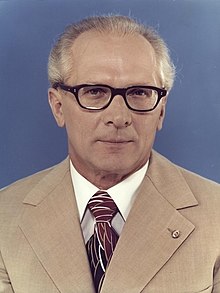
While the Bible has some great stories it can be vague on the politics of the times. After all, it is a religious tome and not The Times of Israel or The Jerusalem Post. There was no headline proclaiming, Messiah Born in Bethlehem. What makes Herod interesting is that he is like a modern day strong man propped up by a foreign super power. He could be put in with the Shah of Iran or East German president Erich Honecker around the time the Berlin Wall came down. History has a recurring theme in which lesser powers, for the lack of a better term, get swallowed up in the business of the prevailing super powers of the times. Herod was caught in the geopolitics of the times. He faced the Romans to the west, the Parthians (the old Persian Empire) to the east and a highly suspicious and disgruntled Jewish population at home. This messiah stuff could be bad news.

Erich Honecker, General Secretary of the Socialist Unity Party of (East) Germany. Honecker found himself on the wrong side of reform after the collapse of the Soviet Union. Anti communist government protests forced him to flee Germany to Russia in 1990. The Russians didn’t want anything to do with him and sent him back to Germany to stand trial for crimes against humanity. He eventually was exiled to Chile where he died in the custody of his family in 1994.

In the Hellenic World the Greeks had mixed it up several times with the Persians. Once Rome conquered Greece around 150 BCE it was now their turn with Persians–now the Parthians and the neo-Persian Empire. The Romans never did subdue the Parthians. Julius Caesar planned an invasion to avenge the death of his friend and fellow ruler, Marcus Licinius Crassus, but the Roman Senate had other plans for Julius, plans that makes an impeachment look like a picnic with plastic dinnerware. Crassus, at the time, was one of the richest men in Rome. However, his Parthian invasion didn’t go off so well for him–the Roman version of rich guy biting off too much–like Elon Musk buying Twitter. The Parthians defeated Crassus at the battle of Carrhae in 53 BCE. Roman and Parthian lore has it that the Parthians poured liquid gold down Crassus’s mouth to mock his riches. They also made sport of his decapitated head using it as a prop in Greek plays. No doubt a tragedy for him but comic relief for the Parthians.

It was around this time that Rome proclaimed Herod King of the Jews. The problem however, was there was already a king in Judea, Antigonus. Herod had managed to overthrow Antigonus around 34 BCE. And to make a long complicated story short, it was around this time the Parthians were making a run on the Roman province of Syria. Antigonus, looking over the possibilities, decided this might be a good time to cut a deal with the Parthians to regain his kingdom. A little cash in the right pocket and Antigonus was back on the throne. The Parthians chased Herod out of Jerusalem and Antigonus was riding high again. The Romans, however, had other ideas. Marc Antony, who stepped in for assassinated Julius Caesar, sends an army to Judea. The Romans shove the Parthians out of what would become the Holy Land, and Antigonus, unfortunately finds himself on the wrong side of Herod and Rome.

Once the Parthians were gone, Herod turned Antigonus over to the Romans. Some ancient historians say that Antigonus was either beheaded or crucified. In either situation Herod was left in control of Galilee under the watchful eyes of Rome. It is in this geopolitical landscape that Jesus is born–and would die. This is when the Christmas story begins, with Herod’s malignant fear of being overthrown. His Jewish minions were never really pleased with his rule. He had to keep the peace and Rome happy at the same time. And now the possibility of another king put Herod on high alert.

According to the Bible both the Magi and Joseph had forewarning dreams. The Magi were told not to tell Herod about the Christ child. They headed back East avoiding Herod. Joseph’s dream told him he needed to head for Egypt and set up shop there until it was safe to return.

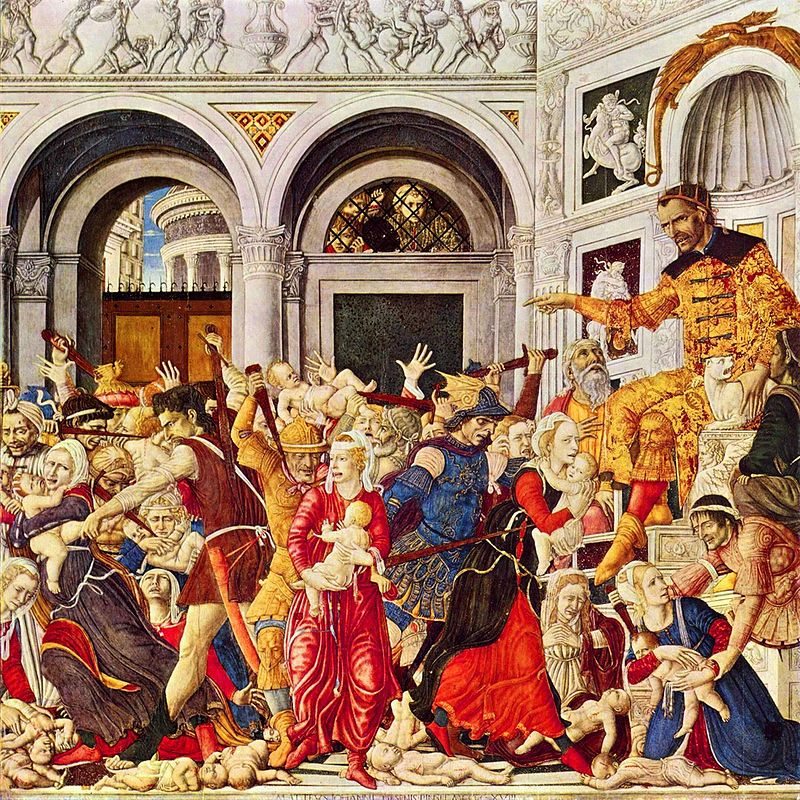
Massacre of the Innocents by Matteo di Giovanni – The Yorck Project (2002) 10.000 Meisterwerke der Malerei Public Domain, https://commons.wikimedia.org/w/index.php?curid=155056

Herod, in his frustration for being duped the by the Magi, retaliates. In Matthew 2: 16 Herod was furious, he gave orders “to kill all the boys in Bethlehem and its vicinity who were two years old and under, in accordance with the time he had learned from the Magi.” This was the “Massacre of the Innocents” or the “Slaughter of the Innocents.”

Since that time we have had all sorts of religious wars, none specifically fought over Christmas. There was an Easter Uprising in 1916 in Ireland. Irish Republicans (no affiliation to Republicans who stormed the US Capitol on January 6th) decide that they had enough of British rule. The rebellion was crushed in English fashion–unconditional surrender and execution.

Today, if there is a war on Christmas it is a fear of heretics, secular progressives and plain old liberals storming the cultural gates, an attack on perceived cultural norms. We can trace this phobia to 1959. A geopolitical time of Communism and atheism when the UN was seen as the boogie man or men. The John Birch Society believed the “assault on Christmas” was being carried out by “UN fanatics.” The battle was being waged in department stores throughout the country utilizing “UN symbols as Christmas decorations.” They may be giving the UN way too much credit as an organization that can get anything done.

As Christmas became more commercialized the only battles being fought were consumer skirmishes, department store fist fights over who gets the last Cabbage Patch Doll; people getting trampled on Black Friday when Walmart stores opened their doors to the hoards of shoppers. And parades with more secular floats featuring modern day cartoon characters. Hardly a war. And where do flying reindeers come into all of this?

https://www.politico.com/magazine/story/2013/12/war-on-christmas-short-history-101222/

https://www.bibleodyssey.org/en/people/main-articles/herod-the-great

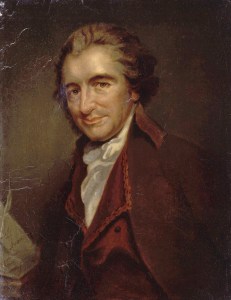
Thomas Paine and Common Cents

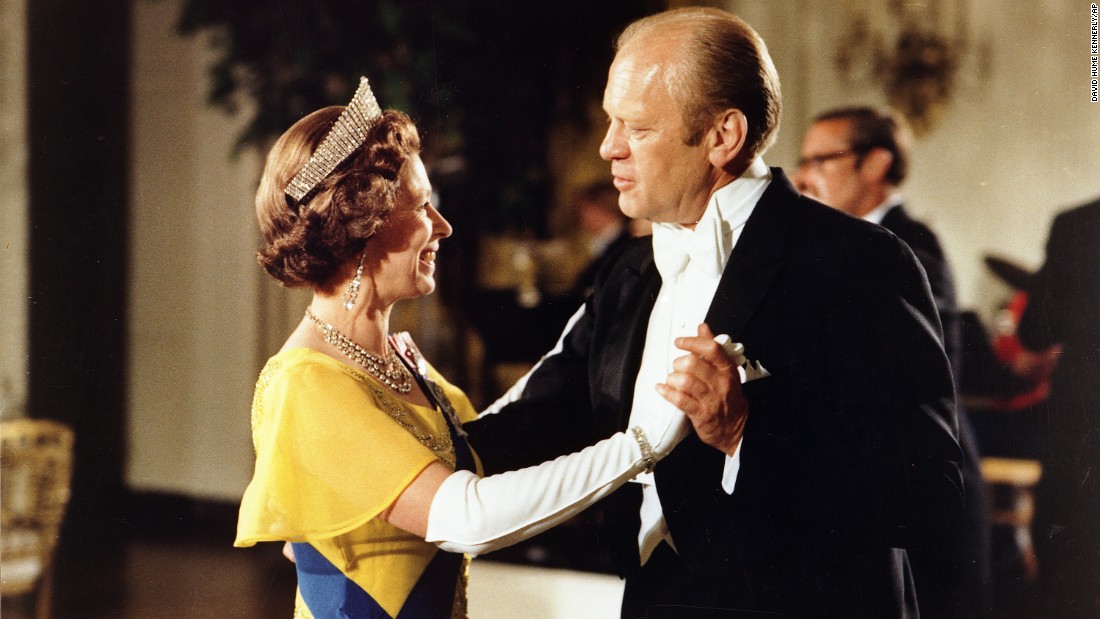
President Ford dances with Queen Elizabeth on July 17, 1976.

I am curious as to how much Americans actually know about British history.  There is a certain amount of British history that intertwines with American history. After all we have fought two wars against them at least three wars with them. A real love-hate relationship. But nothing is more confusing than keeping track of the aristocratic power grabs and titles handed down from generation to generation. Not so here. Its all dollars and common cents.

In school we in America study The Magna Carta and how a bunch of discontent barons forced King John to sign The Great Charter way back in 1215, almost 400 years before our own history starts.  These rebellious aristocrats demanded certain rights from the king that would eventually evolve into our own Bill of Rights.

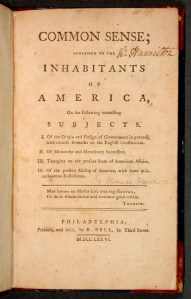
It was 560 or so years later in January of 1776, that Thomas Paine’s Common Sense hit the newsstands in the Colonies.  Washington D.C. was still a swamp on the banks of the Potomac River and the Beltway was not even a dirt road. K Street was not even a lobbyist’s dream.  Paine’s pamphlet created a stir across the Colonies with his rousing attack on the British hereditary monarchy.

Paine took direct aim at the king,  writing that “exalting one man so greatly above the rest cannot be justified on the equal rights of nature, so neither can it be defended on the authority of scripture.” Paine felt the monarchy was “one of those evils, which when once established is not easily removed.”  (Much like an old incumbent  Senator from West Virginia.)  Paine said people submitted to kings out of superstition, fear or just a chance to cash in on the king’s plunder.

According to Paine monarchy  “was the most prosperous invention the Devil ever set on foot for the promotion of idolatry … Heathens paid divine honors to their deceased kings, and the christian world hath improved on the plan by doing the same to their living ones.”

This is harsh stuff flying in the face of an ill-gotten belief at the time in the Divine Right of Kings.  This contrived political doctrine brought about a spiritual-religious belief in kingly absolutism. Unlike the Pharaohs of ancient Egypt, who were considered gods, more enlighten medieval thinkers realized that kings were god-like and derived their right to rule from God.   It was sacrilegious to question an infallible God, who in his infinitesimal wisdom, would never place just any mere mortal on the  thrones of His Earthly kingdoms. If God was above the law it only made sense that his kings were, too. Hence, a democratic belief in elections and the rule of law no matter how much they would cost.

Even though we may disapprove of monarchical rule we do have a fascination with royals.  No matter how many times I watch TV shows like the Crown, Victoria, Wolf Hall or the Tudors, I just cannot keep track of all the comings and goings of Henrys, Edwards, and Georges. It becomes an Abbot and Castello routine of “Whose on the Throne?” Elizabeths not so much, there are two, right.

British history also devolves into the plethora of lower ranking lords that spill out of the ruling houses  Yorks and Lancasters followed by Hanovers and Windsors (and a pair of Oranges tucked in there somewhere). And of course, all the revolving, ascending and descending Dukes and Earls that would make up the House of Lords.

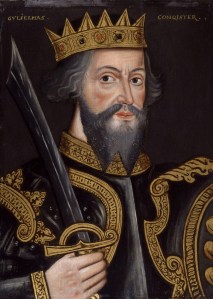
William the Conqueror, the original “Stormin”Norman.

Being Colonials, and out of touch with royals for the better part of two centuries, we have no idea to the ranking of such lords and ladies.  Who would really know that a Duke is higher on the pecking order then a Marquess followed by Earl, Viscount, and finally Baron. I am not sure how these titles are handed out.  I believe it started in 1066, after the Norman Conquest.  William the Conquer started dividing England up into manors (hence to the manor born) which he then turned over to his Norman barons. No doubt with certain allegiance of loyalty and fidelity expected in return.

The oldest English Earl is the Earl of Arundel, which dates back to the 1100’s. There was at least 16 or 23 Earls of Arundel, depending on how they are counted,  Around 1620 the Earl of Arundel became the Duke of Norfolk.  The titles have remained in the FitzAlan/Howard family and there have been 18 Dukes of Norfolk.

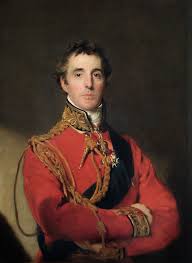
The Duke of Wellington looking rather regal.

The only dukes I am familiar with is the Iron Duke, Sir Arthur Wellesley, the 1st Duke of Wellington who defeated Napoleon at the Battle of Waterloo; and Gene Chandler the self-proclaimed Duke of Earl. This fictitious bastardized title comes from his 1963 hit-single, now an Oldie Goldie, Duke of Earl.

Paine writes in Common Sense that some believe “that hereditary succession” prevents civil wars. This, he says, “is the most barefaced falsity ever imposed upon mankind.” At the time of his writing Paine claimed that Great Britain had gone through 30 kings, eight civil wars and 19 rebellions.

Paine was a real rebel-rouser ending up in the French Revolution

The War of Cousins or as we know it, The War of the Roses was a 15th Century, 30-year war pitting the Houses of York and Lancaster at one another.  Each side captured each other’s champion or forced defeated leaders into exile. A stable form of government?   Paine says there is nothing so uncertain as “the fate of war and the temper of a nation, when nothing but personal matters are the ground of a quarrel.”  Adding that Parliament  is”always following the strongest side.”

Paine did not hang around after the Revolutionary War to help get the rebellious Colonies a working form of government. This was left to men who had a keen understanding of British history. In fact, their insight into British history, politics and economics had them include a Nobility Clause in our Constitution that simply states:

No Title of Nobility shall be granted by the United States: And no Person holding any Office of Profit or Trust under them, shall, without the Consent of the Congress, accept of any present, Emolument, Office, or Title, of any kind whatever, from any King, Prince or foreign State.

Mr. President and Commander-in-Chief with really “deep pockets.”

Of course just because Congress does not officially pass out princely positions does not mean they do not exist otherwise in this country. It took the British centuries to establish a stable peerage. In the New World it is not so formal. This is not to say we are not with out squabbling, rich non-entitled ruling elite.We have billionaires that can spend close to $100 million to buy themselves an “elected” titled position; or at the very least put a strong down payment on getting the right man an elected-peerage.

After 200 plus years as a republic we never created a Lord Protectorate to hand out riches to loyal followers. Here wealth was not inherited, it was created.  And with that the levers of power often go to the highest bidder. To paraphrase Paine, nothing tempts the fate and the temper of a nation than personal greed  ground in a good political  quarrel — with Congress “always following the richest side.”

We may not have titled barons sitting in Congress but we do have a few billionaires buying their way into the Beltway.


The Tale of Two Generals


Vincenzo_Camuccini_-_La_morte_di_Cesare
Caesar dealing with a partisan Senate

When General Dwight D. Eisenhower sat down with General Alfred Jodl in Reims, France in May 1945 to sign Germany’s unconditional surrender ending World War II, the two generals had two drastically different post-war fates awaiting them.

Generals and politics rarely mix well.  The recent exploits of Army General Michael Flynn, and his continuing saga as an alleged political Russian go-between in the last election to allegations of foreign money payouts, has him jinking and jamming like a locked-on fighter pilot in a dogfight as he tries to avoid the political missiles being fired at him by those who believe he may have been in Putin’s vest pocket.

General Flynn, Putin’s money man in Washington?

Flynn is not the first general in history, nor is he likely to be the last, to find himself being the duck in a political shooting gallery  Not too long ago, Generals David Petraeus and Stanley McChrystal both built exemplary combat reputations only to be brought down by the friendly fire of politics.

Of course most people are familiar with Shakespearean saga of Julius Caesar–the conqueror of Gaul;  the Roman general who faced down Barbarian attacks–but was brought down by a mob of knife-wielding conspiratorial Roman Senators. The transparency there was obvious.

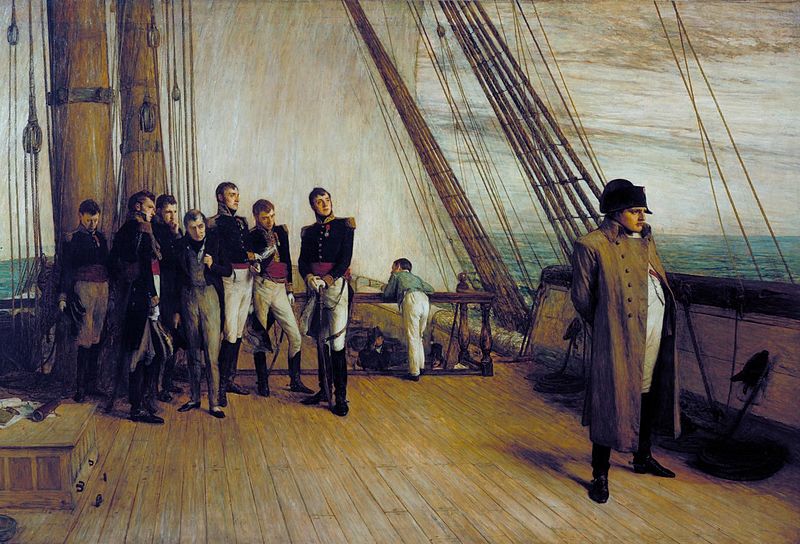
Napoleon sailing off into the sunset under the watchful eyes of the British.

And then there was Napoleon, the twice exiled General/Emperor of France. He conquered large portions of Europe, set his brother up as king of Spain, and for nearly 20 years kept Europe at war.  When he was finally defeated at Waterloo, he was sent into exile for a second time to a small island in the Atlantic off the African coast where he died of stomach cancer on May 5, 1821.

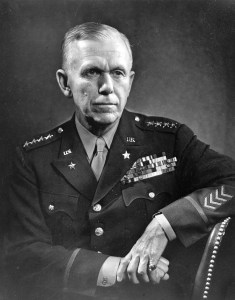
Gen Marshall was hard on the Nazis but some thought he was soft on Commies.

Even Eisenhower’s boss General George Marshall, who helped guide the US war effort against the Axis powers during World War II came under post-war attack. After the war, he served as Secretary of State and Defense but could not avoid the righteous wrath of Senator Joseph McCarthy’s “Red” baiting. One senator went so far as to  boldly claim that, “General George C. Marshall is a living lie” saying “he is eager to play the role of a front man for traitors.” But then this was the era of “un-American activities.”

In some ways surviving the dangers of the battlefield for generals may be a lot easier than trying to maneuver around the political playing field during and after the war.

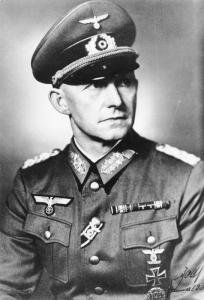
Jodl, the Chief of the Operations Staff of the Armed Forces High Command, Oberkommando der Wehrmacht, (the German army) not only had the dubious honor of dealing with a fanatical and more than slightly deranged dictator on a day-to-day basis; but he also was given the task of unconditionally surrendering the Third Reich over to the Allies.

Jodl was hard on Commies but some thought he was a criminal.

Many prominent, high ranking Nazis avoided Allied retributions by committing suicide. Jodl faced the post-war Nazi fallout at Nuremberg.  Jodl may not have been deeply immersed in Hitler’s “Final Solution” and the Holocaust. He did, however, sign two military orders that did not sit well with the post-war victors. One order was specifically aimed at the Soviets.  The order allowed German troops to summarily execute captured Russian commissars or Communist political officers. The other order allowed for the summarily execution of all commandos whether they were captured in uniform or not.

At the Nuremberg War Trials he was found guilty and hung.  As the model of the proper Prussian soldier he demanded to be executed at the post by a firing squad. Instead, his demise came dangling at the end of a rope like a common criminal.  He was cremated along with Hermann Goering and nine other convicted war criminals. To avoid any future of  shrines or deification to the deceased, their ashes were scattered in the River Isar to become river-bottom sediment to any future Nazi grave site pilgrimages.

Eisenhower, or the other hand maneuvered his way through the political post-war era to became the 34th President of the United States. He was able to avoid the trip wires of the political landscape and enjoy the undulating fairways and greens of the golf course.  While in office he played almost 800 rounds of golf.  In 1961 he retired to Gettysburg, Pa. to an enjoyable political exile.


http://www.history.com/this-day-in-history/napoleon-dies-in-exile

http://www.history.com/this-day-in-history/mccarthy-accuses-state-department-of-communist-infiltration

http://www.americaslibrary.gov/aa/marshall/aa_marshall_mcarthy_1.html

http://www.americaslibrary.gov/aa/marshall/aa_marshall_mcarthy_2.html

http://golfweek.com/2009/11/02/dwight-d-eisenhower-golf-white-house/

Photo credits:

Wikimedia commons Caesar’s Death,  Vincenzio Camuccini La mort di Caesar

Wikimedia commons Napoleon on Board the Bellerophan Sir William Quiller Orchardson

Wikimedia commons Marshall, Jodl

Defense Intelligence Agency  Flynn

Going Nuclear and One Vote’s Fallout


Wikimedia Commons
Supreme Court Building

Recently the United States Senate went nuclear on the filibuster concerning Supreme Court nominations.  Going nuclear for one vote sounds like trying to kill a mosquito with a shot gun; but it does makes a lot of sense when one man’s vote can decide the fallout of a Presidential election.

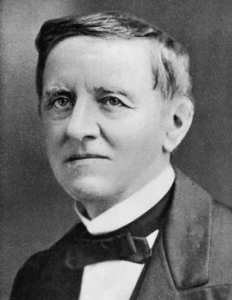
Samuel J. Tilden

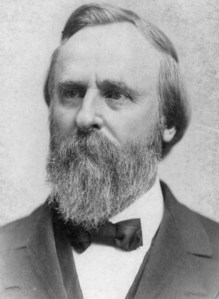
Rutherford B. Hayes


The 1876 Presidential election,which got a lot of attention after the 2000 contested Presidential election, was one that was fraught with fraud and voter irregularities, intimidation, violence and shooting clubs, particularly in the South.  The Democratic candidate Samuel J. Tilden had a slight lead over Rutherford B. Hayes in both the popular and Electoral College vote. However, there were 20 disputed electoral votes. Tilden eventually needed just one of those votes to give him the majority needed to claim victory.

The Electoral College has been the bane of the Democratic Party. Thomas Jefferson first got ensnared with Electoral College when he and Aaron Burr tied for the 1800 election. It took the House of Representatives, which was full anti-Jefferson Federalist, 11 days and 35 ballots to realize they hated Burr more than Jefferson and that the Electoral College really wanted Jefferson as president. The Twelfth Amendment was passed to make sure that snafu would not happen again.

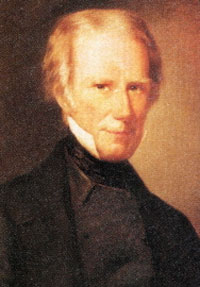
Henry Clay

In 1824 Andrew Jackson saw Henry Clay steal his election in the House when Jackson failed to win a majority of the electoral votes in what was called the “Corrupt Bargain.”  It was a deal that made John Quincy Adams president and Clay the Secretary of State. At that time, four of the first six presidents had served as Secretary of State and Jackson’s supporters believed this was Clay’s attempt to position him for a run at the presidency. When Jackson was elected president, he took out his revenge on his political opponents and moved his policies through with the help of the “spoils system.”

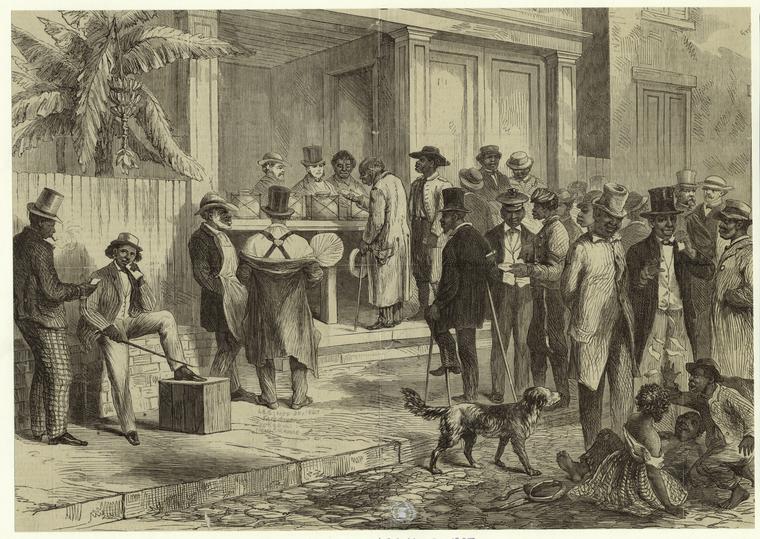
But in 1876, parts of the South were still under Radical Reconstruction.  Union troops were still garrisoned around the South to ensure that Reconstruction civil rights continued and to ensure Republican control of state governments.  The South was ready to throw off the yoke of Radical Republican rule and run Northern carpetbaggers and scalawags out of Dixie. In fact, there were Democratic majorities in all but three Southern States: Florida, South Carolina and Louisiana.

Former slaves voting in 1867 in New Orleans

The 1876 election was the first Presidential Election in 20 years where a Democratic Candidate won a majority of the popular vote. The close election was compounded by voting irregularities and was contested in the three Southern states where the Grand Old Party was barely holding on.  There was one electoral vote being contested in Oregon.

Flash back to 1869 when Congress passed a new Judiciary Act.  This Act expanded the Supreme Court to nine justices.  During the Civil War, and the years following the war, Court membership slipped to seven.  The following year President Ulysses S. Grant chose two new justices, William Strong and Joseph P Bradley, both were sworn in March of 1870 and both would play a role in the 1876 election, Bradley more so than Strong.

As Inauguration Day approached like a lumbering fire truck, attempts to settle the matter brought about an extraordinary committee.  For the first time since the Civil War, the Democrats were in control of the House of Representatives. The Republicans held the Senate with the White House up for grabs. It was the beginning of the “Solid South.”  The old Confederacy states were falling back into the hands of Democrats – except for the three contested states.

In a moment of bipartisanship, despite that the country was still waving the bloody shirt over the Civil War, Congress devised a sure-fire compromise to grid lock who would get the 20 contested electoral votes.  It created a 15-member Electoral Commission of seven Democrats and seven Republicans with one so-called independent member. To further complicate matters, the commission was composed of five Senators, five House members and five Supreme Court Justices.  A real All-Star team of who’s on first.  The swing vote in this ensemble was supposed to be Justice David Davis.

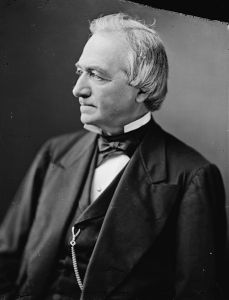
Joseph P. Bradley

With so much at risk, backroom  deals were being tossed around like horseshoes at a backyard barbecue. Illinois Democrats tried to get out in front of the deal. After the commission members were chosen, Illinois Democrats elected Davis to the Senate. Their thinking was that this might help solidify Davis’s Democratic leanings. Davis, however, recuses himself.  Enter the one man with the one vote or in this case 20 votes: moderate Republican and Supreme Court Associate Justice, Joseph P Bradley, as the crowd surfer in the political mosh pit.

In no great surprise, the commission voted strictly along party lines: eight votes for Hayes and seven for Tilden giving Hayes a 185-184 victory and the White House. Starting with Lincoln the GOP would control the White House for 56 of the next 72 years. Although they did impeach Andrew Johnson, supposedly one of their own. The Republicans would keep a firm hand on the White House through the Gilded Age and right up to the Great Depression.

The Democrats did not come away empty handed.  They got Federal troops withdrawn from the South, which ended Reconstruction. Enter the age of Jim Crow and any attempts at civil rights in the South for another 100 years. They also got a Southern Democrat in Hayes Cabinet, the Post Master General. Finally they got a promise that there would be federal support for the Texas Pacific transcontinental southern railroad route. The railroad never happened. Business will always trump politics.

The Senate may have nuked a big part of the filibuster enabling it to get one man’s vote on the Supreme Court. The fallout from the blast, however, may not be radiated for years to come.


Pictures Wiki Commons

Some websites to visit

http://www.pbs.org/wnet/jimcrow/stories_events_election.html

https://millercenter.org/president/jackson/domestic-affairs

http://www.history.com/topics/us-presidents/compromise-of-1877

http://constitution.laws.com/election-of-1876

https://www.gilderlehrman.org/history-by-era/reconstruction/essays/contentious-election-1876

https://books.google.com/books?id=_48uAgAAQBAJ&pg=PA48&lpg=PA48&dq=joseph+p+bradley’s+nomination+hearings+in+the+senate&source=bl&ots=dvT5ChCZIm&sig=zk0RGc0ZQQZ5v_PND25JnlSRCMw&hl=en&sa=X&ved=0ahUKEwjA5qanpKTTAhXIVyYKHWx9AcIQ6AEIRTAH#v=onepage&q=joseph%20p%20bradley’s%20nomination%20hearings%20in%20the%20senate&f=false


April, a Divisive Month and part of a rough 100 Days


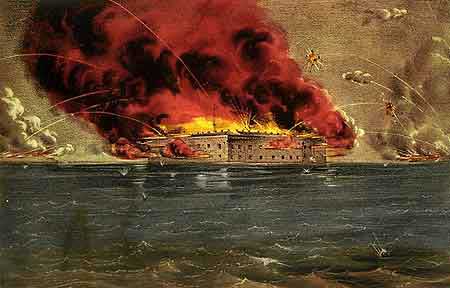
With an explosion that would echo through the next four years and a flash of light that would singe the soul of America, a 90 pound shell belched out from the mouth of 10 inch Seacoast Mortar into the early morning darkness.  Its parabolic arch and burning fuse moving upward and over the waters of Charleston Harbor and then descending downward, exploding over Fort Sumter signaling the near-by forts to commence firing.  This was April 12, 1861, 40 days into President Abraham Lincoln’s first administration.

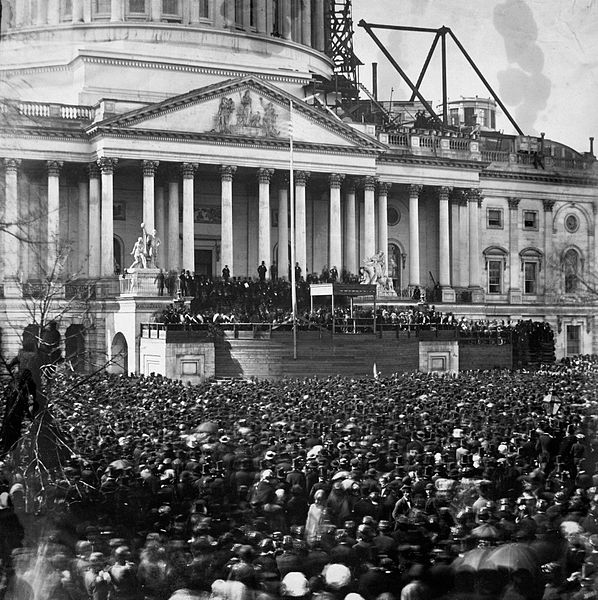
Lincoln basically had to sneak into Washington to be inaugurated. This may have been a good indication how his first 100 days would go.  Today we argue over the size of the crowds at recent presidential inaugurations.  Lincoln won the election with less than 40 percent of the popular vote but had almost 60 percent of the electoral vote. Lincoln is the only president elected with less than 40 percent of the popular vote. He did not receive a single vote in the Deep South “cotton belt” States. Even as popular as President John Kennedy was, he won with less than 50 percent of the popular vote.

Lincoln’s Inauguration Day crowd. Not so huge by today’s standard.

So on March 4, 1861, when Lincoln took to the steps of the Capitol seven Southern states had already left the union — the most of any president before or since — with four more to follow after the bombing of Fort Sumter. April was a rough month for Lincoln and the next four years would be rougher.

In the 1800’s  politics went beyond Blue States and Red States.  Lincoln may not have been the first president to hear some form of “not my president.” But he was the first and only president to face  a real divided America.

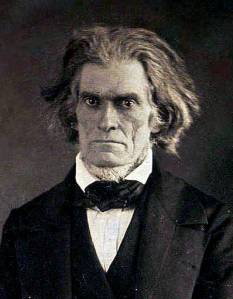
Calhoun did not see eye-to-eye with Jackson.                                                             fabius maximus


The talk of states actually leaving the Union started with the Hartford Convention, New England states strongly opposed to the War of 1812.  Later during the Nullification crisis,  South Carolina threatened to leave the Union over tariff issues during Andrew Jackson’s administration.

As the North became more industrialized there was a need for a higher tariff to protect the growing commerce.  The South remained agrarian based and disagreed with the tariff.  John C. Calhoun, a South Carolina Democrat and Jackson’s former vice president, championed the idea floated by Thomas Jefferson and James Madison in The Kentucky and Virginia Resolutions that states could nullify laws that they considered unconstitutional. This was before Marbury v Madison where Chief Justice John Marshall ruled that the Supreme Court gets to rule on the constitutionality of laws not the states or the executive branch. The Nullification Crisis was settled with the Union intact.  But after leaving office, Jackson was asked if he had any regrets to which he replied that he regretted not hanging Calhoun when he  had the chance.

Dealing with divisive issues is part of American history. For Lincoln there was no repeal and replace.  It was preserve the Union.

The Civil War put to rest the concept that states can nullify federal law or can withdraw from the United States. It  also was the starting gun for the diverse economy that was to develop in the post war era as railroads linked the country. The diversity of the population continued to change as people from as far away as China and Scandinavia were following the Irish and Germans to America and filling in the land between the coasts. Soon people from Eastern and Southern Europe and from the Americas would pour into the country.

It may be ironic, and just possible, that America’s  integrated diversity: economically and culturally, has softened out the rough differences of conservative or liberal; rural or urban; or whatever one’s religious beliefs might be, that keeps America as one despite attempts to separate and divide.

en.wikipedia
Pryor in later years — if you cannot beat ’em,  join ’em            en.wikipedia

Nobody is quite sure who fired the first shot at Fort Sumter. Confederate lore has it that Edmund Ruffin, a 66 year-old  Virginia secessionist, yanked the lanyard that sent the first round down range after  Roger Pryor, a Virginia Congressmen, refused saying, “I could not fire the first gun of the war.”


Some say that Capt. George S. James of the South Carolina Artillery gave the order to fire but did not physically set the fuse that ended up destroying the South and killing a half-a-million Americans.

Ruffin was such a die-hard secessionist that he could not envision living in a post Civil War world with Yankees. On June 18, 1865 Ruffin wrote: “I here declare my unmitigated hatred to Yankee rule — to all political, social and business connection with the Yankee race.” He then committed suicide.

Ruffin had a strong dislike of Yankees.                            en.wikipedia

Pryor, on the other hand, became a Confederate brigadier general and moved to New York after the war where he practiced law and served  as a judge on the New York State Supreme Court.

As for James, he became a Lieutenant Colonel and was killed at Fox Gap on September 14, 1862 during Lee’s invasion into Maryland.

The shots fired at Fort Sumter just happened to be unloosed in April.  It is nothing against the month of April. All the “lost causes”  leading up to the Civil War were cast well before Ruffin, Pryor or Johnson stood on the parapets at 4 am looking out to Fort Sumter and debating who should have the honors of getting the shooting war started. Not only did the war start in April it basically ended in April with both Robert E. Lee and Joseph Johnston surrendering the main Confederate Armies.  Lee surrendered on April 9th and Lincoln was assassinated five days later.

Some web sites to visit:

http://moultrie.battlefieldsinmotion.com/Artillery-10inchMortars.html

http://www.civilwar.org/hallowed-ground-magazine/winter-2010/problem-in-charleston-harbor.html

http://www.ushistory.org/us/24c.asp

http://www.presidency.ucsb.edu/showelection.php?year=1860

http://www.civilwar.org/education/history/biographies/george-sholter-james.html

http://www.eyewitnesstohistory.com/sumter.htm

https://www.usconstitution.net/elections.html

http://www.factcheck.org/2008/03/presidents-winning-without-popular-vote/

http://www.knowsouthernhistory.net/Biographies/Edmund_Ruffin/

The Know Nothings Ride Again


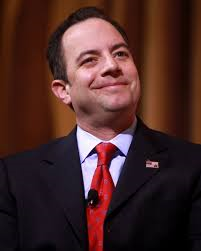
GOP Chairman Reince Priebus


There is a certain amount of comfort in the consistency of life as we know it; or in some case refuse to understand it. We take it for granted that the sun will rise in the East every morning; that the swallows will return to Capistrano; that Halley’s Comet will be whipping into view in 2061; and that some political party will spiral down into stupidity.

In the late 1850s the Whig party began to disintegrate. Zachary Taylor was the last elected Whig president. However, when he died on July 9, 1850 the presidency passed to Millard Fillmore who has the honor to be the last Whig president.
There are several scientific maxims that can apply to social situations. Matter cannot be created or destroyed. It can be transformed into other states. In the case of the Whig party it disintegrated and started to morph into the American Republican Party, which quickly became an anti-immigrant party soon to be known as the Know Nothings. Although not all former Whigs found this party to their liking. Abraham Lincoln was one such Whig.
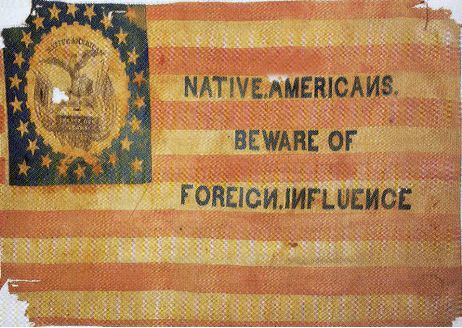
The American Republican Party was founded in New York in 1843 and was associated with a secret organization: The Order of the Star-Spangled Banner Society. Their not so secret response that members would give to identify each other was “I know nothing.”

Knownothingflag
The Know Nothing Flag

It is easy to understand why it started in New York. More than 70 percent of country’s immigrants came into America through New York City’s Castle Garden depot or the “Golden Door.” Seven and-a-half- million immigrants came to America from 1820 to 1870. This influx was more than the entire population of the United States in 1810. One third of the immigrants came from Ireland and another third came from Germany. In most cases they were Catholics coming to Protestant country.


pope
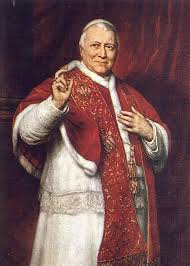
Pope Pius IX

There may have been a real concern among nativists that besides taking jobs from the locals the Pope would be holding Mass in the Capitol. In the middle half of the nineteenth century, more than one-half of the population of Ireland immigrated to the United States.
There was some violence associated with the Know Nothings campaigns as nativists battled Irish immigrants. Catholic Churches and schools were burnt and at least 20 people were killed in one riot. The Know Nothings did have some local success and some members of Congress claimed they were affiliated with the Know Nothings.

imagesK1I61VOF
However, one politician of the time  did not join their ranks. In an 1855 letter to his good friend Joshua Speed Abraham Lincoln wrote:
I am not a Know-Nothing. That is certain. How could I be? How can anyone who abhors the oppression of Negroes, be in favor or degrading classes of white people? Our progress in degeneracy appears to me to be pretty rapid. As a nation, we began by declaring that “all men are created equal.” We now practically read it “all men are created equal, except Negroes” When the Know-Nothings get control, it will read “all men are created equal, except Negroes, and foreigners, and Catholics.” When it comes to this I should prefer emigrating to some country where they make no pretense of loving liberty — to Russia, for instance, where despotism can be taken pure, and without the base alloy of hypocrisy.
The American Republican Party nominated none other than Millard Fillmore and Andrew Jackson’s nephew as their standard bearers for the 1856 presidential election and managed to carry Maryland in the general election. The party, like the country, fell apart in the face of slavery as abolitionist flocked to the newly formed Republican Party and pro-slavery men moved to the Democratic Party.

It may be that stupidly, like matter cannot be created or destroyed.  This is a disheartening concept to think that there is an finite amount of stupidity that covers the Earth much like water. There also appears to be some logic to it all.  Just like the swallows returning to Capistrano, stupidity too, is seasonal phenomenon. It cycles itself every four years peaking on the Tuesday after the first Monday in November.


“May Day! May Day!”

8hoursday_banner_1856

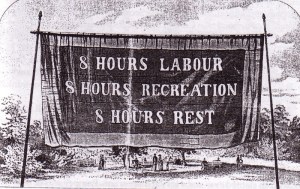
For most Americans an eight-hour work day is something we take for granted.  It is hard to believe that at one time in our history people labored on factory floors for 10 to 16 hours a day or picked cotton from sun up to sun down six days-a-week. Unlike those sweat-shop workers of yesteryear, today’s worker is more concerned with having their job off-shored or being replaced by a robot. Technology has replaced workers on the assembly line as well as on the bank teller line.
cotton pickers

It was after the Civil War, the first real industrial strength war that the industrial revolution started to crank it up into high gear. Workers had to kick it up a notch as they raced with machines to keep up with production. It was the Gilded Age when a buck earned was a tax free buck, which is appealing in any Age.

The industrialist of this time had few, if any, labor laws or regulations to slow production down. Any hint of a child labor law or a minimum wage was at worst anarchy or at least some form of creeping socialism that had to be eradicated.

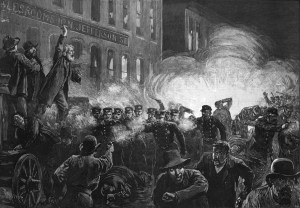
On May 4, 1886 in Chicago’s Haymarket Square a protest over workers’ rights turned deadly when somebody (an archaist) chucked a bomb at police sent to disperse the rally. The ensuing riot killed seven policemen and at least four civilians. Police rounded up eight local anarchists. In the ensuing trial for conspiracy seven of the eight were sentenced to hang and one was given a 15 year prison sentence.

http://www.chicagohistory.org/hadc/intro.html

HACAT_V46


However, a 40 hour work week as not as far fetched as it seemed. Forty years later on May 1st Henry Ford would be one of the first industrialists to bring the eight-hour-a-day, 40 hour-a-week work schedule to the factory floor.  In 1914 Ford began paying his workers a minimum wage of $5 a day for an eight hour day.  This was a raise from $2.34 for nine hours-a-day.

http://www.history.com/topics/haymarket-riot

To put some perspective on this the Federal Minimum Wage in 1977 was $2.30 an-hour. The current rate is $7.50 an-hour and may vary from state to state. In many cities there is a push for a $15 an-hour minimum wage. Economists and politicians debate the impact that these wage hikes will have on the price of hamburger.  One thing is certain: The economy did not collapse when Henry Ford put in the 40 hour week and Americans did not become communists.

http://www.history.com/this-day-in-history/ford-factory-workers-get-40-hour-week

http://www.huffingtonpost.com/leonhard-widrich/the-origin-of-the-8-hour-_b_4524488.html


The Big Bang and the Expansion of Everything

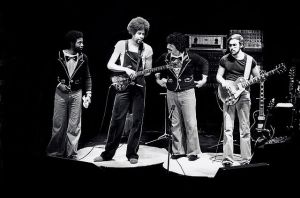
It was like any Sunday morning at 5 am. I was showing up for my shift on the university’s public radio station. I was the board operator for Classics at Sunrise. The operator before me was finishing up Night Flight, a progressive jazz show with less programing restrictions. He was playing Return to Forever a jazz fusion group that started in the ‘70s. Pianist Chick Corea founded the group that featured a variety of jazz players like Stanley Clarke, Al di Meola and Airto Moreira. I, on the other hand, had music picked for me to play by the station’s music director.

https://www.youtube.com/watch?v=ppUpj90YAFU

640px-Return_to_Forever_1976

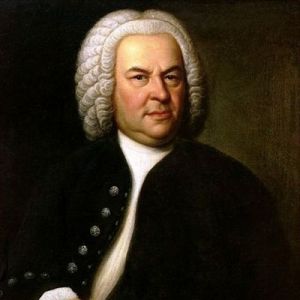
As he was wrapping up Return to Forever I was getting a Bach organ fugue set up on the turntable. My friend saw what I was queuing up and said “Bach.”  He then said something that has stayed with me for more than 30 years. “We are just about to take a 300 year step back in time.”  I do not recall the particular fugue I was going to play. It could have been Bach’s – Fugue in G minor BWV 578; a rocking number for the 1750s.

https://www.youtube.com/watch?v=PhRa3REdozw

Bach

The radio station’s format was one of seamless programing. In other words there was no break between programs.  We went from Corea to Bach in the spin of the turntable. I was never sure how many people were actually listening at that time in the morning.  I imagine some traveler heading down I-75 through the misty fog of the early morning thinking he had just entered the Twilight Zone.

All of this brought me to another tune–the theme to The Big Bang Theory: The History of Everything. The concept that “14 billion years ago expansion started” is hard to contemplate. What is even harder to contemplate is, according to Space.com, this expansion occurred in less than a burst of light. That’s pretty dang quick since nothing has outrun light since.

The universe “experienced an incredible burst of expansion known as inflation, in which space itself expanded faster than the speed of light. During this period, the universe doubled in size at least 90 times, going from subatomic-sized to golf-ball-sized almost instantaneously.”

https://www.youtube.com/watch?v=6Hc70xg9tHw

An established walnut tree, which we may assume comes from a walnut,  is about the same size as a golf ball. It only grows about 12 to 24 inches annually. A seedling may jump 36 to 48 inches in its first two growing seasons. It takes close to 50 years for a walnut tree to get to the point where it’s wood is good for flooring, cabinets or gun stocks. The tree might live for 130 years getting close to 100 feet – an ever expanding feat.

http://www.gardenguides.com/131861-growth-rate-walnut-trees.html

Expansion can come in many forms and more Earthly forms move much slower. Take the Geologic Time Scale, for instance where time is not measured in seconds or minutes but “Events” where plants and animal life may have lived and then become extinct or in Eons which can be 100 million years.  The Phanerozoic Eon, the current eon, started 500 million years ago give or take a million.

800px-Emigrants_Crossing_the_Plains,_or_The_Oregon_Trail_(Albert_Bierstadt),_1869

http://geology.com/time.htm

It has taken man awhile but we have picked up the pace a bit.  It took some time to go from foot to horseback but that is what made the US Westward Expansion possible. In the 1840s people moved along the Oregon Trail as fast a team of oxen could pull a wagon – generally as fast a sore-footed Neolithic man could walk. It was not until the steam engine train came along did we ratchet the speed up to more than 20 miles per hour expanding the distance we could travel. And it seems ever since then expansion has quickened exponentially. I have no formula for this expansion but according to Vocabulary.com “the root of exponentially is the French verb exponere, meaning ‘to put out.’ Think of a factory that puts out so many products its creations seem to increase exponentially.”

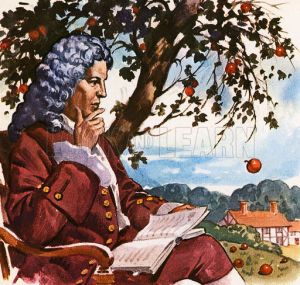
Sir Isaac Newton

It has been said that Aristotle was the last man to know everything. This would be incredible, if such a claim is even possible. Information and knowledge in the ancient world moved as fast as scribe could  chisel cuneiform or hieroglyphics. And then only a handful of people could read it let alone understand what was put into stone. But this all changed with the printing press. Information became portable and privy to the masses. Men like Thomas Jefferson collected knowledge in books accumulated  in libraries.  Jefferson would probably be stunned to see how information has exploded since Al Gore invented the internet.  Never in human kind have people had so much information.  It is hard to believe a 12 year-old middle-schooler with a smart phone has more “instantaneous” information at the touch of fingertip then Isaac Newton had in all of England.

voyager1

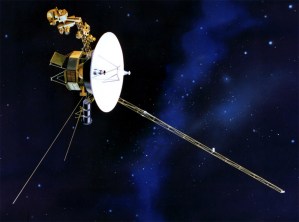
We have been riding that Big Bang wave of expansion from that first flash of subatomic particles. Today we just try to keep up with expansion from horseless carriages to Voyager 1 leaving the solar system. It is hard to imagine a time when large numbers of people had no idea of an expanding universe. I think it would look something like when the first Spanish Conquistador waded the last steps up onto a sandy beach in the New World. Was it a step back in time 300 or 400 years; or was it a leap forward? I guess it depends on which way one is looking.  For certain, it was the universe expanding.


Sgt Peppers

02BEATLES5-articleLarge

It was twenty years ago today
Sgt. Pepper taught the band to play
They’ve been going in and out of style
But they’re guaranteed to raise a smile
So may I introduce to you
The act you’ve known for all these years
Sgt. Pepper’s Lonely Hearts Club Band…

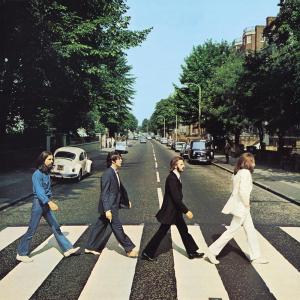
abbeyroad

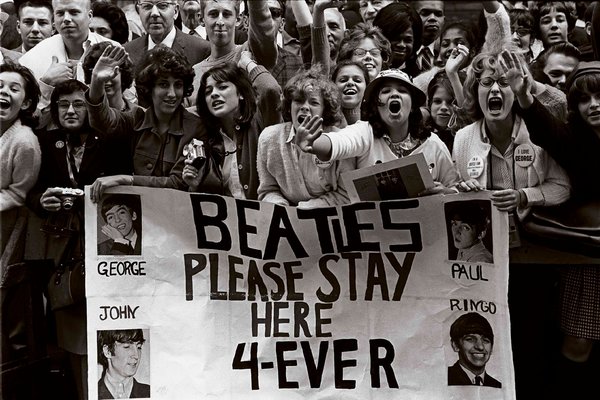
Actually it was February 7th 52 years ago that the Beatles landed at JFK airport and the British Invasion was on. By the end of the decade The Beatles would be a collection of individuals.  But before they broke up they set a new course for pop music.  They also left behind some mysteries like was the Walrus really Paul? And what was their last album?

According to a 2013 Rolling Stone  article:

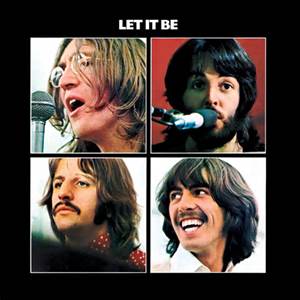
“Abbey Road was the last (album) they recorded, but Let It Be was the last they released. So did the greatest band ever bid farewell with “Her Majesty” or “Get Back”? Does the story end with Paul saying, “Someday I’m gonna make her mine,” or John saying, “I hope we passed the audition”?”

let it be


http://www.rollingstone.com/music/news/hey-its-friday-wanna-argue-about-the-beatles-last-album-20130614

http://www.biography.com/people/groups/the-beatles