Hacking, Cooping, Ratfucking and a Quasi War

When it comes to the alleged Russian hacking of the Democratic Party the question is not did the Russians hack the Democratic Party during the election. The real question is more why wouldn’t they hack.

binghamlg
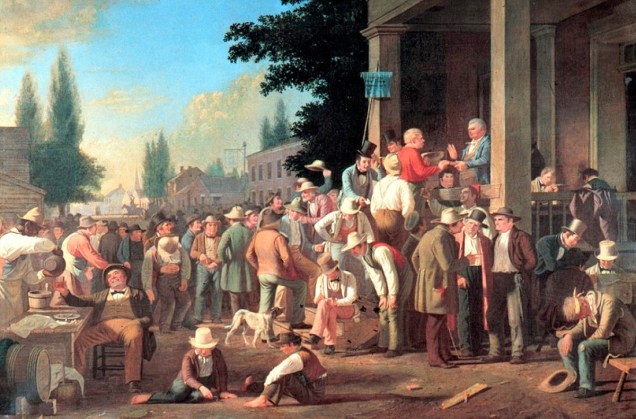
The County Election, 1852 by George Caleb Bingham

Disrupting elections is an American tradition. Why have states been babbling on about voter fraud and passing laws for tougher voter identification? Candidates and their backers have been trying to game the outcome of elections in this country since the first wagon loaded with barrels of hard apple cider was served up gratis for showing up at the polls. There was nothing wrong with Election Day liquor so long as it was not served up by a foreign power.

In the 1840s Baltimore political gangs took election canvassing to newer heights that went beyond stealing election ballots, bribing judges and outright voter intimidation. There was the practice called “cooping.”  “Potential voters” were swept up and steered to a local tavern where they were sequestered and plied with booze until Election Day.  Then they were paraded from one polling place to another polling place to vote.  In some cases the inebriated sots where taken back for a quick change of clothes as a change of identity so they could vote again thus giving true meaning to voting early and often.

poe
The tale to tell is what happened to Poe on Election Day.

There has been speculation that the mysterious death of America’s first detective writer, Edgar Allan Poe, was shrouded in such voter fraud.  Four days before his death Poe was found on Election Day, in what was believed to be a drunken state, outside of Ryan’s 4th Ward Poll watering hole, a tavern known as Gunner’s Hall.  Some Poephiles believe Poe, who was already in poor health, was dragooned into one of these gang-related Election Day cooping efforts.  Once he had fulfilled his civic duty he was cast out on to the street. But these efforts, although coordinated to affect the election’s outcome, were not perpetuated through a foreign power.

http://www.eapoe.org/geninfo/poedeath.htm

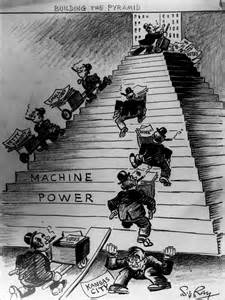
Most American high-schoolers are familiar with the New York City machine The Tweed Ring. William Tweed managed to take control of New York City politics. It was estimated in 1877 that Tweed had stolen between $25 million to $45 million from New York City.  The “Boss” ran a Big City Machine that controlled the loyalty of the voters through graft, jobs, and city projects.

city-machine
Votes go up graft comes down.

Just about every big city has had some sort of machine.  Kansas City had Thomas Pendergast.  Pendergast was the Chairman of the Jackson County Democratic Party. In the latter half of 1920s and through the ‘30s he was able to get friendly politicians elected to office. In fact one friend made it as far as the US Senate and then on to the Oval Office: Harry Truman.  Before his ascent to the presidency Truman was known as the Senator from the State of Pendergast. But both Tweed and Pendergast’s penchant for skirting the law led to convictions.  Tweed was convicted on 204 counts of corruption and Pendergast for income tax evasion. Both served time.

In more recent times we can see that the 2016 election between Donald Trump and Hilary Clinton was close. Clinton received around two million more popular votes than her opponent.  However, her margin of popular vote was a Whopper with fries compared to John F. Kennedy’s 1960 victory.  Richard Nixon lost the popular vote to John Kennedy by a .17% margin or just fewer than 114,000 votes. In most states the margins were as thick as a spider’s web. After the election there was speculation that the Cook Country Democratic boss, Richard Daley, served up the presidency to Kennedy with an overwhelming Democratic vote tally.

Does the name Donald Segretti ring a bell, probably not?  He was one of many of President Richard Nixon’s dirty tricksters – or a ratfucker. In a time before hacking and the social media platforms of Twitter, Facebook and email, dirty tricksters would use the letter heads of political opponents. Once the letter head was acquired then fraudulent statements or “fake news” could be circulated. There were various fake letters circulated from one Democrat accusing another Democratic candidate of having sexual affairs and children with teenagers to being mentally unbalanced. This was just the beginning of the Watergate scandal that would soon turn the word “gate” into a suffix for any major scandal. Most recently Deflategate where New England Patriot quarterback was accused of tampering with the air pressure in footballs used in a championship game.

http://www.washingtonpost.com/wp-srv/national/longterm/watergate/articles/101072-1.htm

The most famous of these letters was the Canuck Letter.  This was a forged letter from the Nixon Campaign that appeared in the Manchester Union Leader newspaper two weeks before the New Hampshire presidential primary election.  The letter attributed disparaging remarks about French-Canadians to Democratic candidate Senator Edmund Muskie of Maine. The letter and the ensuing events, with Muskie accused of crying during a speech before the Manchester Union Leader building in a driving snow storm, led some to believe that the letter sunk Muskie’s hopes for a run for the presidency in 1972.

https://www.youtube.com/watch?v=RoEEs9cD4JI

There was at least one time when foreign diplomats openly tried to influence American public opinion. It was in the turbulent times of the new republic after the Revolutionary War.  Events in France led to the Reign of Terror and the beheading of Louis XVI and his wife.  Before long the newly formed French Republic was at war with every European

adet
Pierre Adet

monarchy – and urging its fellow republic, the United States, to join in.  France, using the 1778 Treaty of Alliance as leverage, tried to enlist American support for France’s war against Great Britain. French diplomats like Edmond Genet and Pierre Adet began to outfit privateers in American ports to attack British shipping. They tried to enlist Americans to their cause to invade Spanish territories and even possibly Canada.


Prior to the 1796 election Adet wrote several letters trying to influence public opinion. In one letter he indicated that if Thomas Jefferson was not elected president there could be war with France. He also leaked terms of the recently negotiated Jay treaty with Great Britain that was up for ratification in the Senate and tried to influence the Senate’s vote. In one letter Adet said that this treaty indicated that America was no longer a neutral country.

President Washington was trying to guide the young country to neutral waters despite the strong sentiments for France, particularly among members of Jefferson’s newly founded Republican Party.  This was a time of sharp partisan politics as Federalists and Alexander Hamilton leaned towards England. The two parties clashed in Congress over many issues.

https://www.ewu.edu/Documents/CSBSSW/History/Conlin/Conlin_American_Mission_Adet.pdf

Despite Adet’s meddling, John Adams won the 1796 election and America eventually fought an undeclared war called the Quasi War with France.  It was also a time when Federalists in Congress passed the Alien and Sedition Acts. The Alien Act gave the government new powers to deport foreigners.  It also increased the residency requirements.  Immigrants were eligible to vote after five years of residency but the new law increased residency  for new immigrants to 14 years.

The Sedition Act was aimed more at budding growth of partisan newspapers, particularly Republican newspapers.  The Act basically prohibited public opposition to the government. Those who “write, print, utter, or publish . . . any false, scandalous and malicious writing” against the government could  and did face fines and imprisonment.  More than 20 Republican editors of newspapers were arrested with some being jailed.  The law was later repealed during Jefferson’s first administration.

http://www.ushistory.org/us/19e.asp

Getting back to Russian hacking, why not? American elections are an invitation for influence peddling and meddling, mudslinging, and misstatements. Now some 400 pound man in New Jersey can affect the presidency from his bed, only getting up for a bag of Doritos and a Mountain Dew.


See All the President’s Men by Carl Bernstein and Bob Woodward https://books.google.com/books?id=6MYYI_LNfWsC&pg=PA137&lpg=PA137&dq=canuck+letter&source=bl&ots=10tTA_hwCe&sig=jUax5YntQMQI0uo-AE-zk0nHgls&hl=en&sa=X&sqi=2&pjf=1&ved=0ahUKEwiG-_SS0LDRAhVGWCYKHd1cA70Q6AEIeTAT#v=onepage&q=canuck%20letter&f=false


Ostracized or Exiled


4640103
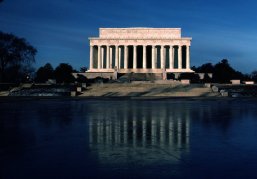
Lincoln Memorial

In the highly charged campaign-election atmosphere, Donald Trump promised to drain the D.C. swamp — starting with Hillary Clinton.  His supporters chanted throughout the campaign to “lock her up,” which sounds better than “ostracize her!”

The tone in the transition period, however, has changed dramatically from assigning a special prosecutor to look into Hillary Clinton’s improprieties from Trump’s first day in office to more of Lincoln’s Second Inaugural address were Lincoln advocated “malice towards none, with charity to all.”   President-elect Trump must have been channeling Lincoln, a president who presided over a severely divide country, when he said: “I don’t want to hurt the Clinton’s, I really don’t, she went through a lot and suffered greatly in many different ways.”

With that said, and since we are in what appears to be a wave of populism, there is one way to drain the D.C. swamp without legal prosecution but through the ancient Greek practice of ostracizing those who may have stepped out of favor with the voting public.

The Athenians practice ostracizing their leaders on an annual basis. The Greeks often sent off some of their most illustrious leaders into 10 years of exile.  In fact, Themistocles, the chief advocate and designer of Athenian naval power, who defeated the Persians at the Battle of Salamis, was sent into exile. Despite his forward thinking in preparing Athens for the upcoming struggles with the Persian Empire, he did not survive accusations of “bribery, sacrilege, and a suspicious association with a Spartan traitor.”

In the 1770s Boston was a hotbed of democratic “populism.”   It was not an unusual sight to see a Sons of Liberty inspired-crowd put the hot tar to some poor British official. After being administering the feathers, the misguided official was then regally escorted out of town on a rail. Once the Revolutionary War started, many “loyal” colonists opted for self-exile rather remain unfaithful to their king and face the possibility of mob reprisals.

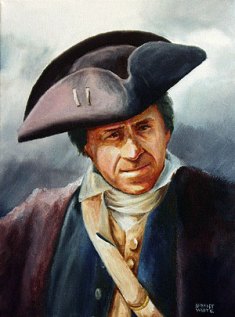
The Sons of Liberty knew a thing or two about putting democracy into action. A mob can be a beautiful thing if it is controlled but, in the wrong hands extreme mischief can spiral into anarchy as when angry Massachusetts’ farmers decided to close down the courts to keep the state from reposing their property for back taxes.  When their attempt failed, one of the chief instigators, Daniel Shays, chose voluntary exile when he fled to Vermont to avoid prosecution.

portrait_daniel_shays
Revolutionary War Army Captain Daniel Shays

These pre and post-Revolutionary War experience in inciting the people, and dealing with tyrannical Royal governors, must have given the framers some disconcerting thoughts when it came time to amend the Article of Confederation. Instead of amending a loose confederation of states they decided to create a tighter federation of states.  They created a hybrid form of government splitting governmental power between a central government and states and putting various political philosophies that incorporated checks and balances, separation of powers, (specifically in creating a separate judicial system) and a Bill of Rights into a Constitution that protected the people and the powers to be from each other.

The framers of our Constitution borrowed liberally from past political thinkers from Locke, Rousseau, and Montesquieu; but sending citizens deemed undesirable into exile was not incorporated into the Constitution. The framers also understood the difficulties the Greeks had in keeping a pure democracy from turning into a tyranny and they no doubt understand the slow fade that took the Romans from a republic to an empire ruled by a soon to be gods.

clement_vallandigham_-_brady-handy
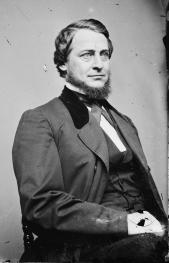
Vallandigham

During the Civil War Clement Laird Vallandigham, a former Congressman from Ohio and an anti-war Democrat, who some believed was a member of the Knights of the Golden Circle, was banished to the Confederacy.  In the opening months of 1863 when the Civil War still hung in the balance, the Union Army issued General Order 38. The order curbed the right to express anti-government sentiments or to convey sympathy for the enemy.


Vallandigham, being the good Copperhead spoke out against Lincoln and the war in a Columbus, Ohio speech.  Union General Ambrose E. Burnside promptly had him arrested, tried by a military court, convicted and sentenced to two years in a military prison all the while avoiding a civil trial. Lincoln however, showing some charity for Vallandigham, commuted the sentence and exiled the former Ohio Congressman to the Confederacy.

The Southerners were probably no more interested in having him around sent him off to Bermuda. From there Vallandigham made his way Canada and ran unsuccessfully for governor of Ohio from Canada. Vallandigham eventually crossed the border and returned to Ohio. He returned after Lincoln had won the 1864 election. Lincoln, however, ignored his return and deemed Vallandigham’s pro South rhetoric and activities no longer a nuisance as Union armies began surrounding Richmond.

Lincoln was dealing with a divided country that some would say was in open rebellion.  Others might say they were defending their rights and homes from an over reaching federal government.

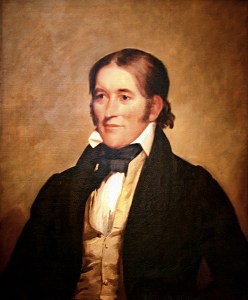
Most Americans who choose to go into exile do so to avoid criminal prosecution.  After falling out of favor for killing Alexander Hamilton, Aaron Burr slithered out West to look for new empires to create. His activities there ran him afoul with the Jefferson Administration.  Burr was later arrested and brought back East and tried for treason and found innocent. He later fled to Europe to avoid creditors. Some may say Davy Crockett went off into self-exile after losing his election for Congress by saying, “You may all go to hell and I will go to Texas.”

david_crockett
David Crockett

A modern day financial flight to exile was millionaire financier and Richard Nixon supporter, Robert Vesco, who some have said was the “the undisputed king of the fugitive financiers.” He fled the United States in 1973 for Costa Rica and eventually died in Cuba.  A more familiar flight from justice is Edward Snowden the Booz Allen NSA subcontractor who leaked secret NSA surveillance documents to the press. He has made Russia his home.

Lost elections, criminal charges and convictions might be one way to encourage certain evasive creatures to leave the quagmire of D.C. But any attempt to drain the D.C. Swamp of certain entrenched reptiles may be as futile as trying to lure escaped pythons and boa constrictors to leave the Everglades.

Mayhem is Everywhere

mayhem

About 40 years ago my dad once said you can go insurance broke. He said that  in time when the median price for a new house was under $70,000. It was time when a mid-size sedan did not need “gap” insurance to cover the immediate drop in value of a new car when its tires hit the street. It was a prehistoric era when a doctor’s visit could be paid in cash and HMOs were just crawling out of the primordial ooze that would eventually evolve into a renaissance of what we now know as affordable healthcare.

In 2014 insurance companies spent a shade over $5 billion in advertising trying to convince customers to buy products that in most cases are mandated by law as in automobile insurance or workers’ compensation insurance. In most states rates are controlled and overseen by an insurance commissioner. In some cases this is an elected official of the consumer for the consumer. Elected or appointed he is the Kommissar for the insurance industry.

This $5 billion is a paltry sum compared to the $16 billion that car companies spend in a market unregulated by a commission. It is less than the nearly $8 billion the Personal Care Products industry spends to convince consumers which $15 four-bladed transforming shaver is the best.

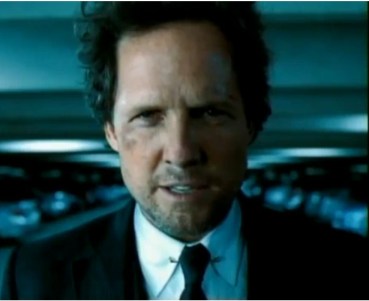
Advertising creates an image of a company and draws customers to its products like Sir Speedy and Mister Peanut. For $5 billion the insurance industry has created some interesting characters to represent them. There is a talking lizard with a British accent. Nothing embodies insurance more than a talking lizard. When it comes to selling there is nothing more convincing than a talking, beguiling reptile to move a product. Just ask Eve.

Hunting and gathering coverage for a discount

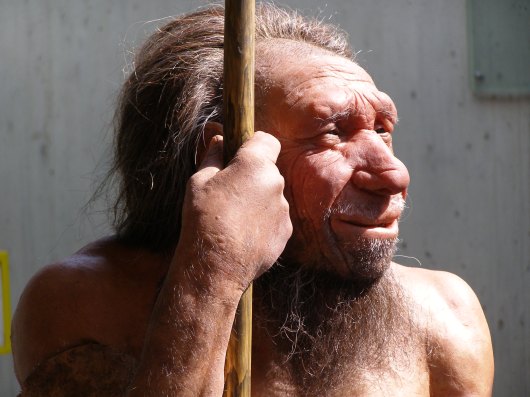
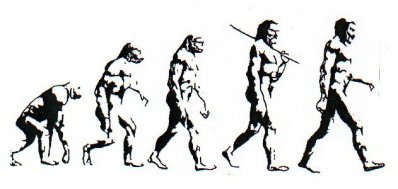
And what kind of message is being sent with those poor, luckless cave men trying to be hip. Neanderthals are constantly getting a bad rap. Life was not so simple for them back in the Stone Age either. And what kind of comment is being made about the insurance buying consumer? Are we Homosapians or just sophisticated Cro-Magnon men with over large deductibles ?

evolutionchart


Then there is the Abdominal Snowman chucking a car-crushing snowball, a fictional accident waiting to happen. Who needs a 500 pound snowball? Golf-ball size hail is a car killer. And everybody loves babies. Nothing makes me want to buy insurance more then giant, diaper wearing,  crying baby that really is a car. This commercial has to be an outgrowth of the old TV sitcom “My Mother the Car.” This was a show that ran in 1965 that TV Guide said in 2002 was the second worst show of all time.

Then there is mayhem everywhere: The one Stooge of the insurance world.  Exploding water heaters and gas grills to recalculating map directions, it is no wonder the cavemen packed it up for a more simpler time. And who can forget white-clad gal who makes buying insurance look as easy as fighting off the mass hordes at a Super Wal-Mart on payday.

stages

And let us not forget the nifty slogans of good hands and good neighbors. Smart consumers may want to forgo their 15 minutes of fame and use it to save money on insurance because as my old man once said “you can go insurance broke.” And if you are not there yet just check out what a COBRA payment would be.


2000px-Supply-demand-right-shift-demand_svg

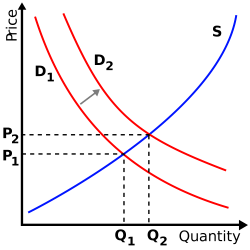
I am not sure of the economics of all this. Is it supply and demand or demand and supply? Is it because there is no snap in the price elasticity of demand?  Or maybe when it comes to insurance there is no inferior good. Who knows, but there seems to be a correlation to a product’s need to how absurd its  commercials are. People have to buy most insurance — a captive consumer — so let’s make it as entertaining and ridiculous as possible.

Space, still the Final Frontier

Rendering_of_Orion_Exploration_Flight_Test_1

Last month the Orion Crew Module was flown to NASA’s Kennedy Space Center. The Orion space craft is designed to take four astronauts beyond low Earth orbit and on to Mars. But before any deeper voyages into space the Orion is scheduled to take a test spin around the  moon sometime in 2018.

http://www.nasa.gov/exploration/systems/orion/index.html

Ironically  it is the near, disastrous flight of  Apollo 13 that holds the record for the farthest voyage from earth: 248,655 miles.  The Orion will go just a bit farther from Earth. The distance to Mars may vary depending on the position of the two planets.  It could be as close as 34 million miles or as far away as 250 million miles. In any case it will be more than a small step or giant leap to get there.

http://www.space.com/24701-how-long-does-it-take-to-get-to-mars.html

Apollo 13’s record setting distance was the unintended consequences of a slight malfunction in an oxygen tank giving us that famous saying: “Houston we have a problem.” The tank exploded due to a frayed wire forcing the crew to shut down the command module and abort a lunar landing. In order to return to earth Apollo 13 looped around the moon in a free return trajectory sending it beyond the low elliptical lunar orbit of 70 to 200 miles as planned.

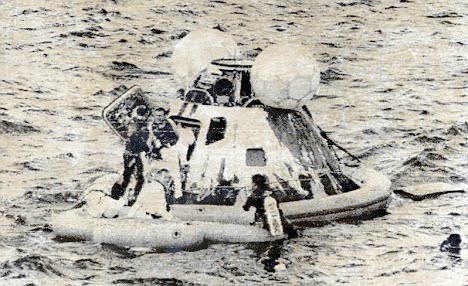
After 56 hours of surviving in 30 degree temperatures in the Lunar Modul, Jim Lovell, Fred Haise and Jack Swigert splashed down on April 17, 1970 proving any landing you can walk away from, or in this case float away from, is a good one.

apollo13

April is a first for other maned space flights. On April 12, 1961, Yuri Gagarin in Vostok I became the first human in space. Yuri’s one lap around the Earth at an altitude of 187 miles took all of  108 minutes.  On May 5 twenty-three days later Alan Shepard’s 15 minute canon ball shot in Mercury 7 boosted him 116 miles into space before he splashed down in the Atlantic Ocean. A year later President John F. Kennedy dropped the starting flag for the race to the moon.

Twenty years after Yuri Gagarin orbited the Earth John Young and Robert Crippen were the first astronauts to take the Space Shuttle Columbia out for a spin.  Young had flown in the Gemini and Apollo programs. Young, like Lovell had flown to the moon twice.  Young, however, as commander of Apollo 16 got his chance to walk on the moon.

Space_Shuttle_Columbia_lands_following_STS-28_in_1989


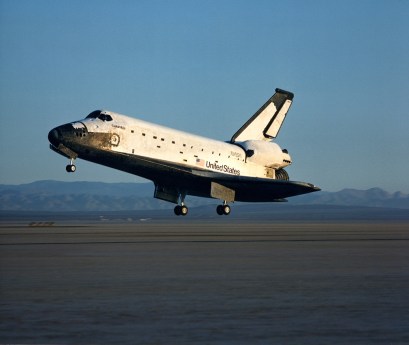
Young and Crippen pushed The Columbia for close to 55 hours and 37 orbits at an altitude of 168 miles above the Earth. It was the first of 27 successful flights for The Columbia.  It’s 22 year career would end when it disintegrate on reentry on February 1, 2003.

There is no race to Mars, as of now. The Orion missions will, however, take space flight from out of the shallow end of space to at least somewhere on the way to the deep end.

Wyatt Earp and Hollywood

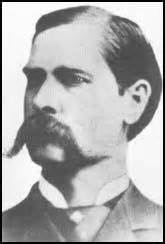
Wyatt Earp, one of the Old West’s most notorious gunman, would be 168 years old this month. Actually he lived to be 80 dying in 1929. It is said that the victor usually gets toearp write the history but in Earp’s case it might simply be that Hollywood  got the chance. But prior to Hollywood’s make over, Earp suffered a lot of what we would call today “misinformation” or simply bad publicity.
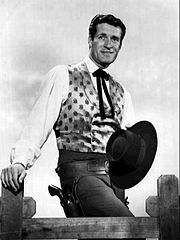
“I am tired of seeing so many articles published concerning me which are untrue,” wrote Earp. In order to correct the “record” and set the untruths right about his life Earp and John H. Ford went to work on Earp’s autobiography. Their attempts to peddle his autobiography were futile.

http://www.historynet.com/john-flood-and-wyatt-earp.htm

Cowboys for the most part had reputations as being a rambunctious crowd prone to drinking, gambling and shooting up saloons. This reputation, however, was slowly beginning to change with end of the 19th Century and the beginning of  the 20th Century. The cowboy was changing from a rowdy individual to the much admired rugged individual portrayed in the paintings of Fredrick Remington and novels like Owen Wister’s The Virginian.

It was in this shifting image that Earp tried to peddle his autobiography off on to silent film star William S. Hart. Hart was a popular Western movie star of the 1910s “and the most revered Western movie actor of the silent era.”

http://www.nytimes.com/movies/person/93608/William-S-Hart/biography

According to IMBd Hart was “A storybook hero, the original screen cowboy, ever forthright and honest, even when (as was often the case) he played a villain.” However, Hart did not buy into the Earp autobiography.

Although things did begin to change. Not too long after Earp died in Los Angles in 1929 Stuart Lake published Earp’s biography: Wyatt Earp: Frontier Marshal. This 1931 publication turned the saloon owner, gun-fighting gambler into Hollywood folk hero.

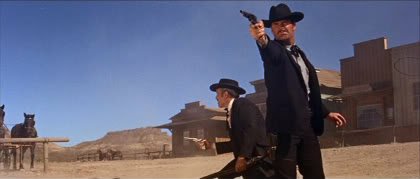
But soon Hollywood buys into Earp as the stand up lawman needed to tame the West  In 1939 Randolph Scott played Earp in Frontier Marshall. That same year Errol Flynn portrays Earp in Dodge City. Other leading greats like Jimmy Stuart, Henry Fonda and Burt Lancaster also  portrayed Earp. Even Bret Maverick, James Garner, played Earp in The Hour of the Gun.

hour-of-the-gun
Jason Robards and James Garner as Doc Holiday and Wyatt Earp

And of course there are the two 1990 revisions of Earp and his brothers in Kevin Costner’s epic film Wyatt Earp, which followed a year after Kurt Russell in the 1993 release: Tombstone.

http://www.criminaleement.com/blogs/2014/05/all-my-earps-the-many-filmed-faces-of-wyatt-earp-edward-a-grainger-film-westerns

But Earp’s story was not just for the big screen.  In September of 1955 Earp made it to TV when ABC aired The Life and Legend of Wyatt Earp staring Hugh O’Brian. The show ran until 1961 before going off after 229 episodes. The Life and Legend of Wyatt Earp premiered four days before Gunsmoke, which ran for 20 seasons going off the air after 635 shows in 1975.

180px-Hugh_O'Brian_Wyatt_Earp_1960
Hugh O’Brian

There have been a plethora of Westerns on TV from Wagon Train to Little House on the Prairie  as well as Epic movies like Dances with Wolves on the big screen. These shows and movies have given the world a shifting image of American history.

The Old West has been open to many  interpretations and misinformation. The Western Genre in literature and movies has found a place in American culture regardless of the man and the legend.

http://www.history.com/this-day-in-history/shootout-at-the-ok-corral

https://www.youtube.com/watch?v=lNHLkcRcazQ


Go, go Google and leave the driving to us

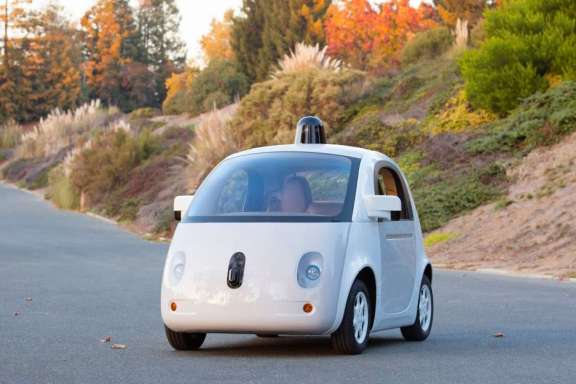
In the 1960s it was Hertz Rental car that wanted to put you in the driver’s seat. In the 2020s Google will be taking you  out of the driver’s seat.

The National Highway Traffic Safety Administration says they agree with Google that a self driving vehicle “will not have a driver in the traditional sense.”  In other words we can all move to the back seat.

google_self_driving_car_driverless_video

A car without a steering wheel or brake pedal really frees the human driver to do everything a driver has always wanted to do but was afraid to while driveing: like put on make up or shave in the visor mirror on the way to work. Or send that all important message to a coworker to save you a doughnut from the break room because you are running late. Soon we will be able to text and not worry if we actually see the brake lights up ahead.  There will be no more slamming on the brakes and spilling  coffee all down your lap.

According to the NHTSA “If no human occupant of the vehicle can actually drive the vehicle, it is more reasonable to identify the driver as whatever (as opposed to whoever) is doing the driving.” This is kind of like if a tree falls in the forest and nobody hears it does it make a sound.  If no “person” is driving does this mean we no longer need a good neighbor or some lizard to sell us auto insurance or does the car get insurance?

A driverless car kills the mystique of the big block Hemi, the muscle car, the tight steering sports car racing up the winding road where man and machine become one.  And what about Hollywood and those fantastic chase scenes. Who can forget the classic car chase in the movie “Bullit.” Steve McQueen horsing a 1968 Ford Mustang GT through the streets of San Francisco chasing a supped up Dodge Charger.

https://www.youtube.com/watch?v=31JgMAHVeg0

Driverless cars will end road rage between people  but will it introduce us to a new form of rage. There is a lot to be said in turning the driving over to Google. But are we handing over more than the keys to the family  car.   As in the movie 2001 A Space Odyssey when Dave tries to get the ship’s computer Hal to open the pod bay  doors.  In this case it would be “Google open the garage door.”

“Sorry Dave I am afraid I a can’t do that.”

https://www.youtube.com/watch?v=9W5Am-a_xWw