In a recent interview President Donald Trump said that the coronavirus “is what it is.” This is not a bad description of the current coronavirus situation. It could probably be applied to any event or incident in history.
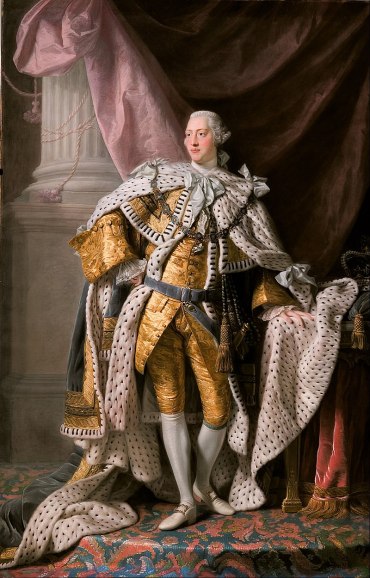
For instance, in the 1760s King George III wanted to hold back the flood of colonist crossing the Appalachian Mountains. Too many colonist were going over the Appalachians and riling up the local native population. Simple solution. Just issue a Proclamation restricting who could go over the mountain.
When Congress couldn’t come up with plan to extend an economic stimulus plan for the Coronavirus they called it a day. They gave it a good shoulder shrug and then went on vacation. Or as Walter Sobchak told The Dude in The Big Lebowski, and I paraphrase here: Screw it Dude. Let’s go bowling. Which, today in the pandemic may be hard to do.

But not so with Presidents. They are always on the job with the launch codes, even if they are bowling like Nixon down in the White House basement. They do not have summer recess. They may spend a couple of weeks in Kennebunkport, Hawaii, bushwhacking in Texas or hitting the links in New Jersey but they are just a phone call away and a quick trip back to DC.

You have to give the current administration credit. It can issue on high decrees from a golf course clubhouse. An opportunity denied George the III. The president teed himself up with four Executive Orders dealing with relief for those struggling economically with the coronavirus and the undue burden of payroll taxes. Meanwhile, in Congress the House cannot fit all the clubs it wants into their bag and the Senate doesn’t even have a bag so forget about deciding on what club to use.
From the get go the Trump administrations has been spewing out executive orders to the tune of about 4 a month. This is about one more a month then Bush or Obama. With Congress not paying out, the Trump has been pulling the levers of government like grandma sitting in front nickel slot at the Beau Rivage Resort & Casino in Biloxi, Mississippi. The problem so far is, all the nickel shoving and lever pulling hasn’t paid out enough to even build his Wall.

Americans have traditionally scoffed at out or ignored orders issued from on high. Just look at how certain people have taken offense to wearing a mask. Try and get a biker in Sturgis, South Dakota to wear a helmet let alone a mask. As a country we come by it naturally. We get indignant to the point of belligerent when an order comes down and says we can’t do this or you can’t go there. John Hancock, the signer of the Declaration of Independence was a known tax invader or smuggler. If the British were to get a hold of him he surely would have spent a few nights in the Tower. The mask up orders in certain states is the equivalent of King George III’s Proclamation of 1763. This is possibly the first stay-at-home order restricting travel issued in America.
George III issued this order to prevent colonist from crossing the Appalachians and setting up shops and farms in the newly won French Territory. The British picked up most of France’s North American territories after The French and Indian War or more politically correct: The Seven Years’ War. With the French gone previous land claims were out the door. The only other group standing in the way where France’s trading partners: the native American tribes.
The Europeans called it The Seven Years’ War for two reasons: it lasted seven years. Europeans named wars for how long they were fought like The Hundred Years’ War and The Thirty Years’ War. I guess there was a lack creativity or just exhaustion because wars in Europe seemed to go on forever; and maybe they just possibly forgot why they were fighting. It could have been as simple as somebody marrying the wrong princess. Then they went through a phase were they named them after a monarch. Like The King William’s War,The Queen Anne’s War or The Napoleonic Wars. I am not sure if these wars were named after the monarch who started the war or the one who won the war.
I think the reason they went back to numbers is because it would have been a mouthful to call it anything other then The Seven Years’ War. The war in Europe found Britain, along with Prussia and Hanover fighting France, Austria, Sweden, Saxony, and Russia. Too much to say and not nearly as succinct as a number. It is more like the Hatfields and McCoys on steroids Better yet it sounds like one of those highly promoted professional wrestling match with 10 or 15 wrestlers jumping in from the top rope, swinging chairs and throwing each other out of the ring.
.png:// "Attributed to Lorens Pasch the Younger / Public domain")
European wars turn into some sort grudge match, where anybody can join in that’s looking to avenge a sucker punch from the last war or regain or take some lost land. And think about it, imagine a time when the Swedes were in a war. It takes a lot to get them going so something big must have been happening. Maybe they saw the war as a way to get back Sweden’s New Sweden settlements along the Delaware River from the British.
The other big reasons they called it The Seven Years’ War is because there were no Indians or what we would referer to today as Native Americans fighting in Europe. The closest thing to an indigenous people might have been ticked-off Prussians under Frederick The Great. They always seemed to be in the mix when the fighting started.
For Americans at the time, French and Indian war summed up the fighting sides very neatly. If they were not skirmishing with Native Americans then they were fighting French. Colonials did not fight Prussians any more Prussians squared off against Mohicans, It was the French and a host of tribes that included the Hurons, Mohawks, and a whole slew of other tribes that saddled up against the British and their Colonial militias.
The Seven Years’ War was the first and possibly the only “global” war started in America that spilled over into Europe. This war actually crossed the Atlantic and moved to Europe when George Washington, then a young 22 year old Virginia colonel, got himself in land development claim that went bad with the French near present day Pittsburgh. Seems like the French objected to Washington and The Ohio Company of Virginia and their “art of the deal.” Coming in and planting a “will build to suit” signs along what the French believed was their riverfront property, did not go over well with the French or their Native American allies. Once the two bullies of Europe started to tussle in North America it jumped the pond. From there it seemed like every other country that disagreed with the results of the last war started picking sides.
The Seven Years’ War had a profound impact for the Colonies. I am not really sure what changed in Europe for the winners or the losers. I do know the big losers on this side of The Atlantic were the French and their Native American allies.
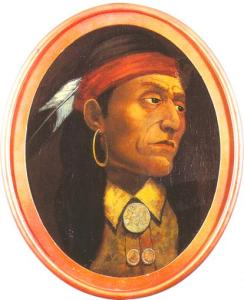
With the war over and the French booted out of North America, Native Americans were on their own and not happy. They were not shy about letting the British know just how they felt with the end results. Particularly a chief named Pontiac. He forms a coalition of Native Americans in the Northwest Territories and takes border security into his own hands. No wall for this guy. He begins burning British forts and running white settlers back east where they came from.
With the frontier in an uproar in comes the great white father, King George III, to save the day–or so he thought. I am not sure if the English would be so familiar to refer to their king as any sort of father great or otherwise. George seemed to be one of those leaders who makes things worse by his involvement. Nonetheless, George from his regal thrown 3,000 miles away tees off a proclamation that among many things restricts colonial migration across the Appalachians. A vain attempt to appease the riled up indigenous people of the Ohio Valley. It is one of the first of many mixed up proclamations and acts George will issue that do not sit well with a lot of people in the Colonies: colonial or native.

Now, how George proposed to keep his royal subjects from crossing the mountains was the problem. There was no mention of building a wall along the Blue Ridge Mountains. But we can see just from our modern day attempts at building a border wall how futile this would have been. There is the physical aspect of building the wall; and then there is, as we have witnessed: no financing of the wall through an executive order. The Native Americans were not going to pay for it. The Colonists were not going to pay for it. And the British were not going to pay for it. Besides, Britain ran up such huge debt in The Seven Years’ War that Parliament came up with the brilliant idea of taxing the Colonies to pay for the war. The Colonials never cottoned to the idea of paying taxes to begin with. They came up with a brilliant concept: taxation without representation is tyranny, which is a whole other story.
Of course this paper proclamation had no effect of keeping land hungry Colonials from venturing west any more than say Trump’s orders about evictions and foreclosures for those running behind on their rents and mortgages or looking the other way on payroll taxes.
Sometimes proclamations and laws have been written in stone like Hammurabi’s Codes or the Twelve Tables of Rome. Whether it is a monarchical proclamation or a presidential executive order, both have been around for awhile. Some have a lasting impact like Lincoln’s Emancipation Proclamation. Others are more notorious like FDR’s order to inter Japanese Americans during World War II. I would venture to say that a large percentage of the more than 1,500 executive orders issued are probably worth less then paper and effort it cost to print them.
Take King George’s proclamation. The only thing that stopped the colonists westward rush was the Pacific Ocean.
 mystoryorhistory