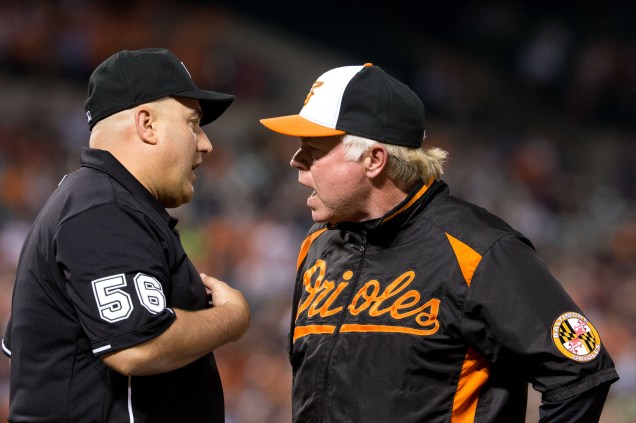
The problem with the Mueller Report, despite what ever Robert Mueller said in his press conference, has left us arguing like it was a play in a sporting event. What we have now are umpires on the sideline debating if a runner was safe or out but never coming to a decision. It is almost as if the umpires know that whatever call they make they are going to end up ejecting one of the raging-mad manager from the game. The report did not resolve a thing. If it proves anything, it is that modern day Americans want some sort of closure. We can live with a bad call so long as it looks like it was made judiciously with out some made up excuse like the ball was tipped or I would call the runner out if I could.
For instance, in the 1824 election Andrew Jackson won the popular vote and had a plurality of the Electoral College votes–but not the needed majority. In situations like this, according the the Constitution, the House of Representatives (a great bunch of umpires) determines who becomes president. It seemed like an obvious call one with plenty of evidence on the ballot to make Jackson the president. But once Henry Clay, the Great Compromiser, became involved it was obvious that Andrew Jackson would be called out at the plate. A botched call. in what was called the Corrupt Bargain. Thus, giving John Quincy Adams the walk-off Presidency–and giving Clay the Secretary of State position he wanted. Back then, Secretary of State was the third base in getting to the Presidency. It was a bad call but one that even Jackson accepted, albeit with retribution to follow.
.jpg "John Tenniel [Public domain]")
This is not a good concept. The masses, or sports fans, have been known to go on a rampage flipping and burning cars, which is never a good idea. The main reason we have judges, umpires and referees is to see that the game is played fairly with results we can all agree upon despite disagreeing with the call. Left to our own devices the masses or fans usually have a hard time coming up with an objective call.
Somethings, however, are not supposed to be open ended. We want a conclusion without illusion. I think one reason Americans like closure is because we watch sports. Sports is on 24 hours a day. There are channels that even show college spring scrimmage games. The University of Nebraska had more than 85,000 fans show up for their spring football game and maybe just as many sitting in a sports bar watching (this was a team that only won 4 games). There are channels dedicated to leagues, conference and individual teams. There are now as many cameras on the sidelines and in the stands as there are players on the field. We get to see those close plays at the plate, we get to see the replays from various angles. But not so with the Mueller report. We just get to see the sideline arguments on cable news. We do not get to see the redacted version, the replay without slow motion so we end up with “collusion delusion.”

Today calls on the field can be reviewed. Any fan watching from the stands; ensconced on the couch; or slamming back a beer at the bar has been subjected to a break in play while an umpire or a referee–maybe two–head to the sidelines, put on the head phones or start looking at an monitor with instant replay trying to get the call “right.” Most knowledgeable fans of sport will realize if the review was spot on or is inconclusive–that is not enough “evidence,” to use a legal term–to overturn the call on the field.
But what happens when there is not enough evidence to overturn a call. For instance in the 1800 Presidential election, it was never in doubt who won the election. It was Thomas Jefferson and Aaron Burr. But hold on a minute there are no ties in Presidential elections. An election, unlike a football play cannot be replayed. A tie was was not the intended outcome in the 1800 election. Jefferson was supposed to be the president and Burr the vice president. The Constitution at the time, however, stipulated that the candidate coming in second would be the Veep.
Despite the intentions, Burr was not conceding the presidency to the Sage from Monticello. This was the first time an election was thrown into the House of Representatives. It took 30 ballots and support from Alexander Hamilton’s Federalist party to get Jefferson into the Presidential Mansion. It turns out that Hamilton hated Burr more than Jefferson. To avoid such election reviews the 12th Amendment was adopted specifying who would be president and who would be vice president.
However, the rabid partisan fan will never be happy. It is, as the old ABC Wild World of Sports saying “the thrill of victory and the agony of defeat.” No one wants to loose especially to their hated rival. Burr got his revenge on Hamilton in an 1804 duel.
But in sports, like politics, a non call is not allowed–or is it? We cannot have two teams arguing on where to place the football or if a hooking fly ball to right field wrapping around the foul pole is a home run or a long foul ball. We may disagree with the call but as they say in British football (soccer to us Americans) “Play on.” And we do.

But a more recent call with national championship implications and reverberations was the NFC Playoff game between the St. Louis Rams and the New Orleans Saints. Again, a close game. It was a tie game, 20-20, with 1:49 left in the game. The Saints had a third-and-ten on the Ram’s 13-yard line. Saints wide receiver, TommyLee Lewis was running a wheel route and was wide open inside the five-yard line; Drew Brees sees the open Lewis heading towards the goal line. The pass never made it to Lewis. Ram’s cornerback Nickell Robey-Coleman was beaten and did what any cornerback in the NFL would do when beaten on a play that has touchdown written all over it: he mugged the receiver. If what followed happened in Walmart parking lot Robey-Coleman would have been charged with battery. He was not even charged with disorderly conduct as no flag was thrown on the play. Without a doubt this was an obvious pass interference call. And a play that was not reviewed.
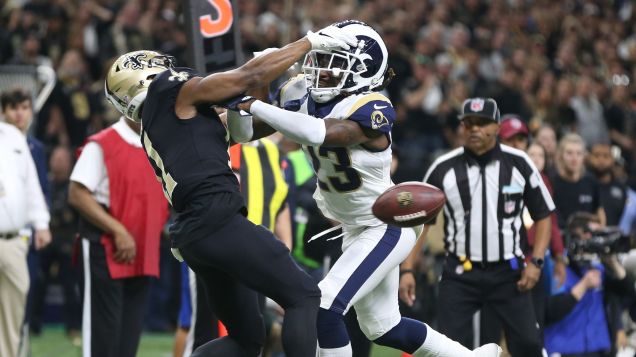
The Saints, like the baseball Cardinals, played on. They kicked a field goal but ended up losing in overtime 26-23. For those in New Orleans it may have felt as if Mardi Gras had just been canceled. The NFL, however, “played on”: the Saints went marching out.
The Mueller report has been subjected to some real biased officiating leaving the American public unsure what the call really is. It is not unusual in most sports to see officials gather around to get a call right. Much like the 2000 Presidential election where judges, legal experts, political hacks and pundits gathered and haggled for a month in an attempt to decide what a hanging chad was and ultimately who won the State of Florida’s electoral votes, and hence the presidency. It took the Supreme Court to put on the headsets and go to the monitors and review the vote. The election stands with George W. Bush winning by less than a half-of-a-step. A lot of people hated the call but they lived with it. We played on.
Today we are in situation where both sides are now calling balls and strikes; deciding where to place the ball on the playing field. I even think some people have been adding extra balls onto the playing field leaving us to argue about which ball is actually the game ball. All this despite senators bleating from the stands: “case closed.” Until somebody comes out and makes a definitive call on the Mueller Report the 2016 election will always be a phantom call. It took a disappointed Al Gore to say enough, the ”partisan rancor must now be put aside.” But for now the Mueller Report will remain a “you make the call.”
https://www.mlb.com/news/don-denkinger-players-recall-blown-call-in-1985-world-series/c-99040244
https://www.sbnation.com/nfl/2019/1/20/18190891/pass-interference-rams-saints-nickell-robey-coleman
 mystoryorhistory
No close call here–this one is a home run and touchdown! Its funny–but it makes you think.
Thank you.
LikeLike