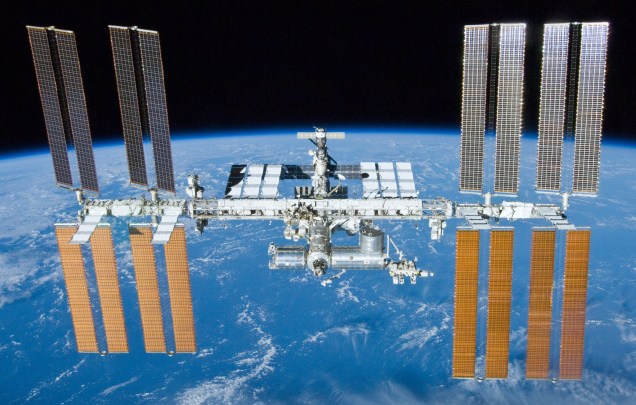
Near the border dividing Europe and Asia south of the Ural Mountains lies the Kazakh Steppe. In this vast 800,000 square kilometer region is the Earth’s largest dry steppe. It is also the site of Baikonur Cosmodrome the world’s largest space port. It was here on June 16, 1963 that Vostok 6 launched carrying the first woman, Cosmonaut Valentina Tereshkova, into space.
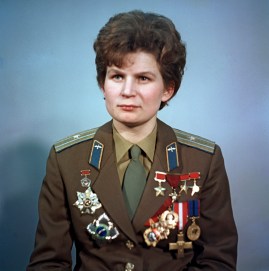
Tereshkova’s flight was a dual mission. She launched two days after Cosmonaut Valeriy Bykovsky left Baikonur in Vostok 5. The two later rendezvoused coming within three miles of each other. Tereshkova made 48 orbits and spent more than 70 hours in space.
Time warp to June 18, 1983. The Space Shuttle Challenger (Space Transportation System or STS) carries Sally Ride, America’s first woman in space. As a Mission Specialist on STS-7, Ride helped launch two communication satellites, made 97 orbits and spent more than six days in space.
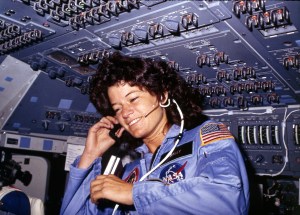
Two years down the flight path, on October 5, 1984, Challenger STS-41-G is launched. This is NASA’s 13th Shuttle mission and Challenger’s sixth flight. This is Ride’s second flight on the Challenger and with her this time is Mission Specialist, Kathryn Sullivan. This is the first NASA mission with two women on board. On this mission Sullivan would become the first American woman to walk in space. Sullivan, however, is not the first woman to walk in space. That was Cosmonaut Svetlana Savitskaya on Soyuz T-12 on July 25, 1984.
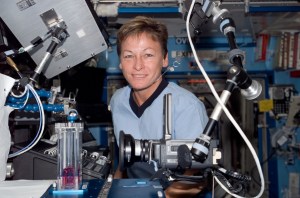
And just this year Astronaut Peggy Whitson broke Jeff Williams’ record of 534 days in space. Whitson is now the longest serving American in space. She passed Williams on April 24. Whitson is due back on terrafirma from a tour on the International Space Station in September 2017.
While women have boldly chosen to go “where no man has gone before,” four women have died trying to go there. Two, Christa McAuliffe and Judith Resnek were on the Challenger (STS-51-L) when it exploded shortly after launch; and Kalapana Chawla and Laurel Blair Salton Clark died when Columbia (STS-107) broke apart on reentry.
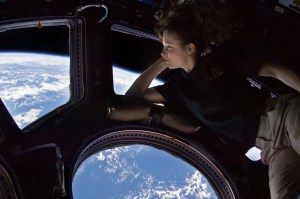
The Final Frontier does not discriminate. The finality of space is uncompromising and unforgiving for both men and women. It deals with all on an equal footing. But back on Earth equality is debatable. For instance, President John F. Kennedy dropped the flag on the space race with his challenge to go to the moon and back: safely. We did this. He may have launched us into the Final Frontier but it is here on Earth his “New Frontier” was intended to bring forth civil and economic rights. A part of that program was to raise the minimum wage and for equal pay for women. Something we are still grappling about as we ponder missions to Mars and back.
A gender wage gape existed then and today that gap still exists. A recent executive order rolled back a previous executive order dealing with the Fair Pay and Safe Workplaces order. This previous executive order was created in 2014 to ensure that companies doing businesses with the federal government adhere to labor and civil rights laws.
Women on any space-time continuum have made less then men. Women today make 80 cents on the $1 compared to men. This may not seem like a lot of money but over the span of a working career it adds up. The gender-wage gap is felt not only in a weekly paycheck but on a family’s standard of living. It also effects retirement and Social Security benefits working woman will receive. Particularly, if these benefits are based on an employees five highest years. According to median income statistics, women make less than $11,000 a year or about a half-million dollars less over their careers then men.
Some sites to visit
http://www.space.com/21571-valentina-tereshkova.html
https://www.nasa.gov/topics/history/features/ride_anniversary.html
https://history.nasa.gov/women.html
http://www.nbcnews.com/news/us-news/trump-pulls-back-obama-era-protections-women-workers-n741041
https://iwpr.org/issue/employment-education-economic-change/pay-equity-discrimination/
Click to access gender-pay-inequality—-us-congress-joint-economic-committee.pdf
Photo Credits
Wikipedia: International Space Station, Sally Ride, Valentina Tereshkova
Flickr: Peggy Whitson
 mystoryorhistory