Buying ink by the barrel is the easy part. Getting the newspaper printed and on the streets can be a rough be business. We take it for granted today that freedom of information is a Constitutional protection; it was not always that way even in America.
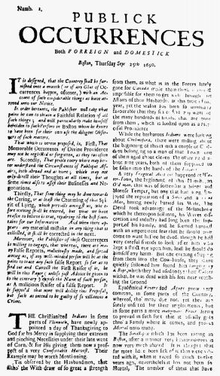
The first newspaper printed, Public Occurences, both Forreign and Domestik, hit the streets of Boston, Massachusetts on September 25, 1690 and was shut down four days later when the governor and council deemed the news printed was “sundry, doubtful” and contained “uncertain Reports.” They also said in the decree that stopped the presses that they “do hereby manifest and declare their high Resentment and Disallowance of said Pamphlet.”
Ooo, “high resentment and disallowance.” Is that just another way of putting your fingers in your ears and repeating over and over again: I hate what you’re saying and don’t believe a word of it.
The old English writing style of the time, sounds so much more civilized using those long words with multi-syllables that just roll off the tongue like water coming down a rain spout instead of those short harsh staccato-sounding words we use today. Much more elegant then yapping: “fake news” over and over again like a chained dog.
The end result for Public Occurences was quick and effective as the governor and his minions went about collecting and destroying all copies of the printed pamphlet. Today there is only one copy and it is stashed away in a British Museum. This, however, was not the first time Benjamin Harris, the editor of Public Occurences, ran into government troubles with his publishing. He left Britain with similar governmental/publishing problems.
In his first and only issue of Public Occurences Harris stated three objectives. The first “that Memorable Occurences of Divine Providence may not be neglected or forgotten as they too often are.” I am not sure what a memorable occurrences of the divine providence would be or how they are forgotten. There is, however, a story about how “The Devil took advantage of a Melancholy widower.” This, “despite neighbors looking in on him” the old man managed to get “into the Cow-House” where they “found him hanging by a Rope…he was dead with his feet near touching the Ground.”

Public Occurences even had a health beat story about small pox ravaging the Boston area, along with other various “Epidemical Fevers and Agues (that) grow very common, in some parts of the Country.” There was even a story about two fires, one that burnt five or six houses and nearly took down the “South-Meeting-House.” All of this sounds like any “eyewitness” news report at Six O’clock with film at 11. Hardly news that could be considered “high Resentment and Disallowance” and enough of a reason to shut down a newspaper.

Maybe the governor and council took umbrage to the story of the sexual exploits of the French royalty. Nothing new here. Although we lack royalty, our news is coated with sexual peccadilloes of our elected officials and business leaders. Maybe Harris knew way back in the 17th Century that sex sells. But shutting down a paper because it was reporting on the sexual indulgences of the French king does not make much sense. The French and English had been battling each other for centuries in Europe and now it is spilling over into the New World and India. Beside the French were Catholic and the British at this point were, for the most part, Protestant with a strong dislike of the Pope. Again nothing new here. It was not until 196o that we elected our first Catholic president; and he had to make a public affirmation he was not under the papist spell of Rome. No collusion there.
Harris’s second goal was a little easier to understand. He writes “That people everywhere may better understand the Circumstances of Public Affairs, both abroad and at home.” There was a story about the abuse and mistreatment of captured French soldiers and clashes and revenge for the numerous acts of barbarity with and against Native Americans. This preoccupation of Native Americans would consume not only the colonial British but non-Native Americans for well into the 19th Century. Both sides were recruiting these “miserable Savages” to fight into what really was a global struggle between the French and British.
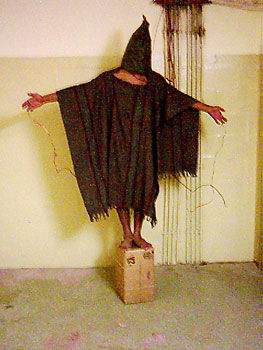
Maybe what really ticked the governor off was Public Occurences carried a story about possible abuses of French prisoners and Native Americans by the British. Again, nothing really new here. In any war there is always a few miscreants who enjoy witnessing the discomfort and sufferings of their enemies. Just think of the pictures of Iraqi prisoners in Abu Ghraib prison after Shock and Awe. So, maybe the governor and council did have beef with Harris in not wanting the people to understand the particular circumstances of affairs “both home and abroad.” Sometimes it is best if the public just does not know what is really going on, or give them just all the news they see fit to print.
Finally, and I think this is the kicker that put him over the edge with the authorities, was that Harris felt that something had to be done with the “Curing, or at least the Charming of that Spirit of Lying, which prevails amongst us.” And with that spirit Harris says “nothing shall be entered, but what we have reason to believe is true, reparing to the best fountains of our Information.” However, if that information is incorrect he promises to correct incorrect misinformation.

Harris, though, takes it one step further with that belief that had to shake the powder right off governor’s curled wig. In what could have been the first attempt at investigative journalism, a Colonial 60 Minutes, he says his paper will take “pains to trace any such false Report so far as to find out and Convict the First Raiser… (and) expose the Name of such person as A malicious Raiser.” What a concept.
It was not the news or Harris’s mission that brought his press to a halt after a four-day run. It was the rules and regulations of the time. Harris simply printed his broadside “Without the least Privity or Countenance of Authority” The governor added the council was “strictly forbidding any person or persons for the future to Set forth any thing in Print without Licence first obtained from those that are or shall be appointed by the Government to grant the same.” What better way to stamp out “fake news,” or control any news and information, then have those with the most to hide determine who gets a license to print?
Hence, one hundred years later James Madison would add to what we now know as the First Amendment to the Bill of Rights that: Congress shall make no law …prohibiting the free exercise thereof; or abridging the freedom of speech, or of the press.”
No matter how much the powers to be claim the information to be “sundry, doubtful” and containing “uncertain Reports.” or squawking “fake news.”
Some websites to see:
https://www.massmoments.org/moment-details/first-newspaper-published-in-the-colonies.html
http://www.ushistory.org/us/7c.asp
 mystoryorhistory