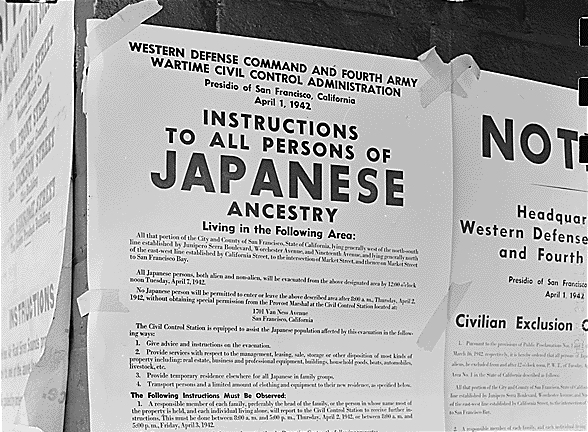
I was not around during the beginning of World War II when Germany invaded Poland in September of 1939. The Nazis had belief in the need for Lebensraum. Eminent domain was one of their many ethos that was backed up by force of arms. Simply put, they needed more living space and Poland and most of Central Europe was condemned property waiting to be re-developed
It is the post Polish invasion that reminds me of today’s battle with the coronavirus: Corvid-19. After Germany invaded Poland, France and England declared war on Germany. All sides sat around looking over their gun barrels for the next eight months in what was called a Phoney War. There were a few minor battles but all sides were content at this time to prepare. Britain began preparations for an aerial blitz that was sure to come. A conscription was put into place as well as rationing and the commandeering of public transportation for military use. The Phoney War put them at ease, and made them little disgruntled with government efforts in the lew of any real combat.
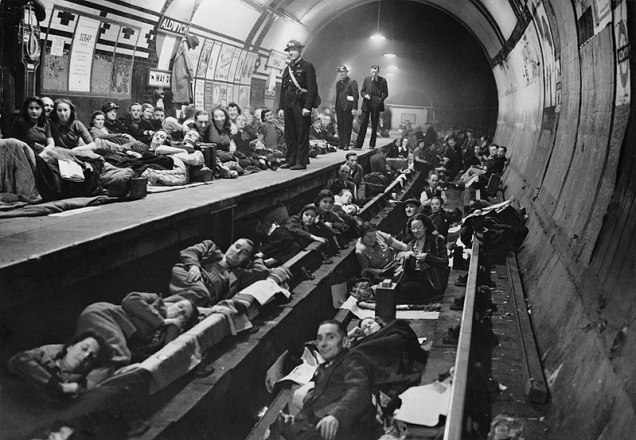
Allied troops sheltering in place
Despite the preparations neither side had any idea how this Phoney War turned out to be a life and death struggle. Little did France realize what would hit them in May of 1940. German tanks rolled through France and on to the Atlantic in less than a month pulling France down. The British barely had enough time to get their troops off the continent and began the process of sheltering in place on their island fortress .
Before I go on any further there is no way that I am comparing the Nazi swarm to a coronavirus–the Black Death maybe. But France and Britain had eight months to prepare for war in which they declared. And the way the Germans rolled them up makes you wonder how well they used that time getting ready for the inevitable, particularly after witnessing how quickly the German army and Luftwaffe–along with the Soviets–put Poland in a box.
What puzzles me is that we watched what happened in China as the coronavirus roared through Wuhan, a city of eleven million. And much like the British and French in 1939, we just looked with unmasked faces during the month of January and February watching and waiting as the coronavirus marched through Italy.
For most of our history as a nation the two oceans have protected us from all foreign enemies. These oceans may have even protected us to some extent from viral airborne invasions. But the global world in which we live events and diseases can jump oceans and continents over night. A slow moving local disease can now become a blitzkrieg.
It was not long before the United States was dragged into the world at war. Much like our other Allies we were not prepared for battle. To quote a turn-of-the century Secretary of Defense who said before launching the nation into a decade of war in the Mideast: “You go to war with the army you have, not the army you might want or wish to have at a later time.”
Unfortunately, that is true and can be said about many things. But in World War II the United States got up from being sucker punched and began producing enough war material to supply not only our own armies but our Allies, too. It was Rosie the Riveter: “We can do it.”
It brings to mind the story of the aircraft carrier USS Yorktown. Badly damaged at the Battle of the Coral Sea, the Yorktown managed to get back to Pearl Harbor for repairs. Engineers determined it would take at least two weeks around-the-clock to make the repairs needed. The problem was Naval Intelligence discovered that the Japanese Imperial Navy was in the process of invading Midway Island. They did not have two weeks. Admiral Chester Nimitz told the Navy Yard that the Yorktown was needed and that they had two days to get the Yorktown out to sea. Much to the surprise of the Japanese navy, the Yorktown was there and played a significant role in America’s victory, a victory considered the turning point of the war in the Pacific.
During that war we were cranking out tanks, airplanes and ships by the thousands not to mention all the other necessities. I find it difficult to believe a country that could build a space program from the ground up, put a man on the moon and bring him back safely today cannot provide enough surgical masks, cotton swabs, and other simple medical needs to combat covid-19.
Granted, we might not have the necessary equipment now but in the past we could and did what needed to be done get the job done. We may be going to war with the health system we have, but that needs to change. It is time to step up the A(merican)-game. Instead of talking about making America great again, realize We can do it!
It is ironic that it was March 4, 1933 that Franklin Roosevelt gave his first Inaugural Speech. Most historically cognizant Americans may know only one thing from this speech and that is when Roosevelt told the country: “let me assert my firm belief that the only thing we have to fear is fear itself.”
The difference between now and then is that in 1933 the country was in the grip of the worst depression or panic the country has ever faced. More than 25 percent of the work force was out of a job. Businesses took it on the chin, too, losing $6 billion. Six billion sounds like chump change today. And it sort of is. When you adjust the 1933 loss for inflation that is close to throwing $115 billion out the window today. Jeff Bezos alone is worth close to $120 billion.
Today, we are witnessing a stock market collapse that is a throw back to the last recession but this time we can add a little oil to the fuel as the energy markets melt down. And of course the pandemic virus adds to our economic woes with the possible overwhelming of our healthcare system.
A bank run during the Great Depression or as Yogi Berra would say “A nickel ain’t worth a dime anymore.” If you could get a nickel for your dollar.
Historians say that the Great Depression kicked off on October 24, 1929 during Herbert Hoover’s Administration when the stock market tanked. Five days later the Dow Jones Industrial had dumped 22 percent of its value. This was a time investment bankers saw their portfolios go out the window. Contrary to popular belief, only two people literally followed their investments out the window
That was just the start. The Hoover Administration’s laissez faire affair approach did not help. The idea of letting the markets do as they will was not working. By 1930 consumer confidence went out the window with the Dow Jones. Interest rates were at rock bottom levels. production fell as did wages. Before long the country was in a deflationary spiral. Demand for goods fell, prices fell, wages kept falling and so did the Gross Domestic Product. Some estimated it fell by 15 percent. And we argue about 2 percent growth in the GDP as being a bad thing. Are things sounding familiar?
In the 1928 Presidential campaign Hoover campaigned on the promise of a “chicken in every pot and a car in every garage.” Boy would those roosters come back to peck Hoover. That little slogan sounded good at the time but I am sure it did not play well when people started bum rushing banks trying to get their money out before banks defaulted. Forget about the car in the garage. When this was done people would be lucky to have a pot to piss in
Hands in pockets maybe but John D Rockefeller’s net wealth adjusted for today’s inflation was close to $420 billion.
Blaming Herbert Hoover for the Great Depression would be like blaming Donald Trump or even Barack Obama for the coronavirus. The 1930s global economy was global pandemic waiting to happen. It was cooking off like a steaming tea pot. Like the good business conservative Hoover was, he followed the belief of cheerful optimism that things are going to get better. And they usually do. But face it, when you have an old business tycoon worth $1.4 billion like John Rockefeller, probably the richest American ever, saying “These are days when many are discouraged. In the 93 years of my life, depressions have come and gone. Prosperity has always returned and will again.” And he was right. The business cycle is a double feature much like a roller coaster. It is a sure thing if it is going up at some point in time it will come back down and vice versa. However, for the out-of-work souls standing in a soup line that sounds encouraging but the real question was when. In the meantime, “brother can you spare a dime.”
Today’s creeping coronavirus and the collapse of the oil market has not created soup lines or a rush on hospital beds–yet. It is, however playing havoc with the fear factor.
In his first Inaugural Address not only did FDR address fear but he also said, “Only a foolish optimist can deny the dark realities of the moment.” The dark realities of the Coronavirus may be embedded in its DNA but its stark realities are more than likely going to manifest in our bastardized healthcare economic system. Much like the 1929 stock market and banking collapse our healthcare system is humming along making profits for insurance companies, medical companies, pharmaceuticals and just about anybody else who can tag on to the medical gravy train. The question is if this pandemic gets out of hand what will happen to this single-payer profit system. It’s not where the buck stops put who will pick up the check.
In the Democratic debates we have heard a lot about “progressive ideas” that to some, border on socialism; or worst communism. One campaign slogan: “Medicare for all” or “Universal Healthcare” already has people heading the Sheep’s Gate waiting for the stirring of the waters at the Pool of Bethesda to make them well of whatever disease they have.
Maybe one of the first National Healthcare Plans:The healing waters at the Pool of Bethesda
What Roosevelt stressed was a New Deal “because the rulers of the exchange of mankind’s goods have failed, through their own stubbornness and their own incompetence, have admitted their failure, and abdicated. Practices of the unscrupulous money changers stand indicted in the court of public opinion, rejected by the hearts and minds of men.” We might not be there yet when it comes to healthcare. But we could be one patient away from a run on hospitals.
Now far be it for me to say what is what in the Healthcare Industry. It does, however, seem to be a system run for and by “unscrupulous money changers.” I would venture that in the hearts and minds of most Americans there is some sort of agreement about changes to a system that favors profits over health. For some reason people are leery of a single payer national healthcare system. I think I can bastardize Churchill’s quote on capitalism and socialism by inserting the current healthcare system is the unequal sharing of blessings (profits) with the inherent virtues of the equal sharing of miseries (lack of actual care).
I am not advocating for a single payer government system. However, the idea of national health insurance is nothing new. FDR’s cousin Teddy Roosevelt, another reformer, was bouncing the idea around when he ran for president in 1912. Harry Truman tried unsuccessfully in 1945. John Kennedy floated the concept about, too. It was President Lyndon Johnson, a Roosevelt New Dealer, who managed to pull it off in 1965 for people over the age of 65. And here we are in 2020 debating the merits of Medicare for all.
At this moment there is a lot of speculation as to the short term and long term effect of the coronavirus on the world’s health as well as the economy. Some countries have taken drastic quarantine measures. China even built two coronavirus hospitals in one week. Granted, this pandemic could be like a 25 year storm, but if it becomes worse it could possibly swamp our healthcare system creating a real need for a “new deal.”
The recent impeachment debate reminds me of why those who wrote the Constitution kept the people as far away as possible from the seat of power. This, despite two of our nation’s founding and guiding documents that are laced with references to “we the people,”but are designed to keep angry farmers with pitchforks away from the county courthouse–as in Shay’s Rebellion. It was also designed to keep greedy despots and tyrants at bay with an impeachment clause.
The Declaration of Independence has slightly more than 1,400 words. The document is laced with words like fellow citizens, our coasts or we and us. And of course the curse phrase “all men are created equal.” This little phrase so succinct wrapped tight in the logic of Enlightenment gives us the indefensible “all” not “some” and no indication at all of the royal “we” but” all.” That little phrase has had this country back peddling on a lot issues starting with counting slaves as three-fifths of a person to women’s rights and immigrants rights. Somehow along the way we have managed to rope in non-people and corporate rights, into “We the People.” Go figure.
The Constitution starts out with “We the People of the United States, in order to form a more perfect Union…” telling us that government derives its just powers from the people. This is a unique concept that has evolved throughout the centuries but has yet come to full fruition. One of the greatest republics in history was the Roman Republic. It lasted almost 500 years from 509 BC to 27 BC. But the Romans, like the men who put our Constitution to paper, realized that it was vital to keep the masses as far away as possible from Forum. But yet, the Romans knew how to use the masses to manipulate “public policy” for personal gain. At times the Roman Republic was rocked with public mayhem, mob murder and several civil wars, which would have been impossible without “we the people.”
The big difference between the Roman Republic and ours is “We the people” is a fine example of well-reasoned rhetoric. After all, the men who crafted the new government and the Constitution were educated in the Age of Enlightenment or Reason, which came about 1,700 hundred years–give are take a decade or two–after the fall of the Roman Republic. The Roman Empire, however, lived on for another 500 years before falling like a straw castle to barbarian hordes whose public policy was pillage and personal gain.
Those who wrote our Constitution looked back to the Roman Republic and Athenian democracy to form a our new government, as witnessed in the Classic Roman-Greco architecture style of a lot of our public buildings. They took many of the ideas from Enlightened thinkers like John Locke, Montesquieu and Rousseau, as well. But between all of that, Western Europe experienced a heavy dose of feudalism. I am not sure if feudalism is more of social system than it is a form of government. To quote Merriam-Websters a government is “a small group of persons holding simultaneously the principal political executive offices of a nation or other political unit and being responsible for the direction and supervision of public affairs.”
King Henry the II, possibly the first feudal Plantagenet king that started a dynasty that ruled for more than 300 years.Here is where things get a bit murky: public affairs. Was there any consideration for public affairs in Medieval Europe? This social structure of the time started basically with one man at the top: the king or the crown. What makes public affairs questionable is that the crown handed out land to the nobility. The nobility in turn handed land down to the vassals who in turn worked the land with serf or peasant labor. Serfs were tied to the land in fealty to the lord and master. This quid pro quo was based on loyalty and obligation to the next guy up on the social rung with not a whole lot coming down. This required nobles to pony up knights, archers and pikemen in the crown’s defense in a semi-military society. This included peasants and any yeoman farmers, and the fruits of their labor, too.
Here is another hitch in this quasi military social structure. If we assume that a Medieval king was a government (unto himself) then the question is what is public affairs or in the public interest. Granted, we cannot impose 21st Century beliefs on 14th Century man. It is unfair. It would be easier said, that any sort of public interest or public policy was really the crown’s interest or what the king said it was. There were no polls in the field to gauge public perception on, say, going on a Crusade to the Holy Land; or the public’s views on the Hundred Year’s War where the English House of Plantagenet fought with the French House de Valois over who would rule France. And we think 20 years in Afghanistan is a stretch.
I wonder what a serf would care about who controlled France? Think about it, this is a person who lived and died five miles from where he was born. That is, unless he got dragooned into the front lines fighting Saracens. Then he probably had the opportunity to die hundreds if not thousands of miles from where he was born, in the interest of one man’s personal gain. Public policy was really how far a king could go in pursuing his own ambitions.
Eventually, the nobles got fed up with this sort fealty to the king. In 1215 a group of English noblemen sat King John down at Runnymede and had him sign the Magna Carta Libertatum, which translates from Latin the Great Charter of the Liberties. This is looked as a great moment in history when a group of men tried to check the unbridled power of a king. Interesting the Great Charter does not make too much reference to we the people: the serfs or the peasants. But it was a start and was just a speed bump in royal self-interest.
Pre-Constitutional impeachment processIf we move ahead about five centuries and shift continents to North America we witness a group of colonials trying to sit a truculent king down with the Olive Branch Petition to discuss their rights as British subjects. The king, being king, saw no advantage in discussing public policies with a group of rebellious, second-class colonial citizens. One thing that must have chafed the Crown was how the colonials used mobs to intimidate his tax collectors and other governmental officials, particularly in Boston. In 1715 the British Parliament passed what was officially known as “An Act for Preventing Tumults and Riotous Assemblies.” We simply know this today as “The Riot Act.” The Act allowed for the quick and speedy dispersal of any group of more than 12 people gathered on the street corner. I am not sure how effective this act was at curbing Boston’s Waterside gangs.
Nothing like a new coat of feathers and rope hanging from the Liberty Tree to change somebody’s opinion.
The Sons of Liberty in Boston, could sum up mobs almost at will. They could whip up a rowdy crowd comprised from either the Northend or Southend gangs. These gangs of out-of-work- sailors, rope walkers and local toughs could tar and feather some poor unfortunate British official, ride his feathered backside out of town and be in the Pub knocking back rum before sun down. This was sending out an intimidating message. It could be the precursor of “Don’t mess with the US.” The Sons of Liberty were very successful in manipulating public opinion with the use of “we the people.” But they were also well aware of the dangers of controlling the wild horses that were pulling their wagons.
There are two interesting points we can gather from the use of mobs to influence public policy. One, is that when it came time to write a Constitution, it was obvious that the people needed to be included, mobs and all. The question is how and what role do the people play in the process without giving them too much power that translates into mob mentality.
One of the ways to dilute the power of the people was the Electoral College. This way of electing the president was sort of letting the “we the people” in through the front door while showing us the back door quickly. The people, however, could elect local officials, members to the House of Representatives but not judges, senators or the president.
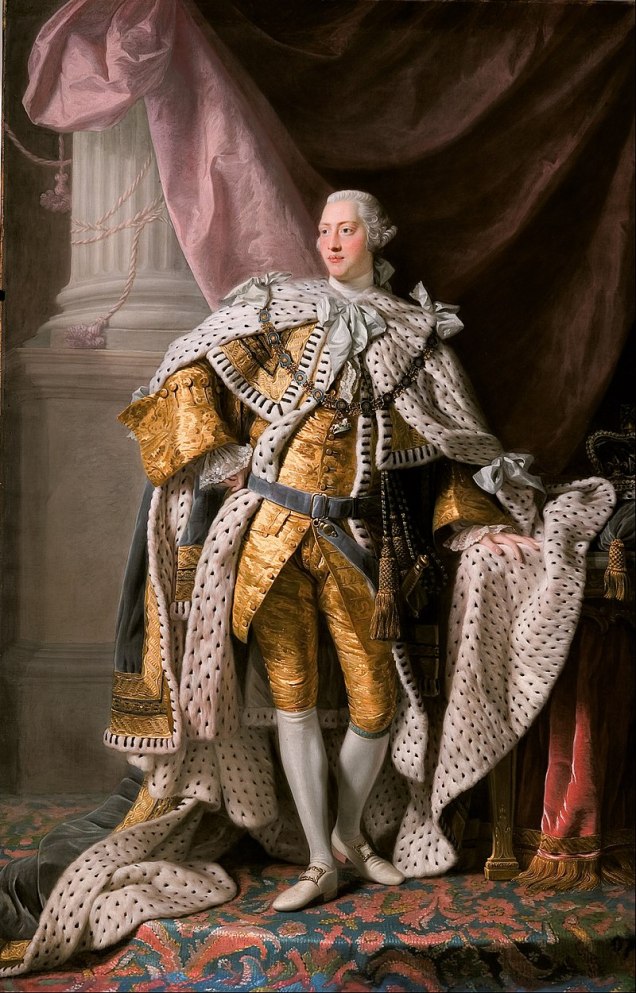
The second point is how do the people deal with an unresponsive government official without taking to the streets. The struggle with King George III taught them that they could not count on a loss of a horseshoe to unhorse a king. Hence, the new Constitution included Biennial elections. It also included an impeachment clause in Article I Section 2 Clause 5.
The one thing that those Enlightened thinkers did not incorporate from the Roman Republic was a Dictator. According to Encyclopedia Britannica a Roman dictator was “a temporary magistrate with extraordinary powers, nominated by a consul on the recommendation of the Senate and confirmed by the Comitia Curiata (a popular assembly).” It is interesting to note that a dictator was nominated and approved “only in times of military and later internal crises.” (It is interesting to note that this is how Hitler became Chancellor of Germany during a time of financial upheaval.)
In theory, a Roman dictator’s term was only six months or until the crisis passed. The Romans. like English colonials, had toppled Roman kings to form a republic. And like there past Republicans, American colonials feared the unbridled power of a king. The Romans, however, saw a need for one man taking charge in a crisis much like when Secretary of State, Al Haig, stepped in for the wounded President Ronald Reagan telling the American people “I am in control here.”
The problem is one man’s crisis could also be his opportunity. An opportunity that could be fudged as in the case of two of the more famous Roman Dictators Lucius Cornelius Sulla and Julius Caesar. Sulla was granted broad powers which included rewriting the constitution. But it was more in the unique way in which he went after his political rivals with proscription. This was a “judicial process.” All Sulla needed to do was simply post names of people he considered “deplorable.” These undesirables who got tagged with with the term “enemies of the state” risked losing everything including life and limb. According to the website UNRV.com Sulla’s rule became a bloody affair: “A reign of terror ensued with rewards offered for the death or capture of any name on the list.” The end result was “as many as 40 senators and 1,600 members of the equestrian class (the property owning social class just below senators) were murdered.”
For those who found themselves on the top of his hit list: “There was simply no place to hide or run. People taking refuge in the temples were murdered; others were lynched by the Roman mob. An intricate network of spies kept Sulla informed and at his whim, tracked down anyone who might be considered an enemy of the state.”
Caesar’s popularity as a dictator took a slightly different turn and ended up with him flat on the Senate floor, bleeding away the last remnants of a Republic, that eventually gave rise to the Roman Empire.
King Louis XVI doing the Perp Walk as his executioners prepare the Guillotine.
It should not come as a surprise that those Enlightened thinkers who wrote the Constitution put the beginning of the impeachment process in the people’s chamber of the Congress: The House of Representatives and not the Senate. It is interesting to note just about the time these Enlightened thinkers were writing our Constitution the reign of terror was being nurtured in the beginnings of the French Revolution. It was mob rule on steroids and guillotine. Four years after the ratification of our Constitution the French lopped the head off head of their king and displayed it for all to see.
The impeachment threshold is a major cliff to climb. And yes, it does nullify an Electoral College election, which sounds a hell of lot more civil than putting a ruler’s head on a pike. The Electoral College vote is one of the few elections in the world where having a majority of a popular vote can have you coming in second. Impeachment is the people’s way of rectifying an election through their representatives. It is “We the People” trying to rein in the reign of a president who may be acting more in his personal interest than the public’s. It is a way of keeping a waterside mob forming onto Boston wharf, storming onto the Beaver, Dartmouth, and Eleanor and chucking 342 tea chests into the harbor.
As Winston Churchill said: Many forms of Government have been tried, and will be tried in this world of sin and woe. No one pretends that democracy is perfect or all-wise. Indeed it has been said that democracy is the worst form of Government except for all those other forms that have been tried from time to time.…
Recently, Prince Harry, the Duke of Sussex and his wife Meghan said they were stepping back from their duties as “senior royals.” This has caused a stir and appears to be a major fissure oozing out ages of monarchical rule. It reminds me of the English ballad A World Turned Upside down. This was the ditty that Lord Cornwallis played as his soldiers marched out of Yorktown to surrender to a bunch of upstart colonials.
Our Lords and Knights, and Gentry too, doe mean old fashions to forgoe: They set a porter at the gate, that none must enter in thereat. They count it a sin, when poor people come in.
In today’s more democratic political climate the word conservative base or liberal base is being bandied about like a shuttlecock across a net in a badminton game. As this political shuttlecock flies it leaves a trail of conservative or liberal vortices that float invisibly down towards center court where the masses, the middle or the silent majority look up to see the little birdy fluttering by. In American politics it is said that elections are won, much like in chess, by controlling the center. I think that this a mistaken myth. It is a myth right up there with “toads cause warts.”
For centuries people lived in kingdoms, empires that were under the rule of some sort of paternal ruling elite whose real aim was to hold onto power and more than likely gave little thought to the masses in the middle and what they thought. It was a “let them eat cake” attitude. So when a pair of “royals” walk away from the castle much like his great uncle, King Edward VIII did for the love of a woman, it is a big deal. To rule over a nation as a king or a queen is considered a godly duty.
In the ancient kingdoms Pharaohs were gods. The Greeks took the gods and made them as human as possible while putting them high on Mount Olympus. The key to success in ancient Greece was don’t piss off the gods. The Romans took a different twist to it and made their human emperors divus or divine upon their death. This also included family members.
Then the ancient Hebrews changed things up with believing in one God. I guess maybe when they were tired of being ruled by a mish-mash of judges they demanded of God the need for one king. The prophet Samuel asked them are you sure about this? Think about it this before I hit send. Saul was God’s “anointed one” way back in 1000 BCE. This is a different take on the king being god. Saul was never a god but appointed by God.
King James I of England championed the idea of God’s grace in the ordination of kings. It put no earthly authority over him and hence, he was not subjected to his subjects. Only God could remove an unjust king. But then who gets to actually say what is unjust?
Saul, however, did not work out to well for the Israelites. Maybe from that time on people believed in the divine right of kings, that kings and the ruling elites were the anointed ones. What other justification could there be? But jumping ahead 3,000 years it becomes a huge leap of faith believing somebody like Friedrich Wilhelm Viktor Albert, a Hohenzollern, was divinely authorized to be King of Prussia and Emperor of Germany. Those who believe in the fallibility of a supreme being have a good argument on the process of picking a ruler.
So, Europe at the beginning of the 20th Century finds itself in family way. Here is the first grandchild of Queen Victoria, an heir apparent simply because his mother was the eldest daughter of the Queen — a product of selective breeding. Cambridge Dictionary defines selective breeding as the “process of choosing only plants and animals with desirable characteristics to reproduce.” This may be a good way to improve wheat yields but there has to be better ways picking a leader. When it comes to royal inbreeding it is hard to make this definition stand up. What were the desirable characteristics gleaned from Wilhelm?
The dapper looking aristocrat turned emperor.What makes this generational transfer of power even more absurd is the future Kaiser of Germany, when he was a little tike, was also sixth in line of succession to the British throne. And to throw a massive wrinkle into this divinity belief, the Kaiser was third cousin to Czar Nicholas of Russia, who was also first cousin to George the V of England who was also first cousins to Willy and Nicky. It would be unfair to blame the three cousins for the carnage of World War I but one has to wonder what a Thanksgiving Dinner would have been like with all of them gathered around the festive table of Europe instead of entrenched for four years on a battlefield.
And simply put, there were no way to popularly remove any of these incompetent divinely mandated rulers. There were no midterm elections. It was up to God. Any attempt by a mere mortal to do so was a at least a treasonable offense at worst a major offense against God. In less legalistic eras the poor misguided miscreant attempting to undo God’s work could end up in a quick trip to the Tower, or a deep dungeon on the rack, possibly being drawn and quartered or some other sort of gruesome public execution. Followed by an even quicker condemned trip to hell.
Using a divinely authorized form of picking world leaders can end up badly. I can only imagine God, hand to forehead, saying to himself, “not again.” This played out in the Balkans in June of 1914 when a ticked-off nineteen year-old Bosnian Serbian, Gavrilo Princip, decides to negate a heavenly mandate by killing Archduke Franz Ferdinand. Ferdinand’s death, the Habsburg heir to the the already dying Austrian Hungarian empire, plunged Europe into fours years of trench warfare resulting in more than 20 million dead. The end result for two of the three cousins is they lose everything: Nickolas his life and Wilhelm is forced into exile and disappears to history altogether. The Habsburgs, like the ruling Romanovs in Russia, lose their 500 years of family rule in four years. As ruling elites they placed themselves and their families above the common man and law.
In previous eras of institutional religious mysticism, getting the uneducated to believe that “God” put a certain family in power for generations was an easy sell. Take Papal rule, for example, the Conti Family, and they may have no affiliation with any New York mob, had four members of its family to reign as heir to Saint Peter in Rome. The Medici and the Orisini families each had three popes each to sit on the Vatican throne of the Catholic Church. This was a time before mass communication. A time when heretical thoughts could get person excommunicated at best tortured at worst. The Church controlled social media with various feast days, religious obligations and indulgences. Any person straying from the flock could possibly find themselves in a visit to the Inquisitor General’s office for reeducation.
And woe to those who begged to challenge certain dogmatic beliefs embedded into the conservative core faith and doctrine of the time. Much like today’s scientific evidence about climate change, the Catholic Church stood firmly behind the geocentric model that the Earth is the center of the universe. Scientist like Copernicus and Galileo turned the conservative world upside down, inside out and all around with scientific observations that shifted the Earth from the center of the known world. However, this did not hinder the Church. In 1616 the Catholic Church went full in on the geocentric belief and declared that any yammering about heliocentrism, the Sun being the center of the universe was simply heresy.
Pope Urban VIII says you can talk about Copernicus and the Sun but only in theory.
Unfazed with possibility of torture for espousing heretical nonsense, Galileo published Dialogue Concerning the two Chief World Systems in 1632. Galileo had already been warned once for his heliocentric views back in 1616. Dropping two differently weighted cannon balls from the Leaning Tower of Pisa to see which would land first was one thing, but Earth going around the Sun was a cannon ball gone too far. Besides, nobody likes a loose cannon, a know-it-all . Despite the growing scientific evidence to support his claims, Galileo was convicted of heresy in 1633 and sentenced to life imprisonment. Fortunately, he served his sentence under house arrest dying in 1642.
This sort of heresy still exists today. In 2017, then Governor of Florida, Rick Scott , banned state agencies and contractors from using the terms “global warming” and “climate change.” in state documents. According to The Guardian, “In 2017, he approved Florida’s so-called “anti-science law”, which critics say was aimed at allowing legal challenges to the teaching of the realities of climate change and global warming in the state’s classrooms.” Pope Urban VIII’s logic lives on, in theory.
In Galileo’s case, the conservative efforts could not keep his ideas under house arrest. They could claim that these ideas were heresy but not fake. Today it can be argued that climate change is fake but Florida, with 8,436 miles of coastline, and the highest point being 312 feet above sea level, is subjected to all sorts of tidal changes from storm surges to saltwater intrusion. Banning a phrase is not going to hold back the Atlantic Ocean any more than it will change the positions of the Earth and the Sun.
In 20 or 30 years the Miami Dolphins might be playing in Orlando Map: Climate Kids NASA.gov
The state of conservative ruling elites, and let me be clear I am not just talking about politics and religion or our conceptual beliefs on liberalism or conservatism. The real trend is that conservative ideology tends to hang on more and eventually rolls back liberal principles. In 1792 the French National Convention, a product of the French Revolution, banned the monarchy. In 1793 they executed the king for treason. Twenty-three years later France brings back a new king to the throne. Granted, France was not the same and without a doubt some liberal changes of “liberty, equality, fraternity” stuck.
Today, we are bombarded with legalistic, economic and political mantras. Liberal chants like “free college tuition” or “medicare for all” that get quickly branded as socialism, a condition worse than the plague. But somehow we buy into “money is free speech” or economic concept “to big to fail.” In response to the Great Recession the federal government passed a variety of banking laws to check the greed of various banking interests. Most of those laws have either been repealed or eviscerated. The government gave out more than $400 billion to various banks and corporations to keep them afloat. And yes, most of this money was paid back. But could you imagine if our government would have taken Marie Antoinette’s advice and handed out some of that cake to the middle. Even if they would have distributed a fraction of that money, say one-fourth directly into the hands of the middle it would have proved a favorite conservative mantra of the 1980s that “a rising tide lifts all boats.”
These modern day conservative myth, some validated by the Supreme Court, others beaten into our brains by political pundits and yammering talking heads, are foisted upon us much like the god-driven Medieval monarchical chant of “divine rights of kings” and the Earth is the center of our little corner of the universe seems absurd. Unlike the past, watching the today’s shuttlecock fly over the net from one-side-to-the-other keeps the majority of the people believing that they are in the game. Are they? Or is it still more of a family affair.
Animal intelligence with human overlords.In so many little ways our country has changed in my life time. I often think of my wife’s grandfather who grew up as a Mississippi farm boy in the early 1900’s. He once tried to explain to me the work differences between oxen, horses and mules. I could not help but think of the recent tug-of-war demonstration Elon Musk put on with his new electric Cybertruck and a Ford F-150. Who would have thought 20 years ago that an electric truck could take on the Ford, Chevy and Dodge gas guzzling giants in a tractor pull. I can imagine constructions workers bantering with each other in a bullying way over beers on which pickup truck was better for hauling or towing but I am sure electric trucks never entered the debate. In our information age this would be equivalent of techno geeks pontificating on the qualities and drawbacks between computing capabilities of Notebooks, Macs, Microsoft or any devices with an operating system.
But Paw, as we called him, lived long enough to see the beginning of the computer age. He saw it but never really experienced it. He grew up fighting in the Great War and spent a year in France. Something new for a lot of country boys living in the Roaring 20’s with The Great Gatsby which would soon turn into To Have and Have Not during the Great Depression. If they lived long enough, they saw the world go from prices stamped onto products to scanning bar codes at the grocery store check-out line. They literally went from horse-and-buggy to landing on the Moon and the Space Shuttle.
That generation is all but gone. I am not sure if they had nickname except maybe “old fogies,” a term, which now, could be considered close to a hate crime or in the same category as a gender or racial slur. I am not sure if the newly coined, “okay boomer” is descriptive or derogatory. The debate is on.
We boomers, too, have seen a thing or two and as of late it seems like things are moving a lot faster than plodding team of oxen on a Mississippi dirt road in August. I have seen it go from where a smart man carried a pocket knife with two blades and a can and bottle opener folded in there somewhere. The more sophisticated man’s knife would have a cork screw on it for that bottle of Chardonnay casually consumed on picnic blanket under a shade tree with your best girl. That was a time before pop top cans and twist off bottle caps. Wine always had a cork and did not come in a box. I would not be surprised that in the very near future somebody comes up with some sort of app to open tough tightly lidded or shrink-wrapped products. I mean how many people today even carry pocket knives. But their phone is loaded with apps that can book a flight, pay for the flight, and then get them on the plane.
The Swiss Army Knife: Soldatenmesser 08, Militärsackmesser with multiple mechanical apps.
Who thought life could get better than pop top cans, and twist off Coke bottles? But it does. Just look at our old rotary dial phones with party lines. The first rotary phone came out in 1892 but it was not until 1963 that we went from dialing to push buttons. As Sonny and Cher would sing: and the beat goes on. Those land lines are still around but have been replaced with multiple iterations of wireless smart phones. Gone are long distance operators and rollover minutes.
According to the website SimpleTexting the first smart phone was an IBM Simon Personal Communicator It came out in 1994 and looked like a slim version of a World War II walkie talkie. It could send and receive emails and faxes and “It even featured standard and predictive stylus input screen keyboards.” I have a feeling I should know what that is but don’t. When it comes to this sort technology, even 1994 era stuff, I’m swimming in the shallow end of the techno pond.
The world’s first smart phone IBM’s simple Simon Personal Communicator.
The smart phone, in my opinion is a perfect example of peanut butter and jelly innovation. Before there could be a peanut butter and jelly sandwich, the world needed sliced bread. The basic ingredients for the sandwich were present. Just like there have always been radio waves. It just took technology awhile to catch up. It is the old “what ya gonna do with it” innovation that has made America always great.
Peanut butter was around in the early 1890’s and was actually considered couture and not a food staple of the masses. Bread has been around for centuries. However, it took sliced bread to bring all three ingredients together. In 1928. Otto Rohwedder brought in the new age of sliced bread with the first automatic bread slicing machine. An invention that gave us the modern Deli and maybe even ushered in the concept of fast food.
The late 1920’s Western Electric’s Model 102 B1 hand telephone with E1 handset with no Apps.
It is really is insane to compare the smart phone to a peanut butter and jelly sandwich. Maybe it is more like the clock radio, which came out in the 1940’s. Combine the average alarm clock with a radio and life just gets better. The smart phone, like the clock radio and the sandwich, was out there just waiting to be developed. It just took some innovation to bring them together. For instance, the first iPhone came out in June of 2007. We are now up to 11 models and 5Gs. Phones with cameras and instant communication and apps that do just about everything for us but tie our shoes. People don’t go out of the house without the damned thing plastered to their faces or some sort of ear piece pushed into their ears. States have had to enact laws to curb people from using their smart phones and driving at the same time. A non alcoholic DUI. We love our smart phones. Now the peanut-butter-and-jelly science is leading us to the innovation of a smart car.
The Nokia 3210 , The “noisy cricket” considered by some to be one of the most popular and best phones Nokia made.
I do not think my first mobile phone had any Gs. It was a little analogue device that my wife called a noisy cricket. A neat feature was the various animal sounds you could choose for ring tones. I liked the Dolphin. The little thing was about the size of the hand phaser that Captain Kirk zapped Klingons with in Star Trek. It did everything my landline did without a wire but with text messaging and a voice mailbox. Texting gave me the opportunity to communicate with people and not have to actually talk to them and the voice mail box meant I didn’t have to answer the phone at all. One drawback though, was the noisy cricket had no emojis. It is hard to imagine a time without emojis. Who could live in world devoid of such creatures. It hearkens back to the dark ages when a P & J sandwich was waiting to come between two pieces of Wonder Bread.
Sliced bread. It brought peanut butter and jelly together.
But life does get even better than sliced bread. Today’s technology allows us to call anybody within radius of a cell tower and a satellite link. And if that is not enough we can now talk to people face-to-face. But what is really great, is we can talk to the phone itself. I cannot count the times I have screamed at some dumb insubordinate machine thinking that my tirade would bring it into some sort of compliance with my wishes. Now the phone is like Aladdin in a lamp. It is science and Arabian fantasy brought together—another peanut butter and jelly moment! It is almost like having your very own Genie. I think it would be neat, though, that when you summon Suri or some other so-called artificially intelligent speaking machine that they answer with, “Yes. Master. Your wish is my command.” The reason I say this is I just do not trust machines to comply with my wishes.
I first ran into this at an early age. My dad always thought I was lazy because I could never get any of his lawn mowers to start. Yes, my motivation to get one started was low but I really think I was meant to live in the age of the hammer and sickle, the era of real bricks and mortar. In a time when they actually stacked one brick on-top-of-two. A time when the goat took care of the lawn. A time before bricks and mortar was not meant to differentiate between a store front business and an online business.
As an “Okay, Boomer” I grew up reading dystopian novels like Alex Huxley’s Brave New World, Ray Bradbury’s Fahrenheit 451 and George Orwell’s 1984. “Big Brother is watching.” My luck with dumb machines and a my dystopian view of them has created a deep distrust of machines that goes beyond any sort belief in the deep state. It concerns me that a machine with artificial intelligence can out-think me. It raises some real concerns because it really does not require much effort to out-think me. I have never fired on all synapses and now machines that can process information faster than me is the norm. And I am not just talking about playing computer chess.
The face of Hal.
I am not sure where things are going. Because what boomer can forget the recalcitrant, malfunctioning artificial intelligent computer HAL 9000 in the Stanley Kubrick and Arthur C. Clarke movie 2001: A Space Odyssey. When commanded by a space-walking astronaut to “open the pod bay doors” to let him back into the space ship, HAL responds with a cool mechanical voice: “Sorry Dave I cannot do that.” What the heck do you mean you cannot do that? HAL was going to leave Dave’s human butt out in deep space because he, HAL, had a better grip on what was going on with their mission. And I use the word their because at what point will we start cohabiting the planet with smarter-than-human machines?
It goes beyond traffic lights telling us when we can go and when we should stop. Machines that have a better so-called understanding of what is going on are taking the peanut butter and jelly sandwich innovation and putting it in the realm of cognitive mental mischief. We may be setting ourselves up to a real dystopian moment. To paraphrase the classic Blues song: It ain’t no fun when the Robot’s got the gun.”
As the nation gears up from an impeachment inquiry to an full blown on House investigation we have to wonder if is something about November that instigates radical political changes. It must be something in the fall air, the Earth’s rotation or the tilt. The changing of the temperatures, in the Northern Hemisphere not only has the leaves turning colors and falling to the ground but people turning red and blue. Maybe it could be just knowing that winter is getting ready to roll in and people, animals and plants know whatever has to get done needs to get done before the cold weather sets in.
Here in the United States, our national elections are a biennial event. Much like plants that come to foliage one year, drops their seeds the next and then flower; so it is with our presidential elections. We experience a two year campaign season that works its way into a frenzy during the dog days of summer with conventions and then culminates into the parties turning the their mad dogs loose onto the electorate. Despite the elections being every two-to-four years, campaign season is now a continual growing season. Even plants need a break and go dormant. But impeachment is like the 50 year drought, or the sudden warm snap that could even lull Punxsutawney Phil out for a day on the town.
Since the framers of the Constitution lived in an agrarian society, maybe they planned for a fall pre-winter election and post-winter inaugurations with a dormant period to let the season do its thing. A sort of governmental sowing of seeds. A time to cage hostile feelings or create a season of contemplative planning to decide what to plant in the upcoming political season. Despite putting impeachment into the Constitution, I am sure it was not meant to be used for Presidential pruning. A nation, however, like the farmer reaps what it sows and we really planted a hybrid.
However, whatever gets planted, the fabric of our representative democracy is intertwined in such a way that a November election is not too far off to initiate the change needed to rectify injustices. For instance, in the 1960s it was Civil Rights laws that brought people to march and demonstrate for full equality. Congress enacted the Civil Rights Act. It was the Vietnam War that brought about the belief if you are young enough to fight for your country you should have the right to vote. Hence, the 26h Amendment lowering the voting age to 18 years. Our outlet for resolving these issues is our biennial elections. But what happens when these elections gives a bad yield?
As the longest running representative democracy, these seasonal elections have served us well to relieve and begin the process of implementing solutions to pressing public problems. Democracy, unlike other forms of government takes a little more time and work to get things done. And, in the view of many, it never gets it right. But it gets it close enough to right so that we do not end up out in the streets in mob rule. We usually get a workable balance between populism, reform and regulation.The two-year election cycle gives us time to sort things out, plant a few seeds and see what sprouts. Lately, though we are lucky if we get a crop in the field.
I would hardly say that today’s fall-season elected officials are like plants. This might be insulting to most plants or the common weed in your backyard. Although, some politicians are well established dandy lions that seem to proliferate in all seasons–even the 50 year drought. But there are some similarities. Plants need rich soil to thrive. Politicians need some rich backers with deep pockets; a few, however, can actually self-fertilize–just look to the previous eight years of Florida’s governor’s office. Florida is a place were just about any invasive can thrive all year long. Some plants prefer sunlight and others shade. Politicians are similar in that some bask in the bright lights of the media enjoying their time behind the podium while others prefer to move about in the shaded areas of public service doing their deeds behind closed doors.
But before we lose that rustic fall scenery and the trees become bare, the clocks get turned back and the skies turn a darker shade of gray, issues come forward and events occur that it some, cases cannot wait for the winter thaw. In America, we are not immune to governmental up-evil. Like most countries around the globe, we have endured our share of struggles, social injustices that have resulted in civil disobedience. and in some cases just plain flat-out widespread rioting; we have endured various economic and natural catastrophes, as well as terrorist attacks and even a full blown Civil War. But in most cases we believe in the power of the ballot over the bullet. Hence, an impeachment clause to the Constitution.
But November in other parts of the world may not experience the growing and nurturing effects of biennial governmental gardening that our elections provide and instead find far more fiery ways to curb their enthusiasm. There is always somebody who wants to take a short cut. They end up taking an ax to the tree trunk; or maybe they are just an overzealous gardener madly hacking away at whatever looks like a weed; or they start a scorched earth policy of burning the entire field and end up eradicate everything like a bunch of Bolsheviks.
Stalin and Lenin: The original Red Scare Duo.*
For example, it was November 7, 1917 when Bolsheviks took to the streets in what would eventually turn into a scorched earth policy. It was earlier in the year, however, that the Imperial St. Petersburg army garrison abandoned their posts and joined striking workers that exposed Russia to radical change. Workers who wanted “socialist reforms” forced Czar Nicholas II to abdicate. The Bolsheviks seized the moment. In November they overthrew Alexander Kerensky’s Provisional Government. Lead by Vladimir Ilyich Ulyanov, better known in the West by the notorious one-name moniker: Lenin, they set up The Council of People’s Commissars.
Unfortunately the seeds of democracy never took. Alexander Kerensky would bolt to the West and remain in exile for the rest of his life. Sadly, the Bolsheviks were less forgiving when it came to the current Romanov’s. In less than a year after toppling the Provisional Government, in what could be described mildly as the culmination of centuries of Romanov exploitation, a manifesto of peasant dissatisfaction with the extravagant, and sometime maniacal, monarchical rule ended with the execution of Nicholas and his entire family. Thus bringing forth the Soviet Union and a radical form of socialism and an economic system we know as communism.
Mussolini and Hitler; Fascist fanatics.
Another November to remember occurred six years later almost to the day that the Bolsheviks took power, Adolf Hitler and his burgeoning fascist movement took to the Bavarian streets in a failed coup. Inspired by Benito Mussolini’s National Fascist Party March on Rome in late October of 1922. A march that toppled the teetering Italian Kingdom and brought Mussolini and his Brown Shirts into power. An energized Hitler, encouraged with his fellow fascist’s success, decided he could overthrow the Bavarian government in what came to be called the Beer Hall Putsch. Hitler and his Nazi cohorts stormed the Buergerbraukeller where Bavarian leaders were meeting, in an attempt to kidnap them, while other Nazis tried to capture key governmental offices.
The two-day Putsch failed in gunfire. Sixteen Nazis and four policemen were killed. Hitler managed to slink off, hiding in a friend’s attic. He was arrested three days later. Hitler was charged with high treason, and was found guilty and sentenced to five years in prison but only served eight months.
Hitler and fellow Nazis return to their failed Putsch in 1934*
Hitler’s form of Fascism would eventually come to power in 1933 eradicating those who did not see the goals of his thousand year Third Reich, a sort of make Germany better again movement. This unchecked fanaticism would bring war to Europe and start World War II killing millions and leaving Europe in ruin. To avoid any consequences for his fascist fanaticism Hitler would commit suicide.
Other monumental November changes happened, in 1519 when Hernan Cortes captured the Aztec capital and Emperor Montezuma ending one of the “New World’s” established civilizations. And in a November closer to our times, a military coup killed South Vietnamese President Ngo Dinh Diem. The assassination of Diem and his brother signaled a deeper United States military involvement in South Viet Nam that would officially end with the fall of Saigon in 1975. It would take several biennial elections, demonstrations and four students killed at Kent state to bring about a political end to this unpopular war.
Franklin knew keeping a Republic would not be easy.
Our election cycle was created by men who wanted to “secure the Blessings of Liberty” for posterity. After leaving Independence Hall where the Constitutional Convention met in Philadelphia to write a new Constitution, a Constitution that bound us together in a firm Republic, to replace the go it alone attitude of the Articles of Confederation; Ben Franklin was asked, “Well, Doctor, what have we got–a Republic or a Monarchy?” To which Franklin replied, “A Republic, if you can keep it.” The key to keeping a Republic is remembering what it stands for. In the closing paragraph of the Declaration of Independence the signers stated their support for independence by putting a “firm Reliance on the Protection of divine Providence” and that “wemutually pledge to each other our Lives and Fortunes and our sacred Honor. ”
Our November elections can be a messy time because democracy is messy. But it is a time when we pledge to each other our mutual support because it sure beats Conquistadors riding into town searching for gold. It is better than Bolsheviks imposing a collective social order. And it is better than Nazis forcing their way into government like mobsters.
Elections might not settle every issue at any given time but if we are guided with the concepts in the Preamble of our Constitution with the belief that we can continually “form a more perfect Union” and not a create chaos out of division , we will be able to keep our Republic. It is unfortunate but maybe necessary at times that we need to review an election. Say what you will about impeachment but the Constitution does give Congress a backdoor to tend to democracy’s garden.
*This photos have been edited by the powers to be at the time either cropping individuals out or simply removing them.
In all this yammering about impeachment lately certain things become obvious yet misinterpreted. Forget about the simple truth–that slithered out the room a long time ago. There does seem to be some “truth” to the statement recently made that we don’t believe in the truth but in facts. I would think that facts build to the truth but I guess it all depends on how you stack them: end-to-end, one- on-top-of-the-other or sideways. And if we really want to get iffy maybe take the facts off into another dimension and alternate universes and reality altogether.
Take Adam and Eve for instance. God dropped them into the Garden of Eden and gave them carte blanche. He gave them run of the place with one rule: Don’t eat from the tree of knowledge of good and evil “for when you do you will surely die.” I honestly feel that God was the first Libertarian. The Institute for Humane Studies at George Mason University says that a classic libertarian’s “perspective is that (of) peace, prosperity and social harmony.” Libertarians “are fostered by ‘as much liberty as possible’ and ‘as little government as necessary’.” It sounds like paradise: no government, basically no rules to follow and no taxes to pay. But you know somewhere somehow it was going to get screwed up and Adam and Eve set the standard. The old saying if it is too good to be true…
Man, despite God’s good graces, has made things much more complicated through the millennia’s endless rules and regulations. A large portion of the world’s population once believed that you could go to hell by eating meat on Friday. God created a couple of innocents to roam freely in Eden. But once God created man his creation sort of went off the rails or maybe it was when he created the serpent. According to the Bible it took just three chapters starting from “in the beginning” and basically one chapter in the Book of Genesis for Adam and Eve to meet up with the serpent and see their lives completely transformed. After that meeting with the serpent, there was no way to make the Garden of Eden great again.
History, however, is full of crafty, sinister, and evil individuals who can mesmerize the masses with their malevolence. It may have started in the Garden with the beguilement of Adam and Eve. However, it did not stop there. The art of the deal gave us great concepts like the Pharaohs were Gods. When that one did not float anymore somebody came up with the “Divine Right of Kings.”
We have seen outright brutal dictators like Hitler at his Nuremberg Nazi rallies. We have seen Stalin and his mass purges that sent millions off to Siberia never to be seen or heard from again.
Napoleon’e triumphant return from his Elba exile. Making France great again.The French zealously followed Napoleon off on European conquest and domination that scorched Europe for decades. The word chauvinist comes from a faithful soldier, Nicholas Chauvin, in Napoleon’s Grand Armee and his undying devotion and patriotism to the “Little Corporal.” And we have seen the less sinister swindlers and con artists like Bernie Madoff, Charles Ponzi and Victor Lustig. Lustig once sold the Eiffel Tower–twice! And even managed to con Al Capone out of $50,000. Talk about bravado and playing to somebody’s fantasies and getting away with it. It sort of reminds you of being able to stand in the middle of 5th Avenue and shooting people and not losing votes. Even Al Capone could not get away with that.
So where did these reptilian people come from? In Genesis we are told that “the serpent was more crafty than any of the wild animals the Lord God had made.” Now the Bible does not give us an actual timeline on how long Adam and Eve were in Eden before they met with the serpent. It seems like one day God was taking a rib from Adam and the next thing you know he and Eve are having breakfast with the serpent.
But after their meeting with the snake, things changed for the worse. Often in life, we meet that one person or thing that can inspire the worst in us. For Adam and Eve it was the serpent telling them the tree in the middle of the garden has great fruit, the very best. “Don’t worry about God. I have a great relationship with God. We get along great and he is doing great things with Eden. God is somebody I can deal with. Besides, He is a great guy.”
“Better to shun the bait than struggle in the snare.” ― William Blake
Christians may call it original sin but I really think it was the original beguilement. When God created the world, and let us put aside for a moment the old argument of Creationism v Evolution, and assume that God put Adam and Eve in the Garden of Eden. We can all agree it would have been a great place to raise your kids, a sort of nirvana neighborhood. However, the pair got played. After catching the serpent’s art of the deal they went right over the fence with the “No Trespassing” sign on it. The sad part is Adam and Eve knew they had been conned. Probably the same way Al Capone felt when he was fleeced for 50 Gees, just like the voters in Wisconsin, Michigan and Pennsylvania who never had any real ring time with a fast con developer who may now be suffering from buyers remorse.
And how did Adam and Eve know they crossed that line? The found themselves hiding naked in the bushes mending fig leaves together. It would be safe to say that most of us have been found in similar situations only with our clothes on: Caught red-handed at the proverbial cookie jar. Most of us know not to take the boss’s parking spot; don’t eat somebody’s lunch left in the refrigerator. Yet there is always one of us who for whatever reason does not get it. Or maybe, like the snake, they just don’t care. From that time on I think all of mankind has been the subject of being beguiled by slippery ideas and catchy phrases
Today we can catch somebody “red handed,” on tape, live on camera saying exactly what they did. God did not need all the technical gadgets used today to catch a thief. He could see for himself that Adam and Eve were in their new fig leaf attire. This was not red-handed. More like bare-assed naked.
The pair did not have cock-n-bull story. Being innocents they had no idea how to lie their way out the situation. That would be an art learned and honed through time. And although buses were not around yet, Adam threw Eve right under the apple cart saying she gave him the apple, In turn, Eve pointed the finger at the snake. No loyalty here as we witness crap going down hill by the bucketful. You have to give the pair credit they did not cry and moan or seek legal advice because there was none to be had. (A fixer would have to come much later.) They took their eviction on the chin.
However, God went from being a libertarian to puritanical vengeful God as in Jonathan Edwards “Sinners in the Hands of an Angry God.” Adam and Eve lost their interest-free credit card. It was strictly cash. They were now being held “over the pit of hell, much as one holds a spider, or some loathsome insect over the fire.”
In our modern day thinking we are quick to blame the victims and Adam and Eve are not exempt. How can two people be fooled by a talking snake saying that if they ate from this tree things would be great, they would be perfect. The serpent was able to play on the their vanity and a belief that somehow they were being left behind. It is not too hard to imagine somebody getting away with selling the Brooklyn Bridge or the Eiffel Tower. After all, the world is full of people trying to sell something bigger and better that glitters in gold.
I play to people’s fantasies. People may not always think big themselves, but they can still get very excited by those who do. That’s why a little hyperbole never hurts. People want to believe that something is the biggest and the greatest and the most spectacular. I call it truthful hyperbole. It’s an innocent form of exaggeration, and a very effective form of promotion.”
As for the snake, he did not fare much better than our pair of innocents. Think about it. What crime did the serpent commit? What are the facts? If you think about it, the snake did not even eat the so-called apple, no proof at all. This could have been the first witch hunt or rattlesnake roundup. I can see the snake now saying the conversation he had with Adam and Eve about the tree of knowledge was perfect, He may have even suggested there was no sort of quid pro quo. Maybe he complained that God was not on the up and up with the tree in the middle of the garden. He just suggested that if the pair ate from the tree of knowledge the Garden of Eden would be great. He possibly could turn heavenly opinion around. He could have told God . “Hey God I am really a great guy, very intelligent, brilliant. I have one of the best brains around. It is not my fault Aimless Adam and Eyesore Eve are two not so bright people, ugly people who also are very stupid. There was no real collusion here because they are not very smart. Besides, they’re no angels.”
All of this brings us back to the facts. Some say facts are the truth. Maya Angelou said, “There is a world of difference between the truth and facts. Facts can obscure the truth.” This leads us to Mark Twain and what he said that fits today’s world of so-called fake news: “Get your facts first, then you can distort them as you please.” Or it is your lie you can tell it anyway you want.
The Bible does not record what the talking snake said to God , if anything, after the tree incident. And for sure God would not buying anything the serpent was selling. He condemned the the snake to a life of crawling on his belly and eating dust for the rest of his days.
I always have to laugh when comedians make jokes about the inappropriate uncle who opens his mouth and jumps right into the water with the sharks. He has no idea about political correctness, he is a conspiracy nut and can go on for hours about the Illuminati’s attempt at controlling the world. In some cases he just lacks the social graces of correctness: whether it be political or just plain manners. It could be something as simple as loudly passing gas at the Thanksgiving table or pontificating his archaic views on race and gender equity. He is not a person we give permanent markers to. We would like to assume that during his lifetime he has picked up a little knowledge and avuncular wisdom. But think about it, despite his claims of being a know-it-all, his accumulation of little bits of knowledge has him swimming in the deep end without floaties. In reality this little bit of wisdom and knowledge along the way has made him more of wise ass than a wise old owl. And this is not necessarily a good thing.
In today’s world of tweets, trolls and bots it may be hard to sort through all the ambiguous forms of misinformation, fake news and alternate realities. As Steely Dan sings: “You been tellin’ me you’re a genius since you were seventeen In all the time I’ve known you I still don’t know what you mean … The things you pass for knowledge I just can’t understand.” Anybody with a social media account and the power of likes can pass along all sorts of “knowledge.” For instance, any yahoo who sits back and watches a couple hours of say the Weather Channel’s coverage of a hurricane and looks at a few weather maps may soon feel like an expert forecaster. He has his own mike to the world: Give me the Sharpie.I’ll explain where this sucker is going.
Alexander Pope: Critic at largeHowever, little increments of knowledge over time have moved the ball forward in a lot of areas of our lives. We have gone from the gravitational pull of Newton’s apple falling to Einstein’s gravitational curving of space. These guys dealt with a lot of knowledge in small but deep depths of the unknown. Not long after the apple beaned Newton it was Alexander Pope who is credited with “a little knowledge (learning) can be a dangerous thing.” Pope is attributed this little phrase from his 1709 An Essay on Criticism. Through the centuries this phrase has been interpreted to mean that having a little knowledge on a subject is a dangerous thing, which it is. Sometimes we take it to mean no knowledge. Actually, it is a little bit of knowledge that emboldens us to make statements beyond our depth of knowledge that puts us in with the circling sharks.
In today’s world with information so available any idiot can look erudite for a moment. And then it goes off the rails. The world is full of those with just a tincture of understanding. They move through the universe with permanent markers and Twitter accounts (and blogs). We can see them on any episode of America’s Funniest Home Videos, too. We have witnessed the meticulous and well thought out stupidity of the imbecile making the calculations that will take him from the roof to the trampoline and then into the pool only to end up in the neighbor’s hedges hung up on a fence. And somehow they escape from their idiocy laughing with just an embarrassing bruise. What this proves is that a little knowledge can be dangerous. Our jumper’s concept of going from the roof to the pool showed that he had a little knowledge on some of Newton’s laws of physics but did not really understand how to apply them.
The CDC 6600: Where is the camera?
Like Newton and Einstein, there are the people who know a whole lot about something and have spent their lives investigating that little area of knowledge that most of us, present company including, know very little about. It should come as no surprise then that Gordon Moore, the co-founder of Intel, came up with a law that bears his name in 1965. Moore said “ the number of transistors on a microchip doubles every two years, though the cost of computers is halved.” Computer capability and speed have increased exponentially. According to Extreme Tech the first supercomputer, the Control Data Corporation (CDC) was released in 1964. “The CDC 6600 was actually fairly small — about the size of four filing cabinets. It cost $8 million — around $60 million in today’s money.” And we complain about the quality of the camera and the rising cost of a new iPhone.
You now might ask, what does this have to do with your wacky uncle. Well that uncle has more computing power in his fat fingers and capability than say an astrophysicist like Vesto M Slipher. According to Sonoma State University’s Department of Physics and Astronomy, Slipher directed the Lowell Observatory from 1916 to 1954. This was in an era before supercomputers. Slipher “discovered reflection nebulae and confirmed the existence of interstellar dust and gas.” Did the universe fart and then slowly left the galaxy several billion years ago and we are just now finding out? He was also “the first to measure the enormous radial velocities of spiral nebulae, showing that most were receding from the solar system and providing important support for the then-controversial view that they were far outside our Galaxy.”
The spiral galaxy Messier 98 about 45 million light-years is estimated to contain about a trillion stars, and is full of cosmic dust and an abundance of star-forming material.
But wait a minute, here is where a little knowledge can be dangerous. According to an August article in the Scientific American “cosmic dust found in Antarctic snow was likely birthed in a distant supernova millions of years ago. The dust’s interstellar journey eventually brought the material to Earth, where scientists discovered the ancient grains.” As somebody might have said in the 1960s: far out. Maybe these Antarctic researchers found the residue of Slipher’s cosmic fart. More than likely I am way over my head in cosmic swirl.
Right now I am treading into the world of the wacky uncle. Or as Pope writes I am launching out beyond my limits. I am out in the deep end because I cannot tell you the difference between a spiral nebula or supernova. But there is a way: just “Ask the Astronomer.” He might tell you that a supernova is the passing gas of a massive star in its final million years of life. A planetary nebula is result of a low mass star fizzling out.–the cheek sneak. From what I can gather the cosmic dust bunnies of a nebula can be recycled into, say, a newer star. But really, what do I know? I am just a guy with a Sharpie and a brain fart who cannot find a hurricane’s cone of uncertainty. Or to quote Pope:
Some have at first for wits, then poets pass’d, Turn’d critics next, and prov’d plain fools at last; Some neither can for wits nor critics pass, As heavy mules are neither horse nor ass.
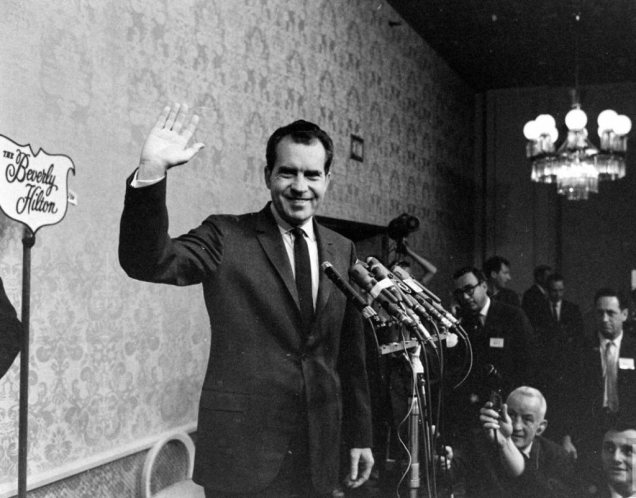
It appears that our political discourse of late has come down to playground name calling. Politics has always been about trying to paint an opponent in a poor light. Richard Nixon painted former actress, Helen Gahagan Douglas, as the “Pink Lady” in the 1950 California Senate race for her liberal views and Hollywood connections. In the era of McCarthyism, the moniker stuck and Nixon went to Washington.
This was the beginning of the Cold War, the atomic bomb and “the Red Scare.” There was a deep seated fear of an international communist take over. Former British Prime Minister, Winston Churchill has already given his “Iron Curtain” speech at Westminster College in 1946. He said that an iron curtain was being built across Europe from the Baltic Sea to the Adriatic Sea.
In Asia in 1949 Mao Zedong finishes his “Long March” and finally chases the Chinese Nationalist off the mainland establishing a communist regime in China. A year later Kim Jong un’s granddaddy charges past the 38th parallel into South Korea. It was time of paranoia. People were finding top secrets stuffed into pumpkins and were looking under their beds for “Reds”. But we have to remember they also were looking to the sky and seeing flying saucers, too. There was no talk about Green Cards for these possible illegal aliens invaders.
Today, invading Earthbound alien caravans are crawling to our borders. Inside the border government officials are rounding up illegals. The increased political chatter is setting social media off like a game of laser tag as opponents paint each other as racists, Nazi, white supremacists homophobes or some sort of misogynist. Spotting a racist, for instance may have taken more physical observation and at times more difficult. A white robe and a hood could easily hide their identity even when marching in plain site. But nobody questioned their hooded beliefs as being un-American.
Sometimes one way to tell a “fellas” beliefs is the stories they tell. Who among us has not snickered at an ethnic joke at one time or another. The classic joke: “Three men walk into a bar one…” When I was a kid I remember a book in novelty store in the mall called “Race Riots.” It seemed no ethnic or nationality was spared from the one-and-two line jokes. Just admitting that I once looked at such a book (never mind laughing at the jokes) could set me up as a racists today. My Mediterranean heritage, however, would keep me out of the “white supremacist” group, though. Once in the ’80s exiled Iranians took me for one of them. They were calling out to me in what I assume was Persian as I was leaving National Airport in Washington DC. They kept following me with pamphlets about the Shah. I called back to them that “I am an American!”
So who are you and where are you from?
So what is an American. How about the quintessential American guys who wrote the Constitution. I have not made a study of the 55 delegates from 12 states that attended the Constitutional Convention in Philadelphia in 1787. Yes, only 12. Rhode Island chose to sit this out. But I would venture to say that if you asked the delegates to fill out a Survey Monkey describing themselves they may not have considered themselves Americans. They would have more likely called themselves Pennsylvanians or Virginians. If you look at the federated document they produced at that conventions it is laced with “states’ rights.” They guarded their individual state’s interest like a junkyard dog snarling through a chainlink fence. Rhode Island was so adamant about not participating, they were the last to ratifying the Constitution. When they got around to it, it was already a done deal.
So who were these 55 delegates. In the first Census they would have fallen into the category: Free White males over 16. There were no National Socialist at the time and there was no gender gap. In fact, the Constitution did not address citizenship except to say it was up to Congress to determine and not the President. Citizenship back then was based on good old English Common law. Basically, who’s your daddy was and, yes, where did you come from. Which brings us to the modern day chant of “send them back.” If that were the case, most of us would be booking flights back to the old country. But with the grounding of the 737 Max this might take more than an Executive order. In reality it took the 14th Amendment to define who a citizen was.
Nobody was asking how inclusive this group was. But they did get the job.
Today we have made it a “federal case” on the questions dealing with citizenship–who is an American–being proposed on the upcoming 2020 Census. According to the United States Census Bureau the first Census in 1790 asked six simple questions:
The number of free White males aged:
under 16 years
of 16 years and upward
Number of free White females
Number of other free persons
Number of slaves
It is interesting to note that government was not interested in the age breakdown of free White females, slaves or the ambiguous group of “others.” Were the White males who put the 1790 Census together racists? By 18th Century beliefs no, but by 21st Century standards, probably. Things change.
The same might be said of the people who put together the 1990 Census where there were 32 questions. Gone are the “other free persons” questions. They were replaced with more specific questions like if somebody was Hispanic or of Spanish origin . They also wanted to know if somebody was lame, lazy or just crazy. Although it was not put in those terms. Question 17 asked if this person has “a physical, mental, or other health condition that has lasted for six or more months and which limits the kind or amount of work this person can do at a job?” Talk about tagging somebody. If the argument can be made that Robert E. Lee was a racist, it could be argued by today’s standards that the 1990 Census Bureau raced passed several “don’t ask don’t tell” questions. If you answered yes to that question today you might have just sunk your future chance to avail yourself of your Second Amendment rights. Forget about that assault rifle you want. You might not even qualify for one of those rubber suction-tipped bow and arrow sets with the fake feathered headbands.
It just seems like we have come light years from the simple six question from 230 years ago to now. For instance, in 1790 it was black or white, free of slave–and the occasional “other.” Today questions go deeper dealing with race and native origins. I think Census Bureau computer might short circuit if it got a response saying a person was a Black Jamaican with German origins. There might not even a box to check on that one.
But people want to know more than just the obvious. I went to a Miami Dolphin Monday Night Football game once. The Fins were playing the Bills back in the Jim Kelly and Dan Moreno era. The Bills owned the Dolphins back then. My brother and I had to hustle to get to the bus taking us to the stadium after work. We showed up at Joe Robbie Stadium in business casual. The gal decked out in Dolphin colors that I was sitting next to gave me the evil eye as I made my way to my seat. No small talk. She bruskly asked, “who are you rooting for.” She wanted to know who I was. Because sitting next to a possible Bill fan that night was not something she paid a ticket for. The Dolphins lost 26-20. It is easy to tell who we are are at a football game.
It is not so easy other times. The way are tagging and slapping coats of paint on each other today we could be many things. And as one of national motto states: E pluribus unum or Out of many one. Granted, there are some seriously dangerous people lurking around there that need to be called out. One thing we should be called is American. It will always be easier to label someone as the “pink lady” or a “Red.” But it seems like we are falling into some sort of national: I know you are but what am I!
The problem with the Mueller Report, despite what ever Robert Mueller said in his press conference, has left us arguing like it was a play in a sporting event. What we have now are umpires on the sideline debating if a runner was safe or out but never coming to a decision. It is almost as if the umpires know that whatever call they make they are going to end up ejecting one of the raging-mad manager from the game. The report did not resolve a thing. If it proves anything, it is that modern day Americans want some sort of closure. We can live with a bad call so long as it looks like it was made judiciously with out some made up excuse like the ball was tipped or I would call the runner out if I could.
For instance, in the 1824 election Andrew Jackson won the popular vote and had a plurality of the Electoral College votes–but not the needed majority. In situations like this, according the the Constitution, the House of Representatives (a great bunch of umpires) determines who becomes president. It seemed like an obvious call one with plenty of evidence on the ballot to make Jackson the president. But once Henry Clay, the Great Compromiser, became involved it was obvious that Andrew Jackson would be called out at the plate. A botched call. in what was called the Corrupt Bargain. Thus, giving John Quincy Adams the walk-off Presidency–and giving Clay the Secretary of State position he wanted. Back then, Secretary of State was the third base in getting to the Presidency. It was a bad call but one that even Jackson accepted, albeit with retribution to follow.
I’m not crazy, my reality is just different than yours” ― Alice In WonderlandToday, the polls on the Mueller Report are all over the place: Trumps approval is down; some say Attorney General William Barr mishandled the report; others indicate that most Americans are not in favor of impeachment but want to see the full report. And add to that, the report did not change too many people’s thoughts on Russian interference in the 2016 election. Putin is sitting on the Homeside of the field smiling like the Cheshire Cat. We are living in an era of self serve. It started with pumping our own gas and has moved to apps where we book our own flights. It is now “you make the call.”
This is not a good concept. The masses, or sports fans, have been known to go on a rampage flipping and burning cars, which is never a good idea. The main reason we have judges, umpires and referees is to see that the game is played fairly with results we can all agree upon despite disagreeing with the call. Left to our own devices the masses or fans usually have a hard time coming up with an objective call.
Somethings, however, are not supposed to be open ended. We want a conclusion without illusion. I think one reason Americans like closure is because we watch sports. Sports is on 24 hours a day. There are channels that even show college spring scrimmage games. The University of Nebraska had more than 85,000 fans show up for their spring football game and maybe just as many sitting in a sports bar watching (this was a team that only won 4 games). There are channels dedicated to leagues, conference and individual teams. There are now as many cameras on the sidelines and in the stands as there are players on the field. We get to see those close plays at the plate, we get to see the replays from various angles. But not so with the Mueller report. We just get to see the sideline arguments on cable news. We do not get to see the redacted version, the replay without slow motion so we end up with “collusion delusion.”
Preacher Roe out bear hunting.It can be argued that having so many cameras and “slow motion,” instant replay has impacted officiating but maybe not the actual play on the field. Any avid sports fan knows that bad calls are part of the game. People who played the game know of the phantom tag. For instance, in baseball if the ball gets to the base before the runner in a bang-bang play, and if it was a good throw, the runner was usually called out even if the fielder “sort of” missed the tag. There might have been a side comment by the runner as he dusts himself off and heads to the dugout, telling the ump out of the side of his mouth, that he missed the call. But generally speaking, everybody accepted the call knowing that most of the time the good calls and bad calls even out unlike trying to determine how to call a “hanging chad.” As an old time baseball pitcher “Preacher” Roe said: Sometimes you eat the bear and sometimes the bear eats you. The same can be said of politics. Just ask Merrick Garland. He never even got on the playing field.
Today calls on the field can be reviewed. Any fan watching from the stands; ensconced on the couch; or slamming back a beer at the bar has been subjected to a break in play while an umpire or a referee–maybe two–head to the sidelines, put on the head phones or start looking at an monitor with instant replay trying to get the call “right.” Most knowledgeable fans of sport will realize if the review was spot on or is inconclusive–that is not enough “evidence,” to use a legal term–to overturn the call on the field.
But what happens when there is not enough evidence to overturn a call. For instance in the 1800 Presidential election, it was never in doubt who won the election. It was Thomas Jefferson and Aaron Burr. But hold on a minute there are no ties in Presidential elections. An election, unlike a football play cannot be replayed. A tie was was not the intended outcome in the 1800 election. Jefferson was supposed to be the president and Burr the vice president. The Constitution at the time, however, stipulated that the candidate coming in second would be the Veep.
Despite the intentions, Burr was not conceding the presidency to the Sage from Monticello. This was the first time an election was thrown into the House of Representatives. It took 30 ballots and support from Alexander Hamilton’s Federalist party to get Jefferson into the Presidential Mansion. It turns out that Hamilton hated Burr more than Jefferson. To avoid such election reviews the 12th Amendment was adopted specifying who would be president and who would be vice president.
However, the rabid partisan fan will never be happy. It is, as the old ABC Wild World of Sports saying “the thrill of victory and the agony of defeat.” No one wants to loose especially to their hated rival. Burr got his revenge on Hamilton in an 1804 duel.
But in sports, like politics, a non call is not allowed–or is it? We cannot have two teams arguing on where to place the football or if a hooking fly ball to right field wrapping around the foul pole is a home run or a long foul ball. We may disagree with the call but as they say in British football (soccer to us Americans) “Play on.” And we do.
No instant replay in 1985In 1985 the Kansas City Royals were the benefactors of what was a bad call that some St. Louis fans would argue cost them the World Series. It is not so much it was a bad call but more about when the bad call takes place. In this case it was in the bottom of the ninth inning, the Royals down 1-0; game six with the Royals one game down in the series The Cardinals were three outs away from being world champions. The Royals send up pinch hitter, Jorge Orta. He hits a squibber in-between second and first. Both the first and second basemen are going for the ball. Jack Clark, the first baseman fields the ball and throws it to pitcher, Todd Worrell, who is on the run covering first base, something that is practiced over-and-over. It was a close bang-bang play; and in sandlot baseball the saying is: Tie goes to the runner: play on. In this case instant replay showed it was not a tie and that Don Denkinger, the first base umpire, missed the call. There was no review and no appeal despite instant replay showing that Orta was out by less-than-a-half-a-step . The Cardinals complained from the dugout but as the British say: Keep calm and play on. The next night the Royals slapped around their instate cousins 11-0 winning the World Series.
But a more recent call with national championship implications and reverberations was the NFC Playoff game between the St. Louis Rams and the New Orleans Saints. Again, a close game. It was a tie game, 20-20, with 1:49 left in the game. The Saints had a third-and-ten on the Ram’s 13-yard line. Saints wide receiver, TommyLee Lewis was running a wheel route and was wide open inside the five-yard line; Drew Brees sees the open Lewis heading towards the goal line. The pass never made it to Lewis. Ram’s cornerback Nickell Robey-Coleman was beaten and did what any cornerback in the NFL would do when beaten on a play that has touchdown written all over it: he mugged the receiver. If what followed happened in Walmart parking lot Robey-Coleman would have been charged with battery. He was not even charged with disorderly conduct as no flag was thrown on the play. Without a doubt this was an obvious pass interference call. And a play that was not reviewed.
No call is better than a bad call?
The Saints, like the baseball Cardinals, played on. They kicked a field goal but ended up losing in overtime 26-23. For those in New Orleans it may have felt as if Mardi Gras had just been canceled. The NFL, however, “played on”: the Saints went marching out.
The Mueller report has been subjected to some real biased officiating leaving the American public unsure what the call really is. It is not unusual in most sports to see officials gather around to get a call right. Much like the 2000 Presidential election where judges, legal experts, political hacks and pundits gathered and haggled for a month in an attempt to decide what a hanging chad was and ultimately who won the State of Florida’s electoral votes, and hence the presidency. It took the Supreme Court to put on the headsets and go to the monitors and review the vote. The election stands with George W. Bush winning by less than a half-of-a-step. A lot of people hated the call but they lived with it. We played on.
Today we are in situation where both sides are now calling balls and strikes; deciding where to place the ball on the playing field. I even think some people have been adding extra balls onto the playing field leaving us to argue about which ball is actually the game ball. All this despite senators bleating from the stands: “case closed.” Until somebody comes out and makes a definitive call on the Mueller Report the 2016 election will always be a phantom call. It took a disappointed Al Gore to say enough, the ”partisan rancor must now be put aside.” But for now the Mueller Report will remain a “you make the call.”