Five members of the far-right libertarian militia group known as the Oath Keepers are being charged with with seditious conspiracy for their suspicious behavior during the January 6th Trump rally at the Capitol to disrupt Congress from certifying the 2020 Presidential election. Some called it a tourist lead coup.
According to CBS News seditious conspiracy is “a Civil War-era crime accusing the defendants (Oath Keepers) of seeking to overthrow, levy war against, or prevent the execution of U.S. law.” Or as the Oath Keepers claim: they “were in Washington, D.C., that day as security personnel for the president’s rally.” Their “primary role was apolitical and meant to provide volunteer disaster relief and security.” They were an amalgam of the Salvation Army and FEMA. One of their main fears, however, was to prevent the ubiquitous Antifa and other left-wing assailants from assaulting the White House.
The Oath Keepers reasoning is straight from Cheech and Chong’s 1971 album of the same name, track three: Trippin’ in Court. A lawyer is trying to defend his client who has been arrested with 24 pounds of marijuana by saying his client merley found the pot and was on his way to the police station to turn the contraband in. To the layman on the street this may seem suspicious–but in today’s conspiracy driven reasoning it’s a valid defense strategy.
The January 6th the stop the steal movement is not the first time Congress has been disrupted and had to hunker down from doing its legislative duty. Way back in June of 1783 about 400 disgruntled Pennsylvania Militiamen were seeking back pay for their years of service during the Revolutionary War. The British had been defeated at the Battle of Yorktown in October of 1781. Preliminary peace negotiation were going on with Great Britain–and the soldiers still had not been paid. Their fear was not from Antifa and far left socialist but that Congress would send them home without pay. Out of sight out of mind. In fact, Robert Morris, who was in charge of finance for the Confederation said it could take years to figure out how much was due individual soldiers. On top of this was a worthless currency. Once furloughed and at home, and with Congress’s financial record of paying off the Confederation’s bills, they felt they would never get paid or receive any bonuses, land patents promised when they had originally enlisted.
Much like the 117th Congress, the Continental Congress of 1783 found itself besieged and crying for militia assistance. On January 6th Congressional leaders sent out calls to Maryland and Virginia governor’s for National Guard help. Calls went out to the Defense Department for help in bolstering the thin blue line that was being stretched beyond the bike-rack defensive perimeter of the Capitol. Capitol and DC Metro Police decided that Capitol Hill literally was the hill to die on. It was their valiant effort that held the citadel of the Republic from what some assumed was an angry mob of tourist without gallery passes.
Congressmen in 1783 also called out to a state for help, Pennsylvania Governor John Dickinson. Congress wanted him to call out the militia to protect what was then the federal government. For some odd reason, Dickinson and his Executive Council sat on Congress’s request for a day. And then just basically said your on your own. Various reasons have been floated around why Dickinson and the state of Pennsylvania did not send help. As a former militia officer, Dickinson may have had sympathy for the soldiers’ position. There is some speculation that the militia being called out may have joined the mutineers. Or maybe it was a state’s right position where they were not going to respond to demands from Congress.
What we do know is that Alexander Hamilton, a Congressional delegate and a former colonel in the Continental Army, convinced the soldiers to let Congress adjourn and meet later to tackle the soldiers demands. Without Pennsylvania’s protection some delegates suggested that the capital should be moved. Given the opportunity to skedaddle Congress “left the building”–and Philadelphia. Without those reassurances of protecting their safety, Congress up and moved the capital out of Pennsylvania.They crossed the Delaware River and set up shop in Princeton, New Jersey.
George Washington did send about 1,500 Continental soldiers to Philadelphia, all for nothing. Once Congress moved across the river the soldiers lost heart in their demands and relinquished the fate of their back pay to a future time. The big consequence of this mutiny was when the Constitutional Convention meet in Philadelphia in 1787. Some of those delegates present remembered their last meeting in Pennsylvania and how the state could not protect the government. The framers of the Constitution felt the need to create a federal district under Congressional control. Hence, the creation of the District of Columbia as the capital of the United States.
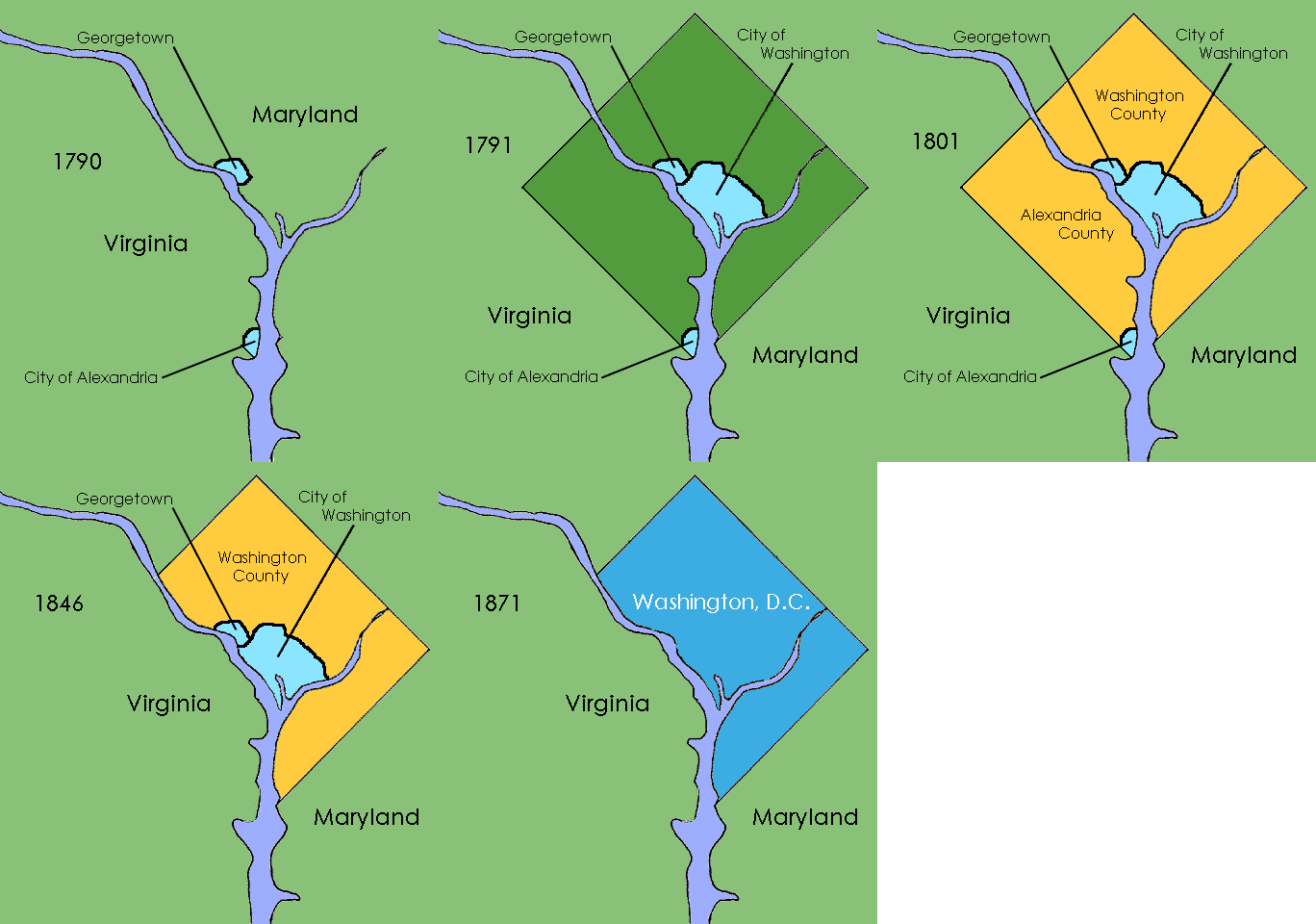
epicAdam, CC BY-SA 3.0 https://creativecommons.org/licenses/by-sa/3.0, via Wikimedia Commons
To exercise exclusive legislation in all cases whatsoever, over such District (not exceeding ten miles square) as may, by cession of particular states, and the acceptance of Congress, become the seat of the government of the United States, and to exercise like authority over all places purchased by the consent of the legislature of the state in which the same shall be
Article One Section 8
Creating a federal district under Congressional control sounded like a good idea at the time. But it didn’t appear to play out the way the framers intended. On January 6th it seemed like the 117th Congress was no better off, and subjected to the same lack of power in their pleas for help as the delegates to the Continental Congress in Philadelphia were on June 20th 1783.
As for the Oath Keepers, their service is suspect at best and maybe judged seditious. Congress’s ability “to exercise like authority” over Washington D.C. creates the impression they have no more control of an angry mob at their doorsteps than their predecessors did in 1783.
some suggested links
https://military-history.fandom.com/wiki/Pennsylvania_Mutiny_of_1783
https://journals.psu.edu/pmhb/article/view/43383/43104
https://www.battlefields.org/learn/articles/early-capitals-united-states
https://washington.org/dc-information/washington-dc-history#
 mystoryorhistory