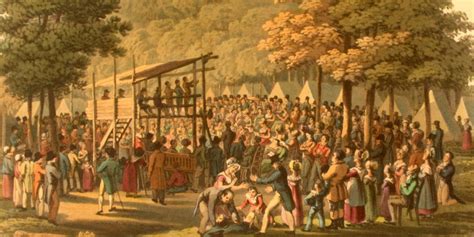
Library of Congress, Prints and Photographs Division
Author Jacques Gérard Milbert (1766-1840)
Whether you are a football fan or not it is impossible to get through the holiday season without seeing a couple of minutes of football. Afterall, there are about 40 college bowl games on TV starting with the Bahamas and Tailgreeter Cure Bowls on December 17 and ending with the National Championship Game on January 10. If baseball is the national pastime than football is the national religion.
I do not mean any disrespect to any particular religion, but according to vox.com, “The popularity of American sport culture is deeply rooted in the history of a particular kind of American muscular Christianity a conflation of nationalism, nostalgia, piety, and performative masculinity. From the football stadium to the basketball court, American sports have been as much about defining a particular kind of male and typically Christian identity as they have been about the game itself.”
Now, I am not a diehard football fan. I am more of a casual observer of the game. It really is hard for me to get revved up over a match between Western Michigan and Nevada. But I probably will watch some of the College Football National Championship Game between Alabama and Georgia–two Southeast Conference teams. I will admit my interest in the game became more intense when I was in college at the University of Florida. It is hard not to get excited about football in a college town. And Gator football, like many other university football programs, has been around for more than 100 years.
Game day in a college town has the same exuberance and exhilaration, and mysticism of a medieval religious holiday. Not that I have been to an actual medieval fair. However, Gainesville does hold annual Hoggtown Medieval Faire with jugglers and such, but not during football season; but I digress. In a college town just about everything is geared for that Saturday game. Gainesville, like so many other college towns, becomes a sporting Mecca as 90,000 people pack the stadium. That is like putting one-third of the county’s population in one place for the better part of a Saturday. People tailgate with generators, set up outdoor canopies. The landed gentry can come from far away in their RVs. The booster elites seated up on high in their sky boxes. And those not in the stadium are at pubs and such; or home in front of a TV. It is a spectacle with a marching band.
It is also a day you can walk into just about any theater in Gainesville and actually yell “fire” without incurring panic. The panic-like conditions comes after the game moving 90,000 people from the stadium. Gainesville lives for those Saturday games. If the University of Florida left Gainesville and packed up like some NFL teams, the city would be just another rest stop on I-75.
The Florida Gators is a team that is in the Southeast Conference. A conference that was conceived in the old Confederacy. It is a conference that takes football seriously. Every Saturday when two SEC teams meet on the gridiron it can seem like the Vidalia Sandbar fight fought on an island in the Mississippi River. The Vidalia Sandbar duel that took place on September 19, 1827. It was the fight that made Jim Bowie a Southern legend. He was seriously wounded, two others were slightly injured and two others killed. It was this fight that started the myths of Jim Bowie and his famous knife. Southern tempers have simmered since then but the ferocity can be just as intense, particularly when two SEC rivals clash. As in the upcoming national championship game.
College football as a fall collegiate contest is undergoing a dramatic economic shift. It is not unusual for head coaches to have $8 to $10 million contracts and million dollar plus buyouts. States are now passing laws allowing players to earn money on their image and likeness blurring the age old divide between amateurs and professionals–as if that even matters anymore.
This concept of amatures has been long debated. For instance, was the Soviet Union National Hockey Team a team of amateurs or professionals? They were so good that ABC News wrote that “In February 1979, they (the Soviet team) faced an NHL All-Star team that featured an astounding 20 future Hall of Famers in a three-game series. The Soviets won two of the matchups, (tied one) including Game 3 at Madison Square Garden in a 6-0 rout.” Today there are 38 Russian players in the NHL. Sort of reverse if you can’t beat ’em join ’em.
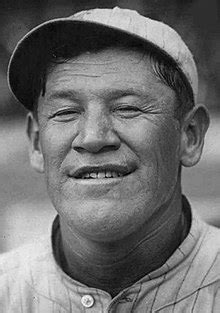
The amature status debate goes even further back. Take Jim Thorpe, the best athlete of his time, and a gold medal winner in the 1912 Olympics. Thorpe, a pentathlon winner, was eventually stripped of his gold medals when it was learned that he was paid to play baseball in 1909 and 1910.
It is hard to imagine how “professional” baseball was at the turn of the century. This, in an era where owners, for all practical purposes, owned their players’ contracts for life. There was no collective bargaining and no marketing of players’ images. Take the 1919 Chicago White Sox known as the “Black Sox.” Eight players on this team were accused of consorting with gambler Arnold Rothstein and others to throw the game “for money.” A unique concept. This was a time of strikes: The Great Anthracite Coal Strike of 1902, the West Virginia “mining wars” that took place for 1912-22 and the Steel Strike of 1919.
Although the National Guard was not called in on the Black Sox, none of the eight were convicted in the trial that followed. However, Judge Kenesaw Mountain Landis banned the players from baseball for life. Getting paid very little to play a sport back then may have made you a professional; it just didn’t make you rich. But for some college athletes not getting paid at all is about to change.
Some may argue that college football players are already defacto professionals, NFL minor leaguers. NFL teams get to pick colleges’ cream of the crop players while letting the universities develop them for nothing. That nothing is the buffer between professional and amature.
Now, most college football pundits agree that the SEC is the best overall conference in college football. All university programs compete for the country’s best players. To appeal to these young squires universities need to raise millions from boosters to improve football facilities and to pay coaches. It is not unusual for head football coaches to be the highest paid state employee. In return the boosters demand victories. Not just wins but championships for their well-donated money. And the SEC does this extremely well, particularly in football by getting teams into championship games. And, at the beginning of the 2021 NFL season there were 1,696 roster players on NFL teams. Three-hundred and thirty-five of those players, almost 20 percent, are from the SEC.
To keep its preeminence the SEC is pushing out just like the Old South did. In recent years the SEC has pursued a Manifest Destiny mentality in its approach to dominate college football. It may not want to control college football from sea to shining sea but it is definitely preaching its football beliefs and culture. It is pulling in other schools like a traveling minister dunking converts into the healing waters at a camp revival. First it added Arkansas and South Carolina into the league in 1991 as sort of First Great Awakening.
Then Second Great Awakening occurred in 2012. In what seemed like the Missouri Compromise all over again when the conference expanded north of 36 degree latitude to bring Missouri into the fold. It then crossed Sabine River and annexed Texas A & M. Both teams were pulled from the Big 12. This expanded the SEC to 14 teams.
By crossing the Sabine River the SEC had a toe hold in Texas. In its Third Great Awakening the SEC annexed another big chunk of the state pulling in the University of Texas. It then moved north in a “take me to the river and drop me in the water” moment when the conference jumped over the Red River and on to the University of Oklahoma campus. Both teams are scheduled to begin conference play in 2025. Thus, leaving the Big 12 Conference without a big box football program to anchor the league.
According to Forbes “The move means the SEC will have nine of the 12 most valuable college football programs, which generate far more money than any other collegiate sport, while The Big 12 would be left without a single member among the 25 most valuable programs.”
The SEC’s moves have forced the other major conferences to protect their turf. College Football has seen the disintegration of The Big East Conference football and now the disfiguring and stripping away of valuable teams from The Big 12. The other conferences have reason to be concerned, And rightfully so. In the last 10 years the SEC has one seven championship titles with Alabama collecting five of them. Auburn and LSU each of won one. And, oh by the way, we can add Georgia to that list after its 2021 win over who else: Alabama.
https://www.vox.com/identities/2017/9/27/16308792/football-america-religion-nfl-protests-powerful
 mystoryorhistory