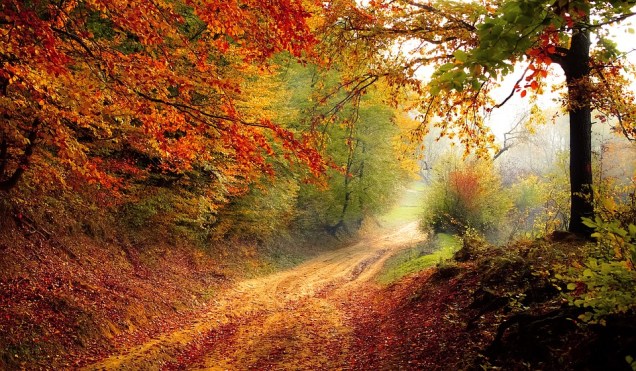
As the nation gears up from an impeachment inquiry to an full blown on House investigation we have to wonder if is something about November that instigates radical political changes. It must be something in the fall air, the Earth’s rotation or the tilt. The changing of the temperatures, in the Northern Hemisphere not only has the leaves turning colors and falling to the ground but people turning red and blue. Maybe it could be just knowing that winter is getting ready to roll in and people, animals and plants know whatever has to get done needs to get done before the cold weather sets in.
Here in the United States, our national elections are a biennial event. Much like plants that come to foliage one year, drops their seeds the next and then flower; so it is with our presidential elections. We experience a two year campaign season that works its way into a frenzy during the dog days of summer with conventions and then culminates into the parties turning the their mad dogs loose onto the electorate. Despite the elections being every two-to-four years, campaign season is now a continual growing season. Even plants need a break and go dormant. But impeachment is like the 50 year drought, or the sudden warm snap that could even lull Punxsutawney Phil out for a day on the town.
Since the framers of the Constitution lived in an agrarian society, maybe they planned for a fall pre-winter election and post-winter inaugurations with a dormant period to let the season do its thing. A sort of governmental sowing of seeds. A time to cage hostile feelings or create a season of contemplative planning to decide what to plant in the upcoming political season. Despite putting impeachment into the Constitution, I am sure it was not meant to be used for Presidential pruning. A nation, however, like the farmer reaps what it sows and we really planted a hybrid.
However, whatever gets planted, the fabric of our representative democracy is intertwined in such a way that a November election is not too far off to initiate the change needed to rectify injustices. For instance, in the 1960s it was Civil Rights laws that brought people to march and demonstrate for full equality. Congress enacted the Civil Rights Act. It was the Vietnam War that brought about the belief if you are young enough to fight for your country you should have the right to vote. Hence, the 26h Amendment lowering the voting age to 18 years. Our outlet for resolving these issues is our biennial elections. But what happens when these elections gives a bad yield?
As the longest running representative democracy, these seasonal elections have served us well to relieve and begin the process of implementing solutions to pressing public problems. Democracy, unlike other forms of government takes a little more time and work to get things done. And, in the view of many, it never gets it right. But it gets it close enough to right so that we do not end up out in the streets in mob rule. We usually get a workable balance between populism, reform and regulation.The two-year election cycle gives us time to sort things out, plant a few seeds and see what sprouts. Lately, though we are lucky if we get a crop in the field.
I would hardly say that today’s fall-season elected officials are like plants. This might be insulting to most plants or the common weed in your backyard. Although, some politicians are well established dandy lions that seem to proliferate in all seasons–even the 50 year drought. But there are some similarities. Plants need rich soil to thrive. Politicians need some rich backers with deep pockets; a few, however, can actually self-fertilize–just look to the previous eight years of Florida’s governor’s office. Florida is a place were just about any invasive can thrive all year long. Some plants prefer sunlight and others shade. Politicians are similar in that some bask in the bright lights of the media enjoying their time behind the podium while others prefer to move about in the shaded areas of public service doing their deeds behind closed doors.
But before we lose that rustic fall scenery and the trees become bare, the clocks get turned back and the skies turn a darker shade of gray, issues come forward and events occur that it some, cases cannot wait for the winter thaw. In America, we are not immune to governmental up-evil. Like most countries around the globe, we have endured our share of struggles, social injustices that have resulted in civil disobedience. and in some cases just plain flat-out widespread rioting; we have endured various economic and natural catastrophes, as well as terrorist attacks and even a full blown Civil War. But in most cases we believe in the power of the ballot over the bullet. Hence, an impeachment clause to the Constitution.
But November in other parts of the world may not experience the growing and nurturing effects of biennial governmental gardening that our elections provide and instead find far more fiery ways to curb their enthusiasm. There is always somebody who wants to take a short cut. They end up taking an ax to the tree trunk; or maybe they are just an overzealous gardener madly hacking away at whatever looks like a weed; or they start a scorched earth policy of burning the entire field and end up eradicate everything like a bunch of Bolsheviks.

For example, it was November 7, 1917 when Bolsheviks took to the streets in what would eventually turn into a scorched earth policy. It was earlier in the year, however, that the Imperial St. Petersburg army garrison abandoned their posts and joined striking workers that exposed Russia to radical change. Workers who wanted “socialist reforms” forced Czar Nicholas II to abdicate. The Bolsheviks seized the moment. In November they overthrew Alexander Kerensky’s Provisional Government. Lead by Vladimir Ilyich Ulyanov, better known in the West by the notorious one-name moniker: Lenin, they set up The Council of People’s Commissars.
Unfortunately the seeds of democracy never took. Alexander Kerensky would bolt to the West and remain in exile for the rest of his life. Sadly, the Bolsheviks were less forgiving when it came to the current Romanov’s. In less than a year after toppling the Provisional Government, in what could be described mildly as the culmination of centuries of Romanov exploitation, a manifesto of peasant dissatisfaction with the extravagant, and sometime maniacal, monarchical rule ended with the execution of Nicholas and his entire family. Thus bringing forth the Soviet Union and a radical form of socialism and an economic system we know as communism.

Another November to remember occurred six years later almost to the day that the Bolsheviks took power, Adolf Hitler and his burgeoning fascist movement took to the Bavarian streets in a failed coup. Inspired by Benito Mussolini’s National Fascist Party March on Rome in late October of 1922. A march that toppled the teetering Italian Kingdom and brought Mussolini and his Brown Shirts into power. An energized Hitler, encouraged with his fellow fascist’s success, decided he could overthrow the Bavarian government in what came to be called the Beer Hall Putsch. Hitler and his Nazi cohorts stormed the Buergerbraukeller where Bavarian leaders were meeting, in an attempt to kidnap them, while other Nazis tried to capture key governmental offices.
The two-day Putsch failed in gunfire. Sixteen Nazis and four policemen were killed. Hitler managed to slink off, hiding in a friend’s attic. He was arrested three days later. Hitler was charged with high treason, and was found guilty and sentenced to five years in prison but only served eight months.

Hitler’s form of Fascism would eventually come to power in 1933 eradicating those who did not see the goals of his thousand year Third Reich, a sort of make Germany better again movement. This unchecked fanaticism would bring war to Europe and start World War II killing millions and leaving Europe in ruin. To avoid any consequences for his fascist fanaticism Hitler would commit suicide.
Other monumental November changes happened, in 1519 when Hernan Cortes captured the Aztec capital and Emperor Montezuma ending one of the “New World’s” established civilizations. And in a November closer to our times, a military coup killed South Vietnamese President Ngo Dinh Diem. The assassination of Diem and his brother signaled a deeper United States military involvement in South Viet Nam that would officially end with the fall of Saigon in 1975. It would take several biennial elections, demonstrations and four students killed at Kent state to bring about a political end to this unpopular war.
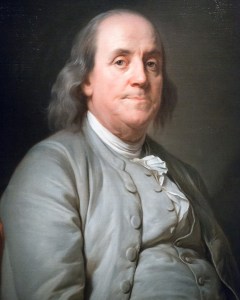
Our election cycle was created by men who wanted to “secure the Blessings of Liberty” for posterity. After leaving Independence Hall where the Constitutional Convention met in Philadelphia to write a new Constitution, a Constitution that bound us together in a firm Republic, to replace the go it alone attitude of the Articles of Confederation; Ben Franklin was asked, “Well, Doctor, what have we got–a Republic or a Monarchy?” To which Franklin replied, “A Republic, if you can keep it.” The key to keeping a Republic is remembering what it stands for. In the closing paragraph of the Declaration of Independence the signers stated their support for independence by putting a “firm Reliance on the Protection of divine Providence” and that “we mutually pledge to each other our Lives and Fortunes and our sacred Honor. ”
Our November elections can be a messy time because democracy is messy. But it is a time when we pledge to each other our mutual support because it sure beats Conquistadors riding into town searching for gold. It is better than Bolsheviks imposing a collective social order. And it is better than Nazis forcing their way into government like mobsters.
Elections might not settle every issue at any given time but if we are guided with the concepts in the Preamble of our Constitution with the belief that we can continually “form a more perfect Union” and not a create chaos out of division , we will be able to keep our Republic. It is unfortunate but maybe necessary at times that we need to review an election. Say what you will about impeachment but the Constitution does give Congress a backdoor to tend to democracy’s garden.
*This photos have been edited by the powers to be at the time either cropping individuals out or simply removing them.
 mystoryorhistory