
It was in May of 1935 that Major League Baseball played its first night game in Cincinnati. Night baseball was a big deal at the time but after the preforming enhancement era of baseball, it is now one of those firsts that falls onto the “who cares” pile of baseball history.
It could be argued that night baseball opened the game up to many firsts. But for the Reds, that night game was just one of 154 that they played that year and the tens of thousands that have been played since.
Once there were lights, it was not too long before there were cameras; and after cameras commercials. The first televised MLB baseball game played on August 26, just four years after the first night game. W2XBS in Manhattan broadcast a double header between visiting Cincinnati Reds and the Brooklyn Dodgers. The NBC station used just two cameras so it is safe to say there were no slow motion replays or umpire reviews If a manager questioned a call he did it the old fashion way: getting into the umps face with a wad of chewing tobacco bulging in his cheek.
In 2008, as if the game was not moving slow enough, MLB decided to allow umpires to review calls using instant replay. At least when managers disputed calls it brought some excitement to the game. Watching umps review calls is like watching your kid play a video game.
It will not be long before umpires, referees and other officials are replaced with robotic movable field cameras controlled by a band of nerds and geeks buried deep with in the bowels of the stadium. I am sure that drones will soon be introduced to the game in some form or capacity.
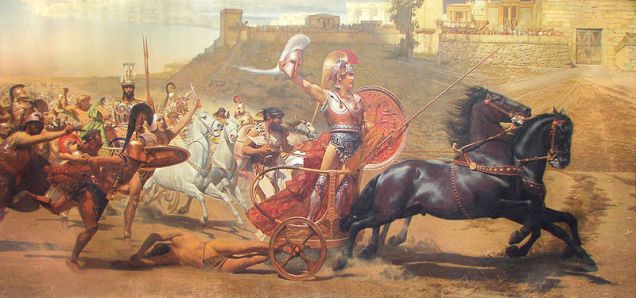
Do not get me wrong, I still love the game. Watching it on TV has faded away for me like a foul ball slowly drifting into the left field stands, bouncing off outstretched hands of fans, to be pursued by a bunch of kids like a pack of dogs chasing a fox; ending with the ball held high for all to see like Achilles dragging Hector’s body around Troy. This triumphant ritual will be repeated throughout game.
The major concern of late is the length of the game. With modern technology: lights indoor stadiums; a game can go on from sun up to sun set. Unless it is the 2002 All-Star Game where both leagues ran out of players. I for one do not want to sit in front of TV the better part of the night watching beer and car commercials. And I will not go on about listening to the yammering of the talking heads behind the mike.
In an effort to cut down on the length of the game Major League Baseball is trying to rid itself of some of its long held traditions. One ritual that MLB curbed is visits to the pitcher’s mound. I long lost interest in baseball before the new rule to limit how many trips emissaries can make a to the pitcher’s mound before a pitcher has to leave the game.
Most fans know when a pitcher is done. Shuttling out various players and coaches to talk to a hammered hurler is not going to change the situation before the manger with the hook yanks him off the mound.
Sure, those little junkets can eat up time. And really, how much strategy was being discussed? Everybody knows it is a stall tactic to give the relief pitcher a chance to get warm. It seems ridiculous to drag out the inevitable. After all, gone is the four-pitch intentional walk.
Ah, but some argue that this is where the real thinking of baseball is made. Those tough decisions managers had to make in the daylight before TV and the Designated Hitter era. Managers had to mull over when and how to pull his pitcher for the best pitcher-batter match-up, the double switch on where the new pitcher should bat in the lineup.
All of this cogitation requires counter cogitation in the other dugout, too. Does the opposing manager pull his batter for a switch hitter to check the other manager’s moves? It is a chess match played on a diamond—so they say. Oh for the sake of these chess like-managerial decisions: The King’s Pawn Opening, The Catalan Gambit or the Sicilian Defense.
Two things are taking place in the late 1960s and early 1970s. Baseball games are becoming low scoring events, and the American League is losing attendance, which means lost revenues. Remember, this is a time before the plethora of sport channels and ESPN. Only a couple of MLB teams could wrangle a multi-million dollar TV deals.
Two quick fixes occurred. One, MLB lowers the pitcher’s mound. This was followed by the American League taking the bat out of the pitcher’s hands and replace him with a real hitter, a Designated Hitter to boost offense and excitement. Charles Finley, owner of the Oakland Athletics quest for the DH came true in the 1973 season.
I personally do not care one way or another about the DH. I do think it shows how out-of-touch baseball is with itself. I have come to accept the fact that just about every league in baseball (and softball) except the National League and the Nippon Central League are holdouts. The DH has been around for 45 years and I do not think it is going anywhere. The game loses a certain symmetry when one team plays the game slightly different than they normally play. It would be like one chess player starting the game without it one of his knights.
What I found more maddening about the slow pace of MLB games, besides the endless amount of commercials, is the batter stepping out between every pitch. I do not think sky divers check and adjust their equipment as much as a batter does between pitches. The constant adjusting of every accouterments a batter has on; tightening re-tightening of batting gloves, elbow pads; adjusting the jock; and holding his hand up to the ump while he is digging back into the batter’s box. I do not think the Aztecs went through this much ceremony when they were sacrificing virgins to their gods.
The same goes for the pitcher who steps off the rubber, shakes off the catcher two and three times. First of all, how many pitches does the pitcher have? And the catcher only has so many fingers and hand gestures to send out signals as to what pitch to throw. How many combinations and permutations of pitches can he throw to one batter? This is not British Intelligence at Bletchley Park trying to crack the German’s Enigma code during World War II. Throw the ball for god’s sake.
There were other events that killed my interest in MLB. Free Agency changed the game. I do not begrudge the players for making the big bucks. The Reserve Clause was a modern throw back tying players to a plantation much like a serf to the Lord’s Feudal Manor. You play here and die here unless the owner trades you.
Then there was the 1994 strike when a season was canceled and no Fall Classic was played. And in an attempt, bring back interest inter-league play followed. The first inter-league game was played on June 12, 1997. The Texas Rangers lost 4-3 to the visiting San Francisco Giants.
Major League Baseball, being the statistical abnormality that it has grown to be, keeps track of such now meaningless stats as the American League a positive 1,714 run-differential and .529 winning percentage over the National League in inter-league play. Really? Who cares about stats after the performance enhancement era of baseball? Maybe me, but not now.
I use to be a die hard American League fan. I grew up outside Washington DC as a Senator fan. At that time, Washington was in the American League. For Senator fans, any hope of getting out of the cellar and to the World Series was clinched by mid-May. As Charles Dryden wrote in 1904 that: Washington was first in war, first in peace and last in the American League.
Being a Senator fan I hated the damn Yankees. This puzzled my Mother when it came to the World Series. How could I hate the Yankees all year and then root for them in the World Series. It did not matter what American League team played in October–which now seems like November. The team could have been the ship of fools piloted by the devil himself. I did not care so long as they could beat the National League. So maybe inter-league play had a lot to do with me losing interest in MLB.
During my youth, I suffered mightily. In 1963 both leagues had won 17 All-Star Games. In the next 20 years the American League would only win two. It was not until last year did the American League finally evened the score with 43 wins a piece.
And who thought of tying the All-Star to the World Series with the winning league getting home field advantage. Baseball fans knew that the All-Star game was a stand alone game full of league pride prior to inter-league play. Inter-league play, free agency and commercial TV has turned it into some sort of Red Carpet Gala of stars in cleats.
Baseball, like so many things has to change with the time. But the real killer is TV. It is TV the lets us watch so many games but it is lights that let us watch night baseball. Television dictates the game itself. Television and its corporate sponsors literally has changed everything in American culture. Television uses baseball as the vehicle to sell more insurance, cars and beer. The game becomes secondary. Once advertisers figured out how to market their product to MLB, the game was never the same. MLB will tinker with the rules and rituals of the game to make Madison Avenue happy. And it all became possible when lights came on way back in 1936 and night baseball became a reality.
Some websites to check out.
https://www.ge.com/reports/bringing-good-things-night-night-baseball-came-cincinnati-1935/
http://cincinnati.reds.mlb.com/cin/hof/hof/directory.jsp?hof_id=113285
https://www.mlb.com/news/20-years-of-interleague-play/c-212597146
https://www.usatoday.com/story/sports/mlb/2014/08/11/1994-mlb-strike/13912279/
https://www.npr.org/templates/story/story.php?storyId=112234266
www.forbes.com/sites/maurybrown/2016/10/08/the-greatest-baseball-tv-ad-of-all-time/#165c3312576f
 mystoryorhistory