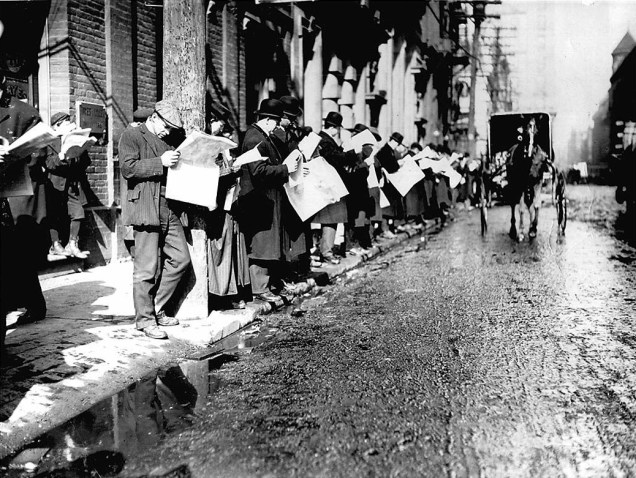
New words and phrases are always coming into use and out of use. It is interesting how unrelated words are combined into a meaningful phrase like “bottomless pit,” “exact replica,” and “speed trap.” When broken down these sorts of word combos really do not make sense but if you are pulled over along a stretch of road with other drivers for exceeding the “suggested” speed limit the word combo “speed trap” is very self evident in more ways than one. Not so much bottomless pit.
A recent word combo, “fake news” is making the rounds of late. When the two words fake and news are combined it seems obvious what is being conveyed. But what really is fake about the news?
The most vociferous user of the term fake news is President Donald Trump and his friends. Presidents and politicians have always used vague combo-words, catch phrases and cliches to have specific meanings easily understood by the masses. Pithy word combos can create an image like Theodore Roosevelt’s “Square Deal.” Franklin Roosevelt built off Teddy’s word combo to create a “New Deal;” Kennedy had his “New Frontier” and Johnson built off of Kennedy’s Camelot image with his “Great Society.” And who can forget George Bush’s oxymoron “Compassionate Conservative.” Granted all of these are catchy campaign slogans that try and boil complex issues into one pot without real specifics. Fake news is more of a rallying cry.
President Trump’s use of the FAKE NEWS, emphasized in all caps, is meant to register his contempt for established media outlets. His use of Twitter hammers home his views to any negative news story that criticizes him or goes against what he believes to be true. Twitter amplifies the president’s “bully pulpit.”
There is nothing wrong with using the media to get your message across. Presidents have been doing this as far back as the 1800’s. President Thomas Jefferson was tired of the partisan pummeling he was receiving from John Fenno’s Gazette of the United States. He and James Madison decided to hire Philip Freneau to edit a Republican newspaper, The National Gazette, to hit back at Alexander Hamilton and his Federalists. No more free unanswered shots.
Neither paper lasted more than a few years. It is not until the 1830’s that mass media begins to take off with the Penny Press. Steam presses and advertising made daily newspapers cheap and available to the public. One of the first presidents to realize the importance of mass media was 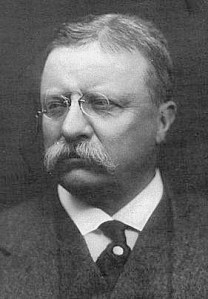 Teddy Roosevelt.
As a writer, Teddy knew the power of the written word. He knew how to position himself in front of cameras for what we would call today a photo op. And he developed the office of the presidency into what he called the “bully pulpit.” A place to expound on his progressive policies. But time has changed the meaning of that term “bully.”
Today, the word bully as noun, is a brutish person that goes around intimidating the weak and feeble. As a verb it is the act of brow beating (another good two-letter combo) and tormenting the timid.
However, at the turn of the 19th Century when Roosevelt, the 26th President, used the phrase, bully was a superlative meaning grand or excellent. The presidency was an outstanding (another good word combo) office for pushing the president’s agenda.
Other presidents, like, Teddy’s cousin, used the new media of the day. FDR used the radio to his advantage in explaining his “New Deal” policies to the public. In the 1960’s TV added to John Kennedy’s prestige. Television, however, did not enhance Johnson and Nixon’s image. In fact, it helped topple their presidencies. It was Ronald Reagan, an actor turned politician, that became the “great communicator” using TV as the ultimate bully pulpit. So President Trump using Twitter is nothing new.
However the term fake news is interesting because on the face of it, it seems that there is no doubt in what the message is saying. But fake news can be like beauty: it is all in the eye of the eye of the beholder. It can also be like pornography in that most people know it when they see it. But do they really? Fake news that is.
What is counter intuitive (another good word combo) is that often for something to be fake, it usually is based on some sort of truth. For instance, there is only one real Mona Lisa but easily thousands of replicas. It would be hard to call them fakes–but they are. The big difference is everybody should know that if they have a Mona Lisa it is not the real one. The term “replicated news” does not come out with the same meaning as fake news. However, we are not replicating but realizing the possibility that some of the news is not 100 percent factual. But then when are we ever working with 100 percent certainty on anything.
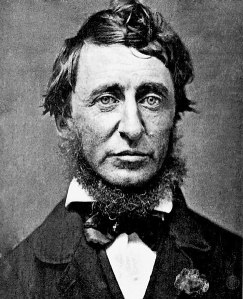
When it comes to news. we could look at David Thoreau’s impression when he wrote “all news is gossip and they who edit and read it are old women over their tea.”
That is rough on old women considering most of the people doing the loudest yammering today about the news, fake or otherwise, are not doing it over tea and would never classify it as gossip.–fake maybe. And usually, it is media-squawking heads who are the main purveyors in distorted one-sided news (another good word combo).
When a President attacks the news media with claims of “fake news” it can be interpreted as an attack on free speech and freedom of the press. Teddy Roosevelt wrote that “Free speech, exercised both individually and through a free press, is a necessity where the people are themselves free.”
He also wrote that a president should be supported or opposed “to the degree which is warranted by his good conduct or bad conduct, his efficiency or inefficiency.” To believe there should be no criticism of the President, and that “we should standby the President no matter if he is right or wrong, is not only unpatriotic and servile but is morally treasonable to the American public.”
The real problem is not “fake” but interpreting what is the truth. Teddy wrote that: “Nothing but the truth should be spoken about him (the president) or any one else. But it is even more important to tell the truth, pleasant or unpleasant, about him than about any one else.:”
Here in lies the dilemma. In today’s distorted, vindictive political climate trying to determine if a statement is true or just antagonistic to one’s cherished beliefs and opinion can bring out the cry “fake news!” At one time people believed the Earth was flat and the Moon was made out of green cheese.
https://founders.archives.gov/documents/Madison/01-14-02-0046
https://www.theatlantic.com/politics/archive/2016/01/how-teddy-roosevelt-invented-spin/426699/
 mystoryorhistory