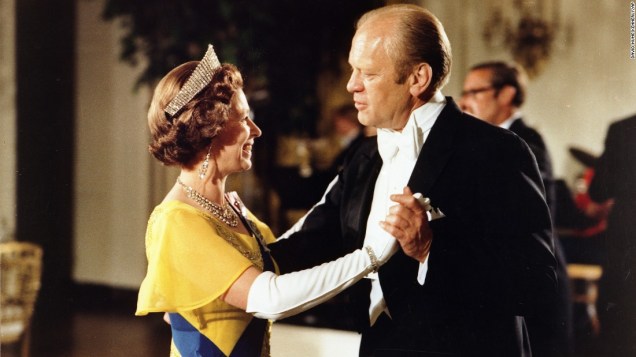
I am curious as to how much Americans actually know about British history. There is a certain amount of British history that intertwines with American history. After all we have fought two wars against them at least three wars with them. A real love-hate relationship. But nothing is more confusing than keeping track of the aristocratic power grabs and titles handed down from generation to generation. Not so here. Its all dollars and common cents.
In school we in America study The Magna Carta and how a bunch of discontent barons forced King John to sign The Great Charter way back in 1215, almost 400 years before our own history starts. These rebellious aristocrats demanded certain rights from the king that would eventually evolve into our own Bill of Rights.
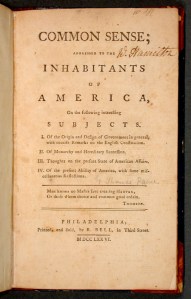
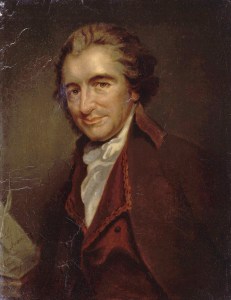
It was 560 or so years later in January of 1776, that Thomas Paine’s Common Sense hit the newsstands in the Colonies. Washington D.C. was still a swamp on the banks of the Potomac River and the Beltway was not even a dirt road. K Street was not even a lobbyist’s dream. Paine’s pamphlet created a stir across the Colonies with his rousing attack on the British hereditary monarchy.
Paine took direct aim at the king, writing that “exalting one man so greatly above the rest cannot be justified on the equal rights of nature, so neither can it be defended on the authority of scripture.” Paine felt the monarchy was “one of those evils, which when once established is not easily removed.” (Much like an old incumbent Senator from West Virginia.) Paine said people submitted to kings out of superstition, fear or just a chance to cash in on the king’s plunder.
According to Paine monarchy “was the most prosperous invention the Devil ever set on foot for the promotion of idolatry … Heathens paid divine honors to their deceased kings, and the christian world hath improved on the plan by doing the same to their living ones.”
This is harsh stuff flying in the face of an ill-gotten belief at the time in the Divine Right of Kings. This contrived political doctrine brought about a spiritual-religious belief in kingly absolutism. Unlike the Pharaohs of ancient Egypt, who were considered gods, more enlighten medieval thinkers realized that kings were god-like and derived their right to rule from God. It was sacrilegious to question an infallible God, who in his infinitesimal wisdom, would never place just any mere mortal on the thrones of His Earthly kingdoms. If God was above the law it only made sense that his kings were, too. Hence, a democratic belief in elections and the rule of law no matter how much they would cost.
Even though we may disapprove of monarchical rule we do have a fascination with royals. No matter how many times I watch TV shows like the Crown, Victoria, Wolf Hall or the Tudors, I just cannot keep track of all the comings and goings of Henrys, Edwards, and Georges. It becomes an Abbot and Castello routine of “Whose on the Throne?” Elizabeths not so much, there are two, right.
British history also devolves into the plethora of lower ranking lords that spill out of the ruling houses Yorks and Lancasters followed by Hanovers and Windsors (and a pair of Oranges tucked in there somewhere). And of course, all the revolving, ascending and descending Dukes and Earls that would make up the House of Lords.
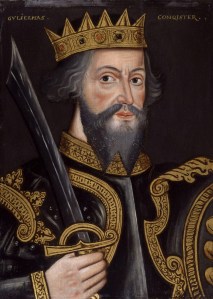
Being Colonials, and out of touch with royals for the better part of two centuries, we have no idea to the ranking of such lords and ladies. Who would really know that a Duke is higher on the pecking order then a Marquess followed by Earl, Viscount, and finally Baron. I am not sure how these titles are handed out. I believe it started in 1066, after the Norman Conquest. William the Conquer started dividing England up into manors (hence to the manor born) which he then turned over to his Norman barons. No doubt with certain allegiance of loyalty and fidelity expected in return.
The oldest English Earl is the Earl of Arundel, which dates back to the 1100’s. There was at least 16 or 23 Earls of Arundel, depending on how they are counted, Around 1620 the Earl of Arundel became the Duke of Norfolk. The titles have remained in the FitzAlan/Howard family and there have been 18 Dukes of Norfolk.
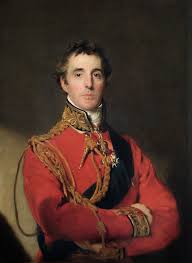
The only dukes I am familiar with is the Iron Duke, Sir Arthur Wellesley, the 1st Duke of Wellington who defeated Napoleon at the Battle of Waterloo; and Gene Chandler the self-proclaimed Duke of Earl. This fictitious bastardized title comes from his 1963 hit-single, now an Oldie Goldie, Duke of Earl.
Paine writes in Common Sense that some believe “that hereditary succession” prevents civil wars. This, he says, “is the most barefaced falsity ever imposed upon mankind.” At the time of his writing Paine claimed that Great Britain had gone through 30 kings, eight civil wars and 19 rebellions.
The War of Cousins or as we know it, The War of the Roses was a 15th Century, 30-year war pitting the Houses of York and Lancaster at one another. Each side captured each other’s champion or forced defeated leaders into exile. A stable form of government? Paine says there is nothing so uncertain as “the fate of war and the temper of a nation, when nothing but personal matters are the ground of a quarrel.” Adding that Parliament is”always following the strongest side.”
Paine did not hang around after the Revolutionary War to help get the rebellious Colonies a working form of government. This was left to men who had a keen understanding of British history. In fact, their insight into British history, politics and economics had them include a Nobility Clause in our Constitution that simply states:
No Title of Nobility shall be granted by the United States: And no Person holding any Office of Profit or Trust under them, shall, without the Consent of the Congress, accept of any present, Emolument, Office, or Title, of any kind whatever, from any King, Prince or foreign State.

Of course just because Congress does not officially pass out princely positions does not mean they do not exist otherwise in this country. It took the British centuries to establish a stable peerage. In the New World it is not so formal. This is not to say we are not with out squabbling, rich non-entitled ruling elite.We have billionaires that can spend close to $100 million to buy themselves an “elected” titled position; or at the very least put a strong down payment on getting the right man an elected-peerage.
After 200 plus years as a republic we never created a Lord Protectorate to hand out riches to loyal followers. Here wealth was not inherited, it was created. And with that the levers of power often go to the highest bidder. To paraphrase Paine, nothing tempts the fate and the temper of a nation than personal greed ground in a good political quarrel — with Congress “always following the richest side.”
We may not have titled barons sitting in Congress but we do have a few billionaires buying their way into the Beltway.
 mystoryorhistory