Traditionally in football when a player’s knee touches the ground he usually has the football and that means the ball is down and the play is over. The trend, however, seems to be when a player takes a knee it is an indication that the player’s career is over.
Several years ago, Tim Tebow created a stir with taking a knee after the play was over when he scored a touchdown. This was a spiritual gesture, a more solemn form of celebration that was even given the term Tebowing. Tebowing, imitated on and off the field, was not the typical end zone celebration of spiking the football or the myriad other end zone dances performed after crossing the goal line.

A couple of seasons ago Colin Kaepernick decided to take a knee before the game actually started. He took his knee in protest during the National Anthem. Kaepernick wanted to bring attention “to the oppression of people of color.” A gesture that has caused national attention and earned Kaepernick status as a Public Enemy Number One right there with wanted men like John Dillinger and Alvin “Creepy” Karpis.
Ironically, both of these quarterbacks were released and have not taken a knee in any NFL huddle for several seasons. Their actions could easily be interpreted as a symbolic gestures. According to Merriam-Webster.com a symbolic gesture is an act that has no purpose or effect other than to show support, respect, etc. And I guess this is where we run into the debate on how to show support and respect.
In most cases symbolic gestures are spontaneous, spur-of-the-moment responses. We are more familiar with simple use of hand gestures during polite conversation. This can morph quickly into the more animated hand gesture accompanied with the vein popping, red-faced, eye-bulging action of flipping off a driver who just cut you off in traffic. These sorts of gestures are easily understood; others, not so easy.
Symbolism is a way of expressing intangible ideas and concepts with recognizable material objects, which can be open to various interpretations and misconceptions. It could be like beauty is “in the eyes of the beholder.” It could be as Supreme Court Justice Stewart Potter said in trying to determine pornography by simply saying he could not define it “but I know it when I see it.”

When The Continental Congress decided to design a seal for the newly united colonies, they went to its go-to guys who did a bang-up job on the Declaration of Independence: Thomas Jefferson, Benjamin Franklin and John Adams. Three of the best philosophical, scientific and legal minds of the time. Basically the Congress took a pass on the seal for six years as different artistically-gifted colonials took a shot at creating the symbols acceptable to a finicky Congress.
So what do we see when we see a symbol? Franklin thought one of the first proposed seal’s depiction of the Bald Eagle looked more like a turkey. Jefferson’s vision for the seal was an illustration of Pharaoh in his chariot chasing Moses and the Hebrews across the Red Sea with the motto: Rebellion to Tyrants is Obedience to God as part of the seal. I am not sure how that would play out today.
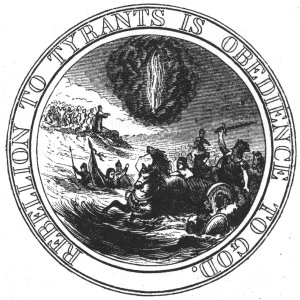
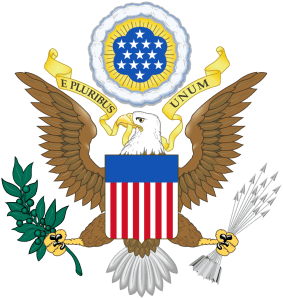
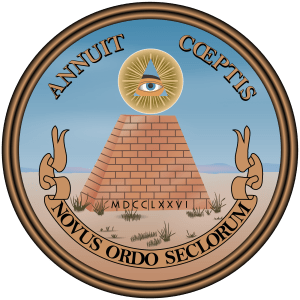
It eventually took three shots to get the symbols on The Great Seal that The Continental Congress wanted to represent the its beliefs and and values to future generations of Americans. On June 20, 1782 Congress approved the seal as we know it today. Everything on the seal from the colors, the 13-step pyramid with the ever watching eye in the sky on the reverse side symbolize a belief in the new nation. Even the Latin phrases: “One out of many (or from many)” and “New order of ages” are meant to represent the ideals of 1776. A sort of 18th Century flash forward to the present is a reminder of the symbols from the past meant to guide us into the future.
Although the Great Seal was a thoroughly thought-out process sometimes symbolic traditions come along haphazardly. For example, how did the knee-jerk tradition of bestowing God’s blessing on somebody who just sneezed get its start?
According to Baseball Reference The Star Spangled Banner was first played at a baseball game in May of 1862 at the Union Grounds in Brooklyn. The United States Navy started playing the Star Spangled Banner at official functions in 1889. In 1916 President Woodrow Wilson signed an executive order making the Star Spangled Banner the National Anthem.
A half-of-a-century after the game at Union Grounds, The Star Spangled Banner made it back to the playing field. On September 5 during the 1918 World Series game in Chicago a band played the Banner. It just so happened they played it when everybody in the ball park would be standing for the traditional 7th Inning Stretch. A sailor on leave snapped to attention and the crowd followed suit. It has been played at World Series games and Opening Day ceremonies ever since, with one caveat: A band had to be present.
We have to remember that this was a time when the public address systems were in their infancy and was more likely a strong-lunged man with a megaphone.
Symbolism sometimes has a haphazard way of coming together. I am not sure if Tebow or Kaepernick ran their decision to take a knee before a Congressional committee. More than likely they just did it as a symbolic gesture. Whether we stand up, sit down, take a knee or just shut up, the gesture, as a symbol, is always up for interpretation.
https://www.ourdocuments.gov/doc.php?flash=true&doc=5
http://www.nytimes.com/1987/06/12/us/washington-talk-briefing-tribute-to-cia.html
http://time.com/4955623/history-national-anthem-sports-nfl/
conventihttps://www.baseball-reference.com/bullpen/The_Star_Spangled_Banneron
 mystoryorhistory